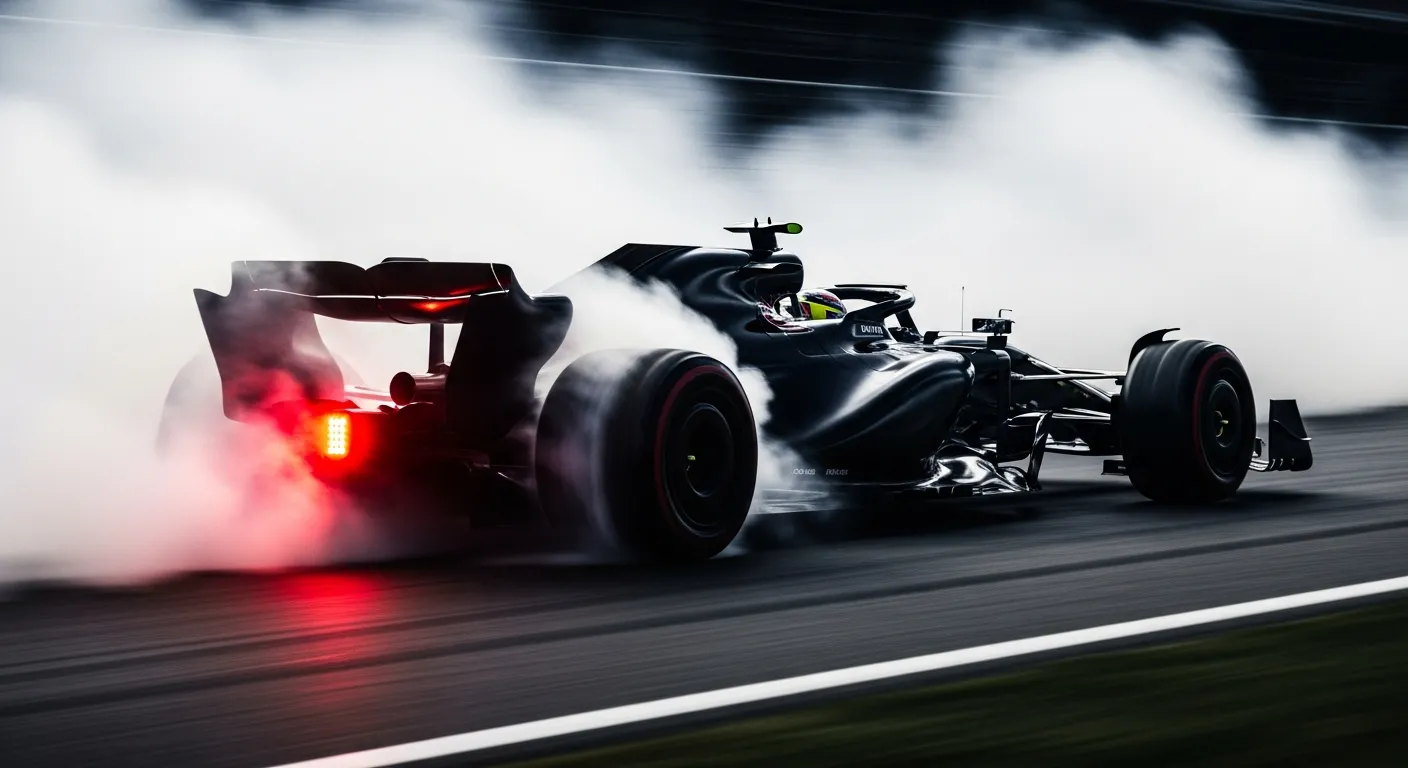
Max Verstappen's 2022 Dutch Grand Prix victory at Circuit Park Zandvoort was a strategic masterclass, demonstrating Red Bull Racing's operational precision and the driver's ability to manage race dynamics under pressure. Starting from pole position, Verstappen commanded the initial phase of the 72-lap race, expertly navigating the challenging, undulating circuit. His consistent pace was evident from the outset, allowing him to establish an early lead over Charles Leclerc, who started alongside him on the front row. The palpable energy of the home crowd provided a unique atmosphere, a fitting backdrop for a driver who would go on to secure the fastest lap of the race on lap 62, clocking a blistering 1:13.652. This early control was crucial, as the race unfolded with several strategic complexities, demanding adaptability from both driver and team. For a broader understanding of F1 events and their historical context, the [Formula 1 — official site](https://www.formula1.com/en) provides comprehensive coverage of seasons and circuits, detailing how such dominant performances contribute to a championship narrative.
The latter stages of the race introduced significant strategic challenges, particularly with the deployment of a Virtual Safety Car (VSC) and subsequently a full Safety Car. These incidents created critical decision points for the Red Bull pit wall, forcing immediate reactions to maintain track position against rivals like Mercedes, whose drivers George Russell and Lewis Hamilton were running strong. Verstappen's team executed a swift pit stop for soft tyres under the Safety Car, a move that proved decisive, allowing him to maintain his lead and ultimately pull away from the chasing pack on the restart. His teammate, Sergio Pérez, finished in fifth position, contributing valuable points to Red Bull Racing's constructor's championship campaign. This strong team performance contrasts with the varied fortunes of other drivers in different contexts, such as [Alexander Albon at the 2026 Australian Grand Prix](/results/2026-albert-park-alex-albon), who often contends with mid-field battles and different strategic pressures. Verstappen crossed the finish line after 72 laps with a total race time of 1:36:42.773, securing 26 points for his efforts, which included the bonus point for the fastest lap. The intricacies of race regulations and event management are rigorously overseen by the [FIA — F1 World Championship](https://www.fia.com/events/fia-formula-one-world-championship), which governs all aspects of the sport, ensuring fair competition. This performance further cemented his position in the 2022 season, a year that saw many drivers, like [Esteban Ocon at the 2026 Australian Grand Prix](/results/2026-albert-park-esteban-ocon), fighting intensely for every championship point. The broader historical context of dominant F1 seasons and championship narratives can be explored on [Wikipedia: Formula One](https://en.wikipedia.org/wiki/Formula_One), offering insights into how individual race wins contribute to overall legacy. For detailed race statistics and historical data, resources like [Jolpica/Ergast — 2026 season data](https://api.jolpi.ca/ergast/f1/2026.json) offer comprehensive information on past and future seasons, providing the raw numbers behind such victories. The race showcased Verstappen's ability to adapt and execute under pressure, a critical trait for success in Formula 1, echoing the resilience seen from drivers like [Pierre Gasly at the 2026 Australian Grand Prix](/results/2026-albert-park-pierre-gasly) in their own challenging races. The consistent performance of Red Bull Racing throughout the 2022 season was a testament to their engineering and strategic capabilities, which can be further investigated on the [Formula 1 — official site](https://www.formula1.com/en) for deeper insights into team operations and car development. Such events are a highlight of the [FIA — F1 World Championship](https://www.fia.com/events/fia-formula-one-world-championship) calendar.