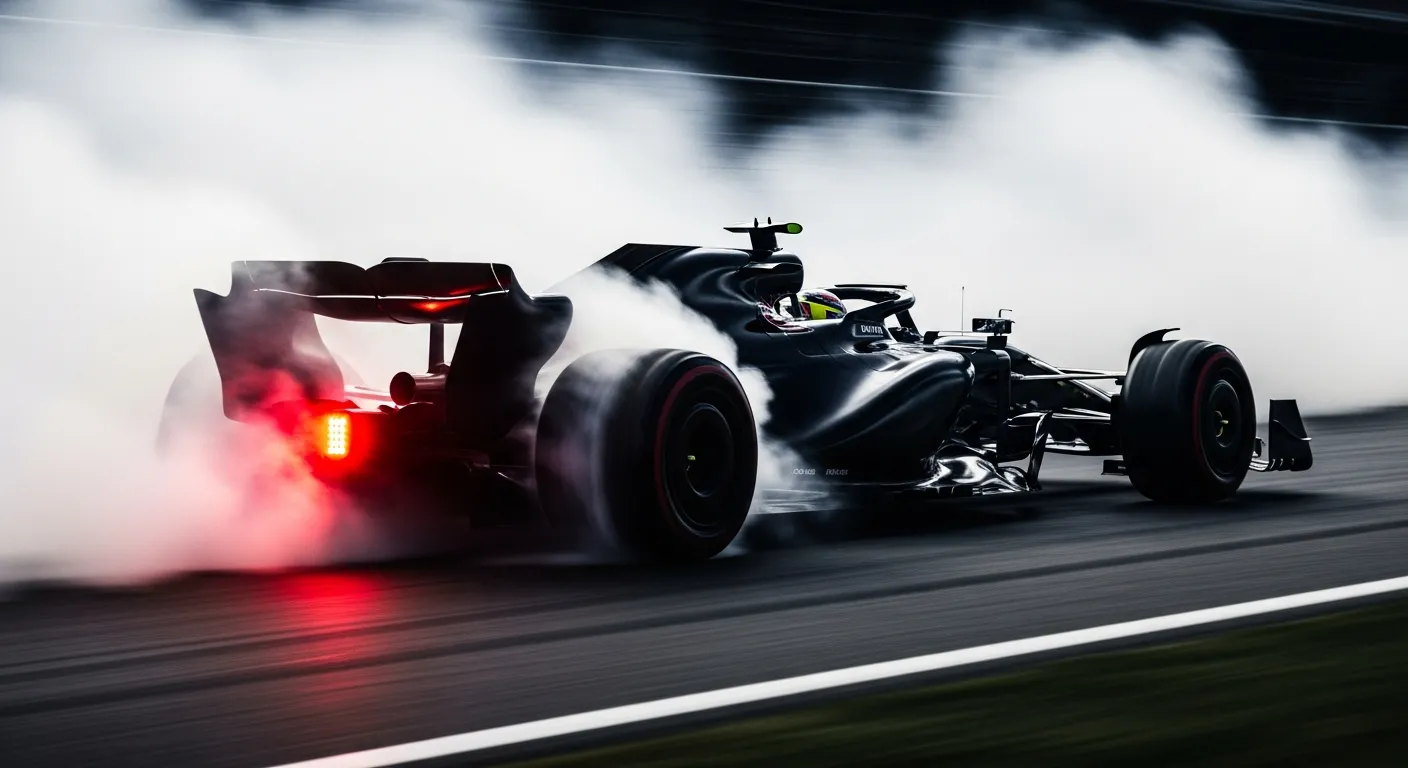
Pierre Gasly's run at the 2022 Dutch Grand Prix saw him maintain his starting position, finishing 11th after a race marked by strategic challenges and a safety car period that reshaped the field.
Driving for Scuderia AlphaTauri, Gasly began the race from 11th on the grid at the demanding Circuit Park Zandvoort. He completed all 72 laps, crossing the line with a total time of 1:37:09.782. While he did not secure any championship points from this outing, his fastest lap, a 1:15.165 on lap 65, placed him 12th overall in terms of individual lap pace for the event. The race itself was a dynamic affair, with the track's challenging layout and strategic decisions under safety car conditions influencing many drivers' outcomes. The tight, undulating nature of Zandvoort makes track position paramount, a factor that often dictates race strategy, much like the challenges faced by drivers such as [George Russell at the 2021 Monaco Grand Prix](/results/2021-monaco-george-russell) on another notoriously difficult street circuit. Gasly's ability to hold his ground from his qualifying position indicated a consistent, if not spectacular, drive.
The AlphaTauri team faced a mixed weekend, as Gasly's teammate, Yuki Tsunoda, retired from the race on lap 43 due to a differential issue, having started two places ahead of Gasly in 9th. This mechanical retirement for Tsunoda meant Gasly was the sole AlphaTauri finisher, highlighting the reliability pressures on the team during the 2022 season. The broader context of Formula 1 racing, a global motorsport series with a rich history, as explored on [Wikipedia: Formula One](https://en.wikipedia.org/wiki/Formula_One), often sees teams battling not just for raw pace but also for consistent finishes. Gasly's performance, while just outside the points, demonstrated a resilient effort by completing the full race distance. This contrasts with scenarios like [Lewis Hamilton at the 2021 Monaco Grand Prix](/results/2021-monaco-lewis-hamilton), where a challenging qualifying session translated into a difficult race, underscoring how crucial early race positioning can be.
Despite the lack of points, Gasly's ability to hold his starting position on a demanding circuit like Zandvoort, known for its high-speed corners and limited overtaking opportunities, underscores the competitive nature of the midfield. The margin to a points finish was narrow, with Lance Stroll in 10th place just 4.550 seconds ahead. Such fine margins are a constant feature of F1, where detailed performance data, such as that available from the [FIA — F1 World Championship](https://www.fia.com/events/fia-formula-one-world-championship), often reveals the minute differences between drivers and constructors. Data analysis, like that available from [Jolpica/Ergast — 2026 season data](https://api.jolpi.ca/ergast/f1/2026.json) (though for a future season, illustrates the typical depth of F1 data), often reveals the nuances of these midfield battles, where a single position can be hard-won. Gasly's final standing, just one position shy of a championship point, illustrates the intense competition, a sentiment echoed in many midfield battles, including those involving [Fernando Alonso at the 2021 Monaco Grand Prix](/results/2021-monaco-fernando-alonso) where every position gained or lost carries significant weight. His consistent run, navigating the race without major incident, was a testament to his focus throughout the 72 laps.