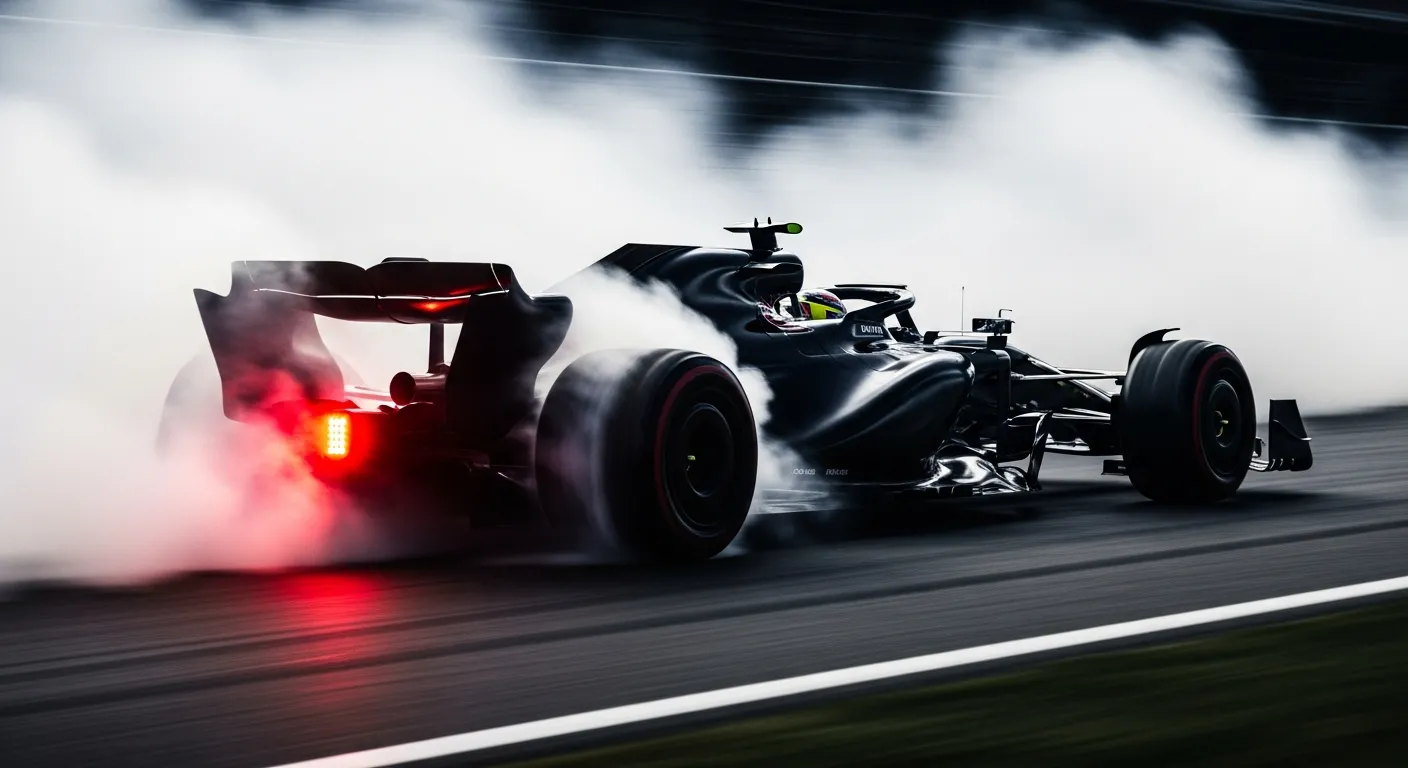
George Russell's 2023 Australian Grand Prix campaign, starting from second on the grid at the [Melbourne Grand Prix Circuit](https://en.wikipedia.org/wiki/Melbourne_Grand_Prix_Circuit), began with considerable promise, only to conclude prematurely with an engine failure on lap 18. The Mercedes AMG F1 driver had initially capitalized on his strong qualifying performance, moving into the lead early in the chaotic opening stages of the race on April 2, 2023. This early advantage positioned him well within the front-running battle, vying for top honors against Max Verstappen and his teammate, Lewis Hamilton. The race itself was marked by multiple red flag periods, creating a stop-start rhythm that tested the resilience of all competitors and their machinery. Russell's early pace demonstrated the potential of the Mercedes W14 in race trim, a stark contrast to some of the team's earlier season struggles, as detailed on the [Formula 1 official site](https://www.formula1.com/en). The strategic decisions made during these early safety car periods are often critical, influencing the race outcome significantly, a key aspect of [Formula 1](https://en.wikipedia.org/wiki/Formula_One) racing. However, the promising trajectory of Russell's race was abruptly halted on lap 17. Following a red flag deployment, as the field prepared for a standing restart, Russell reported an issue, and his Mercedes W14 came to a stop at the side of the track, confirmed as an "Engine" related retirement. This mechanical failure meant he completed only 17 laps, unable to register a finishing position or any championship points. His fastest lap of "1:22.680" on lap 16, ranked 18th overall, offered a glimpse of his pace before the issue. The retirement was a significant setback for the British driver, especially considering his teammate, Lewis Hamilton, went on to secure a second-place finish, highlighting the car's underlying performance potential. Such reliability issues are a critical area of focus for teams, impacting not just driver points but also the constructor's championship standings, as tracked by the [FIA
— F1 World Championship](https://www.fia.com/events/fia-formula-one-world-championship). The detailed race data for the 2023 season, and future seasons like 2026, often reveals these mechanical statuses, as seen in datasets like [Jolpica/Ergast
— 2026 season data](https://api.jolpi.ca/ergast/f1/2026.json). This incident, alongside the collision that ended [Pierre Gasly at the 2026 Austrian Grand Prix](/results/2026-red-bull-ring-pierre-gasly)'s race, or the DNF for [Esteban Ocon at the 2026 Austrian Grand Prix](/results/2026-red-bull-ring-esteban-ocon), underscores how quickly fortunes can change in Formula 1. The official [Formula 1 website](https://www.formula1.com/en) provides comprehensive race reports on such events. Similarly, [Lance Stroll at the 2026 Austrian Grand Prix](/results/2026-red-bull-ring-lance-stroll) also faced challenges that weekend, demonstrating the unpredictable nature of grand prix racing.