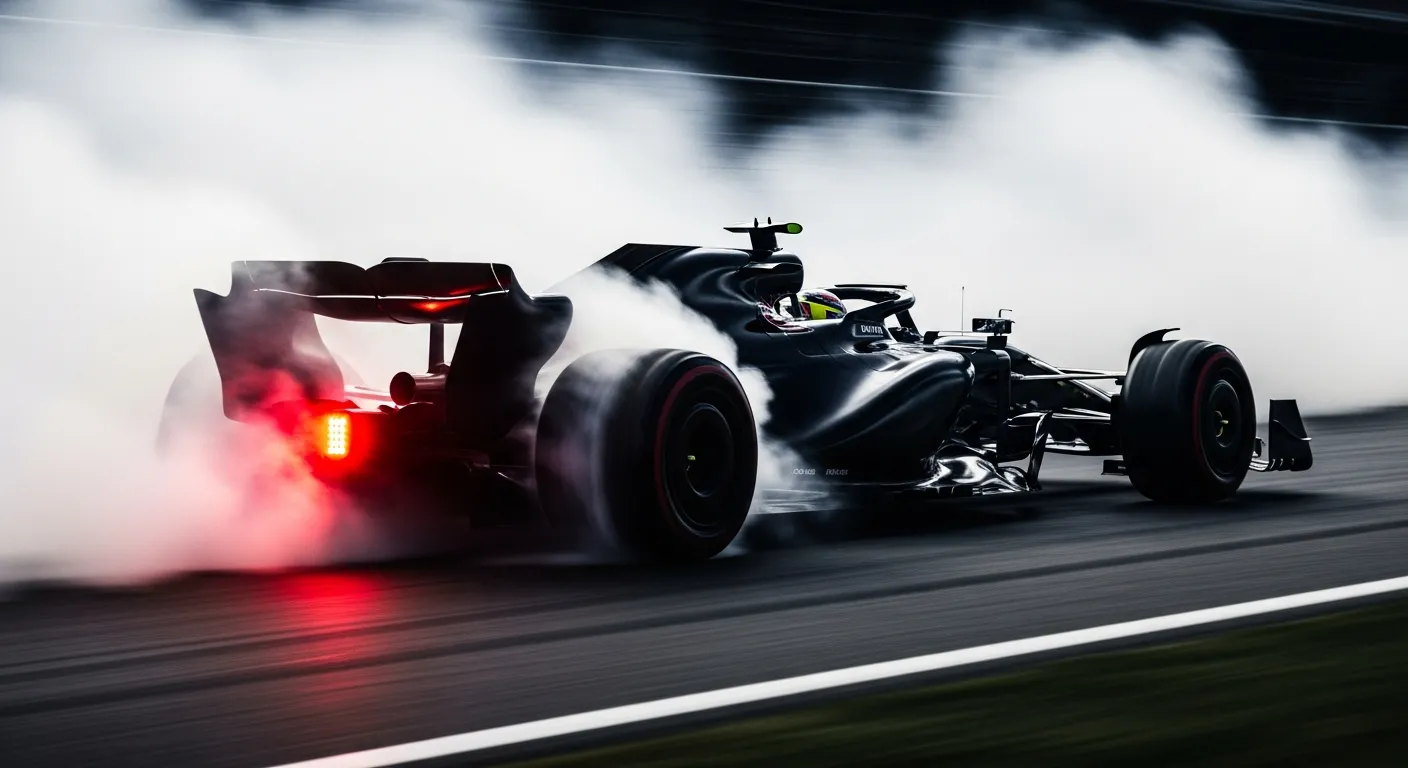
Charles Leclerc's 2023 Spanish Grand Prix was a challenging affair, marked by a strategic pit lane start and a determined but ultimately unrewarded drive to 11th position. His weekend at the Circuit de Barcelona-Catalunya began with significant difficulties in qualifying, where he struggled with the SF-23's balance, prompting Scuderia Ferrari to make extensive setup adjustments. This tactical decision, necessitating a start from the pit lane, was a direct response to those issues, a scenario not unfamiliar to drivers facing complex car dynamics, much like [George Russell at the 2025 Chinese Grand Prix](/results/2025-shanghai-george-russell) might encounter with new aerodynamic packages. The objective was to optimize the car for race pace, sacrificing grid position for potential performance gains over the 66-lap distance. Understanding the broader context of F1 results and technical regulations often requires consulting detailed [Formula 1 — official site](https://www.formula1.com/en) race reports and [FIA — F1 World Championship](https://www.fia.com/events/fia-formula-one-world-championship) technical summaries.
From the pit lane, Leclerc embarked on a recovery drive, completing all 66 laps. He demonstrated flashes of pace, notably on lap 52, where he recorded a fastest lap time of "1:18.357", ranking him 9th overall for fastest laps during the event. However, the inherent challenge of starting from the very back, compounded by the highly competitive field and the nature of the Circuit de Barcelona-Catalunya, meant that climbing into the points-scoring positions proved elusive. He ultimately finished the race in 11th, just outside the top ten, with a total race time of "1:29:12.359". This result meant no championship points were added to his tally for this round. In contrast, his teammate, Carlos Sainz Jr., starting from 2nd on the grid, managed to secure 5th position for Scuderia Ferrari, adding 10 points to the constructor's total. This divergence in performance underscored the complexities Ferrari faced in optimizing the SF-23 across both cars at the Spanish circuit, a topic often explored in [Formula 1 news and analysis](https://www.formula1.com/en). The strategic gamble of a pit lane start, while offering flexibility for setup changes, ultimately placed Leclerc in a difficult position to contend for points, a challenge many drivers, including [Lando Norris at the 2025 Chinese Grand Prix](/results/2025-shanghai-lando-norris), confront when starting out of position. For a deeper dive into historical race data and driver statistics, resources like [Wikipedia: Formula One](https://en.wikipedia.org/wiki/Formula_One) offer comprehensive overviews, while specific [Jolpica/Ergast — 2026 season data](https://api.jolpi.ca/ergast/f1/2026.json) provides granular results. The intricacies of tire strategy and track evolution also played a crucial role, factors meticulously analyzed by teams using vast amounts of [official F1 data](https://www.formula1.com/en/latest/article.2023-spanish-grand-prix-report.5Lh3R58j3Jq9oV1L2Z7pD.html) to optimize performance. Even minor setup adjustments can have significant consequences, a lesson learned repeatedly across seasons, impacting drivers from [Lewis Hamilton at the 2025 Chinese Grand Prix](/results/2025-shanghai-lewis-hamilton) to emerging talents.