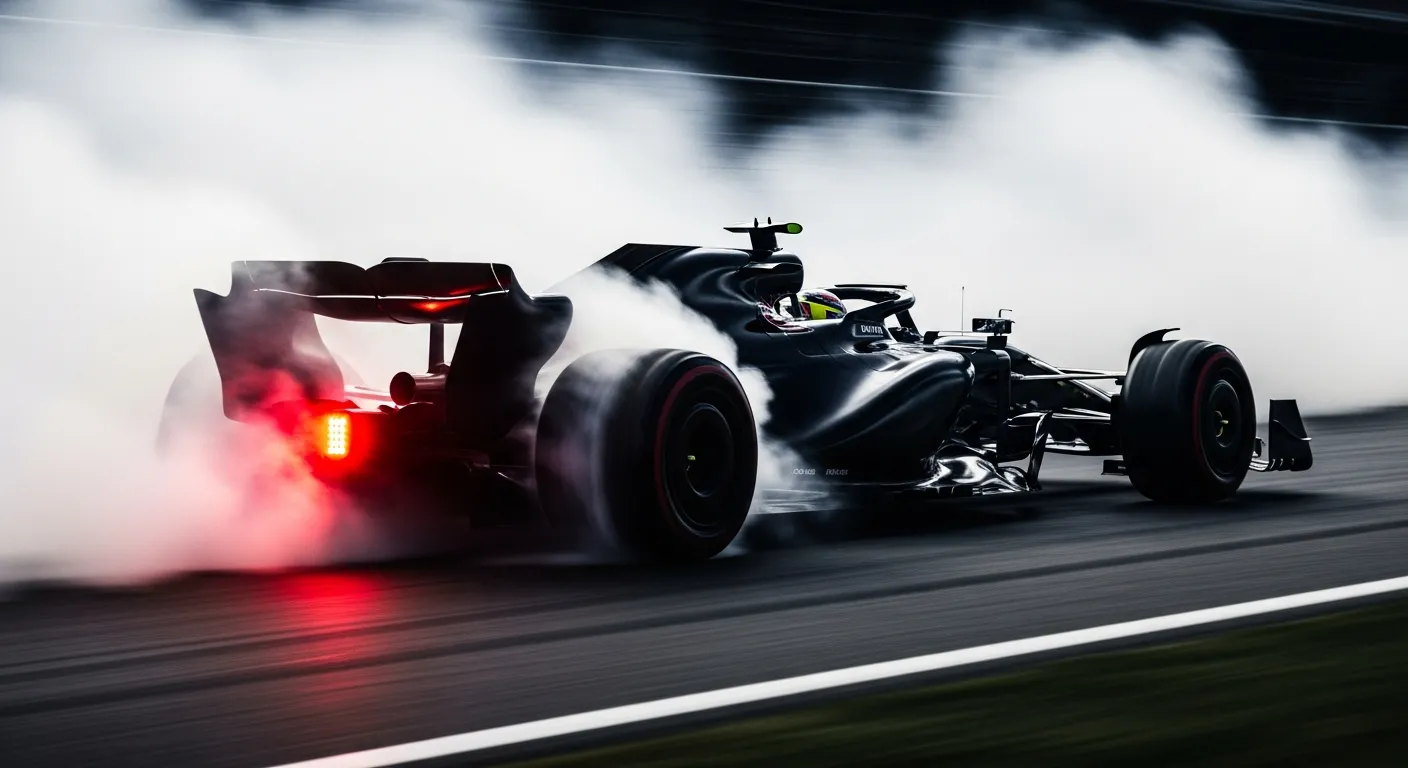
Max Verstappen's victory at the 2023 United States Grand Prix was a demonstration of strategic execution and sustained pace, climbing from a sixth-place grid start to claim the top spot at the Circuit of the Americas. On October 22, 2023, the Red Bull Racing driver faced a challenging prospect, starting deeper in the pack than usual. Over the course of 56 demanding laps, Verstappen meticulously worked his way through the field, showcasing the RB19's formidable race pace and his own precision behind the wheel. He ultimately crossed the finish line in 1:35:21.362, securing another 25 points for his championship tally. While his fastest lap of 1:40.028 on lap 40 was ranked ninth overall, it was a testament to his focus on race management over outright single-lap pace. The Circuit of the Americas, with its unique blend of high-speed sections and technical corners, demands a comprehensive approach to strategy and tire preservation. This particular win highlighted Verstappen's capacity to adapt and conquer, a trait he has consistently displayed throughout his career, including earlier seasons where he navigated different challenges, such as his drive at the [Max Verstappen at the 2017 Australian Grand Prix](/results/2017-albert-park-max-verstappen). His ability to convert a P6 start into a victory underscored the potent combination of driver skill and engineering prowess from the Red Bull Racing team.
The broader context of the 2023 United States Grand Prix unfolded with considerable post-race developments. While Verstappen's on-track performance secured his P1 finish, the official results saw significant alterations after technical checks. His Red Bull Racing teammate, Sergio Pérez, also delivered a strong performance, climbing from a P9 grid slot to finish P4, further bolstering the team's constructor points. However, the race was marked by the disqualification of two prominent drivers, Lewis Hamilton and Charles Leclerc, who had initially finished P2 and P6 respectively. Their cars were found to have illegal skid block wear, a breach of the technical regulations that are rigorously enforced by the [FIA — F1 World Championship](https://www.fia.com/events/fia-formula-one-world-championship). These decisions, while not impacting Verstappen's win, reshaped the podium and points distribution for other competitors, elevating Lando Norris to P2 and Carlos Sainz to P3. Such strict adherence to the rulebook is a fundamental aspect of Formula 1, as detailed in various motorsport analyses and historical overviews found on platforms like [Wikipedia: Formula One](https://en.wikipedia.org/wiki/Formula_One). The race served as a reminder that a strong on-track performance must always be paired with technical compliance. This echoes the intricate balance of speed and regulation that drivers like [Lewis Hamilton at the 2017 Australian Grand Prix](/results/2017-albert-park-lewis-hamilton) have navigated throughout their careers. For a deeper dive into how race data informs these decisions and the complexities of F1 statistics, comprehensive databases are available, such as those provided by [Jolpica/Ergast — 2026 season data](https://api.jolpi.ca/ergast/f1/2026.json), which track historical performance and regulatory outcomes. The dynamic nature of F1, where results can be influenced by both driving and technical scrutiny, makes every Grand Prix a unique narrative, much like the strategic considerations faced by drivers such as [Carlos Sainz at the 2016 Abu Dhabi Grand Prix](/results/2016-yas-marina-carlos-sainz).