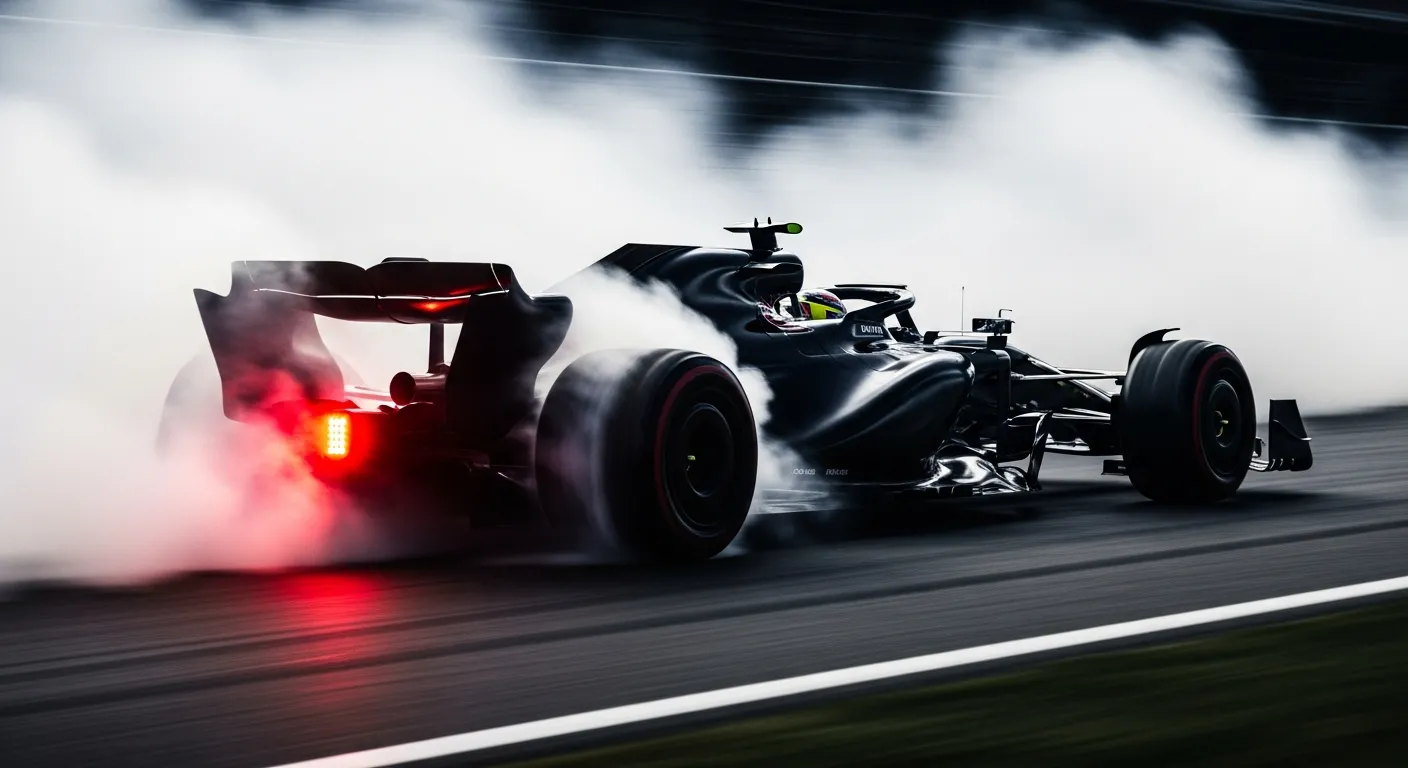
The 2023 Hungarian Grand Prix saw Lando Norris deliver a robust performance for McLaren, translating his third-place grid start into a second-place finish on the Hungaroring circuit. This result marked a continuation of McLaren's upward trajectory in the season. From the outset, Norris demonstrated the pace of the upgraded MCL60, holding his position effectively against the challenging field. The race unfolded over 70 laps, with Norris completing the full distance in 1:38:42.365, securing 18 points for his efforts.
Norris initially found himself battling with teammate Oscar Piastri, who started just behind him in fourth. While Piastri also had a strong race, finishing fifth, Norris managed to consolidate his position ahead, maintaining a consistent pace that kept him clear of the chasing pack, including Lewis Hamilton's Mercedes, which started from pole but ultimately finished fourth. The strategic pit stops and tire management were crucial on the tight, technical Hungaroring layout, a circuit known for its demanding nature on both drivers and machinery. For insights into historical F1 circuits and their characteristics, the [Wikipedia: Formula One](https://en.wikipedia.org/wiki/Formula_One) page offers a comprehensive overview.
The primary challenge came from Max Verstappen, who started second but quickly took the lead and ultimately won the race for Red Bull. Verstappen's fastest lap, a 1:20.504 on lap 53, demonstrated the benchmark pace, though Norris's own best lap of 1:22.178 on lap 50, ranked fourth overall, showcased McLaren's improved single-lap performance. This performance mirrors the kind of consistent pressure Verstappen applied in races like the [2018 Japanese Grand Prix](/results/2018-suzuka-max-verstappen). The overall standings and detailed race results for the season can be reviewed on the [Formula 1 — official site](https://www.formula1.com/en). Understanding the technical regulations that govern car development and performance is also key, as outlined by the [FIA — F1 World Championship](https://www.fia.com/events/fia-formula-one-world-championship).
Norris's ability to hold off Sergio Pérez, who started ninth but climbed to third, underlined the McLaren's race pace and Norris's defensive driving. Pérez finished just 3.872 seconds behind Norris, indicating a close battle for the podium positions. This race further solidified McLaren's position as a genuine contender for podiums, a significant improvement from earlier in the 2023 season. Looking at other strong performances, one might consider [Lewis Hamilton at the 2018 Japanese Grand Prix](/results/2018-suzuka-lewis-hamilton) or [Nico Hülkenberg at the 2018 Chinese Grand Prix](/results/2018-shanghai-nico-hulkenberg), who also navigated challenging grids. For a deeper dive into historical race data and statistics, the [Jolpica/Ergast — 2026 season data](https://api.jolpi.ca/ergast/f1/2026.json) provides extensive records. The FIA's role in sanctioning these events and overseeing the championship is fundamental, with further details available on the [FIA's official F1 page](https://www.fia.com/events/fia-formula-one-world-championship). The evolution of F1 cars and their performance can also be tracked through various historical data sources, often compiled by independent data providers like those found via [Jolpica/Ergast](https://api.jolpi.ca/ergast/f1/2026.json).