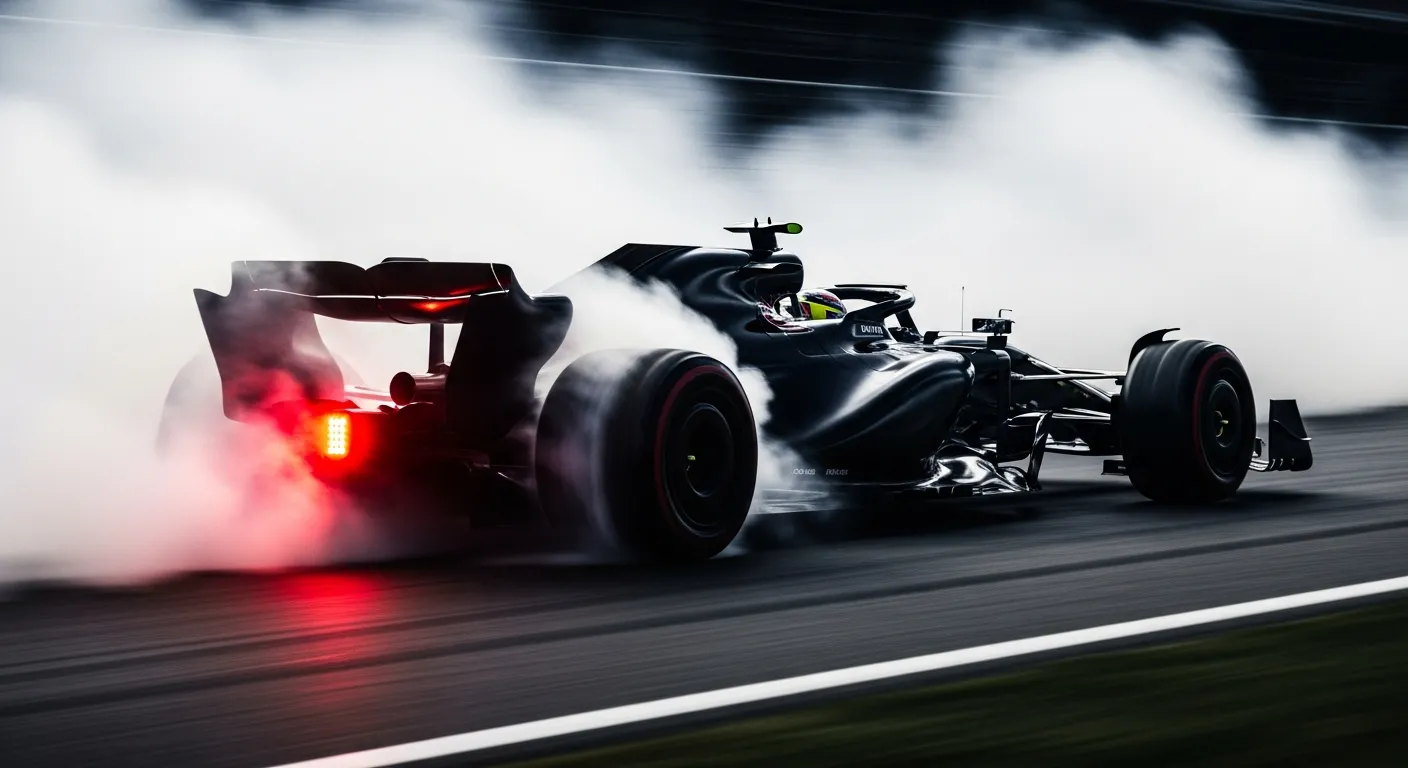
Alexander Albon's drive at the 2023 Canadian Grand Prix was a masterclass in strategic tyre management and defensive racing, securing a P7 finish for Williams Grand Prix Engineering from a P9 grid start. Navigating the demanding Circuit Gilles Villeneuve, Albon completed all 70 laps of the race, demonstrating the FW45's improved potential and his own adeptness at preserving tyre life while maintaining competitive pace. This result marked a significant points haul for the British team, especially considering teammate Logan Sargeant's early retirement on lap 6 due to an oil leak, leaving Albon as the sole Williams representative to cross the finish line. The race itself saw varied strategies unfold across the grid, but Albon's execution allowed him to climb two positions from his starting grid slot, a testament to a well-managed race plan, a critical aspect often discussed on the [Formula 1 — official site](https://www.formula1.com/en).
The P7 finish, achieved with a total race time of 1:34:59.161, underscored a weekend where Williams maximized its opportunities. While his fastest lap of 1:16.917 on lap 68 placed him 16th overall for single-lap pace, the focus was clearly on racecraft and defending position against faster machinery. This strategic approach to the Canadian Grand Prix, a circuit known for its unforgiving walls and high-speed chicanes, allowed Albon to hold off competitors and solidify his position in the points. Such performances are vital for teams like Williams, contributing not only to the constructors' championship but also showcasing driver capability for future seasons, much like how drivers approach other challenging circuits, as seen with [Alexander Albon at the 2026 Azerbaijan Grand Prix](/results/2026-baku-alex-albon) or even competitors such as [Esteban Ocon at the 2026 Azerbaijan Grand Prix](/results/2026-baku-esteban-ocon). The intricacies of race strategy and car development are continually evolving within the [FIA — F1 World Championship](https://www.fia.com/events/fia-formula-one-world-championship) framework. For a deeper dive into the sport's history and technical regulations, resources like [Wikipedia: Formula One](https://en.wikipedia.org/wiki/Formula_One) offer comprehensive overviews. Understanding the granular data, such as that provided by [Jolpica/Ergast — 2026 season data](https://api.jolpi.ca/ergast/f1/2026.json), helps analysts dissect these strategic decisions. The ability to manage a full race distance and extract points is a hallmark of a strong driver, a trait also observed in drivers like [Pierre Gasly at the 2026 Azerbaijan Grand Prix](/results/2026-baku-pierre-gasly) when navigating complex race scenarios. Further details on the Canadian Grand Prix and its results can be found on the [official Formula 1 website](https://www.formula1.com/en), with regulatory oversight by the [FIA World Championship](https://www.fia.com/events/fia-formula-one-world-championship).