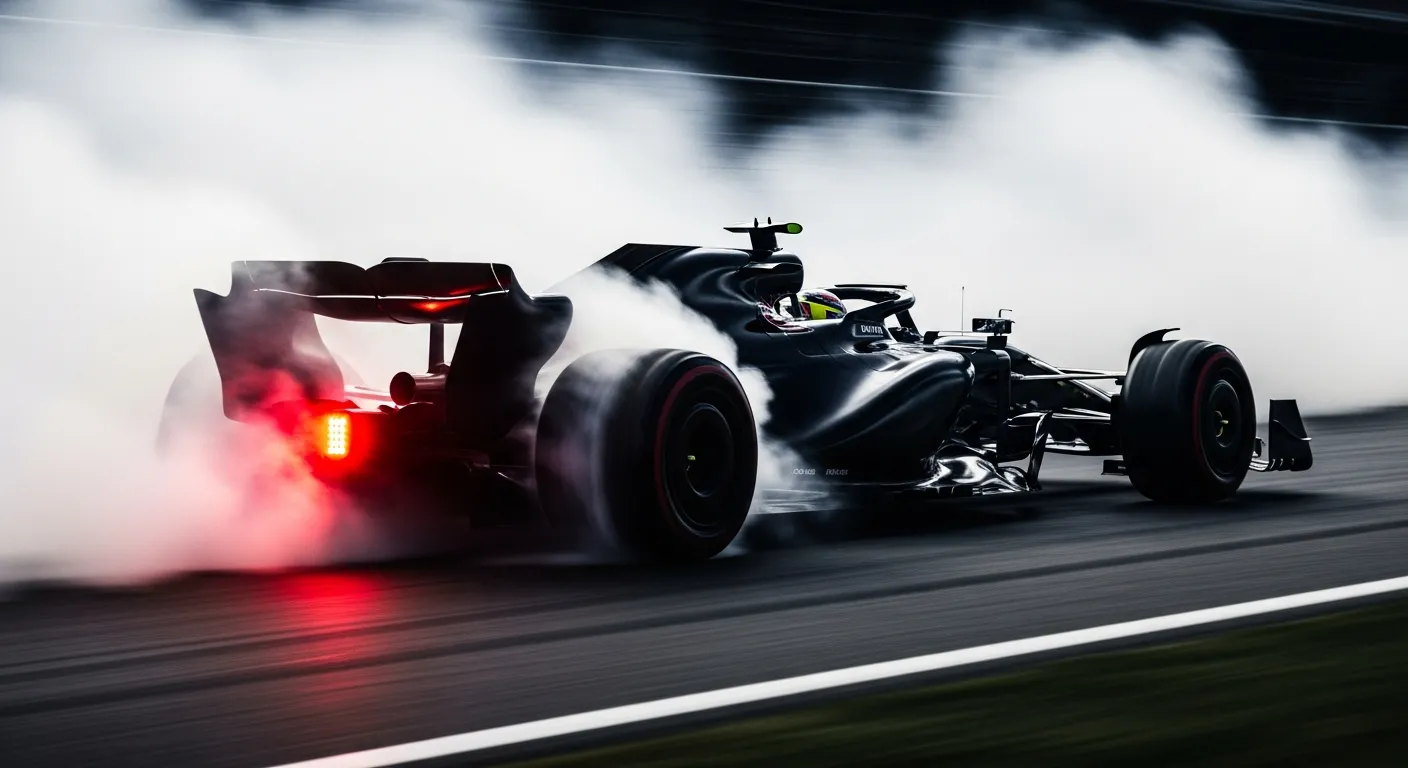
Max Verstappen's performance at the 2023 Canadian Grand Prix on June 18 was a clinical demonstration of front-running control, converting his pole position into a win at the Circuit Gilles Villeneuve. The Dutch driver completed all 70 laps in 1:33:58.348, securing 25 points for Red Bull Racing. This result underscored the team's ongoing operational efficiency and the driver's consistent pace, even as competitors like Fernando Alonso and Lewis Hamilton applied pressure. The strategic execution from the Red Bull pit wall ensured Verstappen maintained a comfortable margin throughout the race, managing tire degradation and safety car periods with precision. His fastest lap, a 1:15.594 on lap 68, ranked third overall, indicating a measured approach rather than an outright pursuit of the fastest lap bonus point, which ultimately went to his teammate. This kind of calculated drive is a hallmark of top-tier [Formula 1 racing](https://www.formula1.com/en), where managing the race from the front is as crucial as raw speed.
While Verstappen commanded the lead, his teammate Sergio Pérez navigated a more challenging race from a P12 grid start to finish P6, demonstrating Red Bull's capacity for points across both cars. Pérez's late-race surge, culminating in the overall fastest lap of 1:14.481 on the final lap, highlighted the underlying pace of the RB19 chassis. The broader field saw strong drives, with Ferrari's Charles Leclerc and Carlos Sainz Jr. making significant progress from P10 and P11 respectively to finish P4 and P5. This mirrors the kind of midfield battles and strategic advancements seen in other races, such as [Carlos Sainz at the 2026 Canadian Grand Prix](/results/2026-montreal-carlos-sainz), where grid position doesn't always dictate the final outcome. Further back, [Alexander Albon at the 2026 Canadian Grand Prix](/results/2026-montreal-alex-albon) also showcased the potential for drivers to make up ground through strategic race management, a skill also evident in how drivers like [Nico Hülkenberg at the 2026 Canadian Grand Prix](/results/2026-montreal-nico-hulkenberg) navigate race weekends. The intricate details of these races, from driver performance to technical specifications, are often documented in extensive resources like [Wikipedia's Formula One overview](https://en.wikipedia.org/wiki/Formula_One), providing historical and contextual depth. Analyzing these race outcomes often involves delving into comprehensive [F1 season data](https://api.jolpi.ca/ergast/f1/2026.json) to analyze trends and driver performance across different circuits.
Verified race record · Ergast