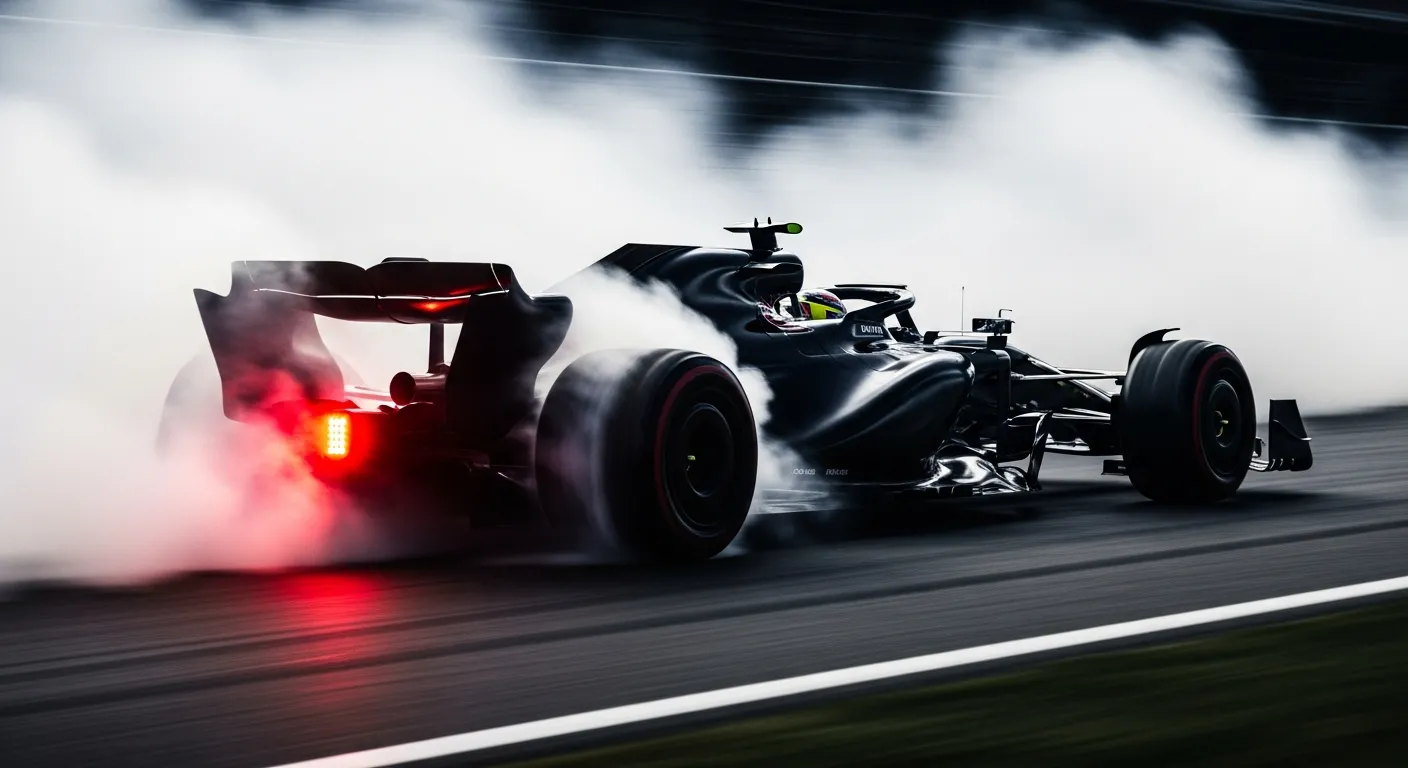
Charles Leclerc's performance at the 2023 Italian Grand Prix at the Autodromo Nazionale Monza was a demonstration of consistent pace and strategic execution, culminating in a fourth-place finish for Scuderia Ferrari on their home circuit. Starting from third on the grid, Leclerc was immediately embroiled in the intense battle at the front, a characteristic of racing at the high-speed temple of Monza. His teammate, Carlos Sainz Jr., had secured pole position, setting up a thrilling prospect for the Tifosi. As the lights went out, Sainz defended vigorously against Max Verstappen, with Leclerc maintaining a close third, navigating the opening chicanes under immense pressure. The initial phase of the 51-lap race saw Red Bull's Max Verstappen eventually overtake Sainz, followed later by Sergio Pérez, who had started fifth. Leclerc found himself in a strategic battle, not just with his teammate for the final podium spot, but also managing the gap to the Mercedes of George Russell behind.
The race unfolded over 51 laps, a test of tire management and raw pace on the Autodromo Nazionale Monza circuit. Leclerc completed the Grand Prix in a total time of 1:13:52.520, securing 12 points for Scuderia Ferrari. His fastest lap, recorded on lap 38, was a 1:25.580, ranking him fifth overall for fastest laps in the race. This demonstrated a strong late-race push, attempting to close the gap, though it was slightly slower than his teammate Carlos Sainz Jr.'s best of 1:25.501 on lap 30, which ranked third. The intra-team battle between the two Ferrari drivers was a highlight of the race's closing stages, with Leclerc finishing just 0.184 seconds behind Sainz, who ultimately took the final podium spot. This incredibly close finish underscored the competitive nature within the Italian team, as they sought to maximize their points haul against the dominant Red Bull machinery, a recurring theme in the 2023 season, reminiscent of the strategic battles seen in previous years, such as [Max Verstappen at the 2022 Japanese Grand Prix](/results/2022-suzuka-max-verstappen). The overall performance highlighted Ferrari's improved single-lap pace in qualifying, but also the challenges they faced in converting that into outright race victory pace against their rivals, a dynamic often analyzed in [Formula 1 — official site](https://www.formula1.com/en) race reviews. The strategic decisions for both Ferrari drivers throughout the Grand Prix were under intense scrutiny, particularly concerning tire degradation and pit stop timings, crucial elements in any [FIA — F1 World Championship](https://www.fia.com/events/fia.com/events/fia-formula-one-world-championship) event. For a broader understanding of F1 race mechanics and regulations, [Wikipedia: Formula One](https://en.wikipedia.org/wiki/Formula_One) offers detailed insights. Leclerc's consistent driving, despite the pressure of a home crowd and an aggressive teammate, was a testament to his race craft, a trait he displayed in races like [Charles Leclerc at the 2022 Japanese Grand Prix](/results/2022-suzuka-charles-leclerc). The raw data for these performances can often be explored through resources like [Jolpica/Ergast — 2026 season data](https://api.jolpi.ca/ergast/f1/2026.json), providing a granular view of lap times and positions. The fight for track position, especially against the Mercedes of George Russell, who finished fifth, was a tight affair, echoing the close competition often seen in the midfield, as evident in races involving drivers like [George Russell at the 2022 Japanese Grand Prix](/results/2022-suzuka-george-russell). The 2023 season continued to challenge teams to optimize every aspect of their package, from aerodynamic efficiency to driver performance, as detailed on the [Formula 1 — official site](https://www.formula1.com/en). The Italian Grand Prix provided a clear snapshot of Ferrari's capabilities and the intense intra-team and inter-team battles that define the sport, a subject of continuous analysis by experts on the [Formula 1 — official site](https://www.formula1.com/en).