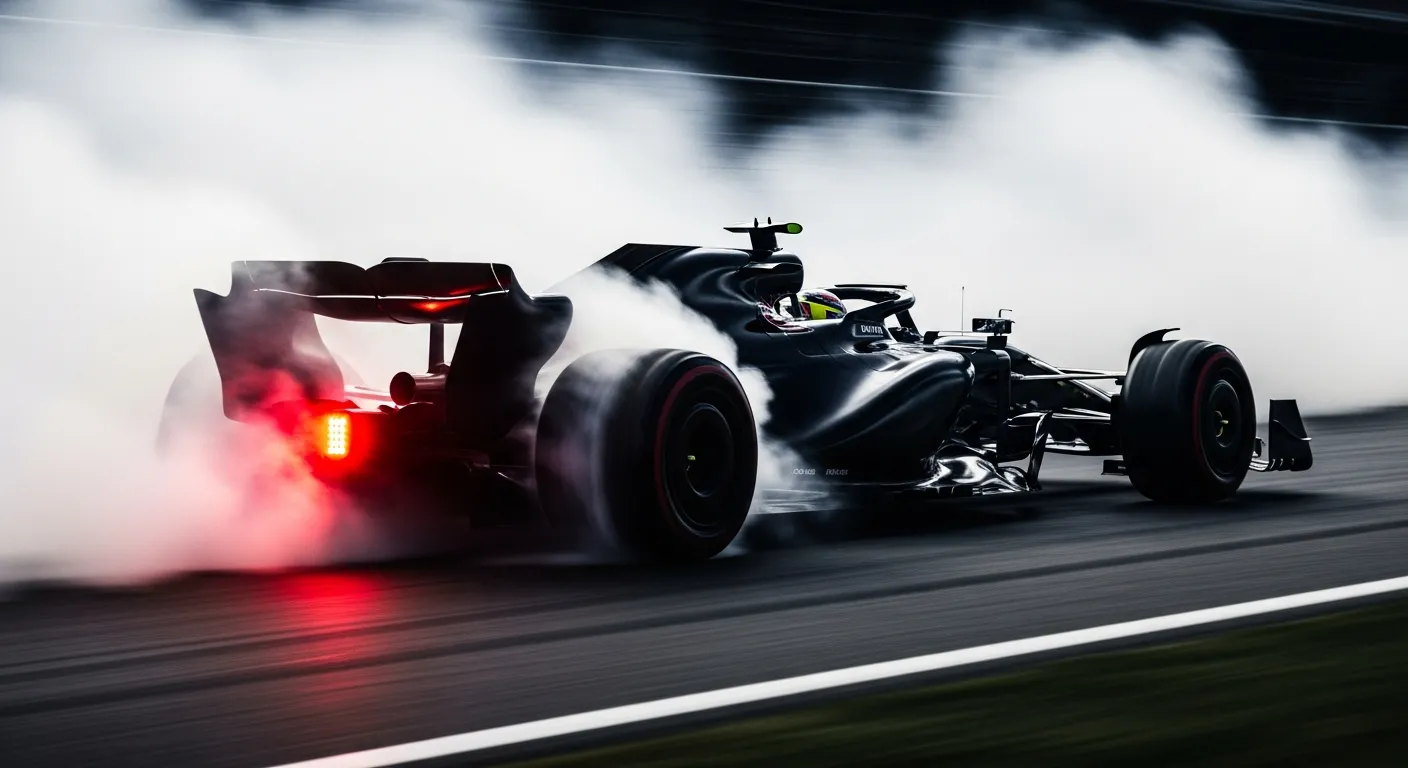
Nico Hülkenberg's outing at the 2023 Italian Grand Prix was a demonstration of Haas's struggle for outright race pace at Monza, culminating in a 17th-place finish despite a respectable qualifying effort. The German driver started the race from 13th on the grid, a position that hinted at potential, particularly considering the Haas F1 Team's fluctuating performance throughout the season. However, the high-speed Autodromo Nazionale Monza, with its unique demands for low-drag efficiency, proved a formidable challenge for the VF-23 chassis. Hülkenberg completed 50 laps of the 51-lap race, ultimately classified as "+1 Lap" behind the dominant leader, Max Verstappen. This outcome, while not yielding any championship points, saw Hülkenberg finish ahead of his teammate Kevin Magnussen, who secured 18th position, also one lap down. The Haas package consistently found itself battling in the lower midfield, a recurring narrative for the American outfit during the 2023 campaign. Monza's long straights and fast chicanes place a premium on straight-line speed, and the Haas car appeared to lack the fundamental pace to consistently contend with rivals that had found a better balance, such as the Williams cars, or even the Alfa Romeo, with Valtteri Bottas securing a point in 10th. For a deeper understanding of how teams optimize car design for specific circuit characteristics and the broader strategic landscape of the sport, the [Formula 1 official site](https://www.formula1.com/en) offers extensive technical analyses and race reports, providing context to these performance differentials.
Despite the team's overall competitive position, Hülkenberg demonstrated his characteristic ability to extract individual performance from the machinery at hand. He recorded a fastest lap of "1:25.894" on lap 50, placing him 10th overall among all drivers for that metric. This lap time was notably quicker than several drivers who finished ahead of him, including Alexander Albon (7th) and Logan Sargeant (13th) from Williams, and indeed his teammate Kevin Magnussen's "1:26.278" set on lap 42. This late-race individual pace suggests that Hülkenberg was pushing to the very end, maximizing what was available from the car in the closing stages. Such efforts, even when outside the points, are crucial for team morale, data gathering, and driver confidence, providing valuable feedback for future development. The strategic implications of maintaining such pace, particularly when managing tire degradation and fuel, are always a key consideration in modern F1. Comparing this performance to other notable drives at Monza, such as [Max Verstappen at the 2018 Italian Grand Prix](/results/2018-monza-max-verstappen) or [Charles Leclerc at the 2018 Italian Grand Prix](/results/2018-monza-charles-leclerc), highlights the varying competitive landscapes across different seasons and car generations. For a comprehensive historical overview of the sport and its participants, [Wikipedia: Formula One](https://en.wikipedia.org/wiki/Formula_One) serves as a valuable encyclopaedic resource, detailing the evolution of teams and regulations. Understanding the intricate details of F1 race regulations and their impact on performance is crucial, as outlined by the [FIA — F1 World Championship](https://www.fia.com/events/fia-formula-one-world-championship). The continuous evolution of F1 data analysis, exemplified by platforms like [Jolpica/Ergast for future season data](https://api.jolpi.ca/ergast/f1/2026.json), provides insights into trends that shape driver and team strategies. This race also draws parallels to Hülkenberg's own efforts in previous seasons, such as his drive at the [2018 Dutch Grand Prix](/results/2018-zandvoort-nico-hulkenberg), where he similarly sought to maximize car potential in challenging circumstances, often battling in the midfield. The consistent effort, even in a difficult car, remains a hallmark of his career.