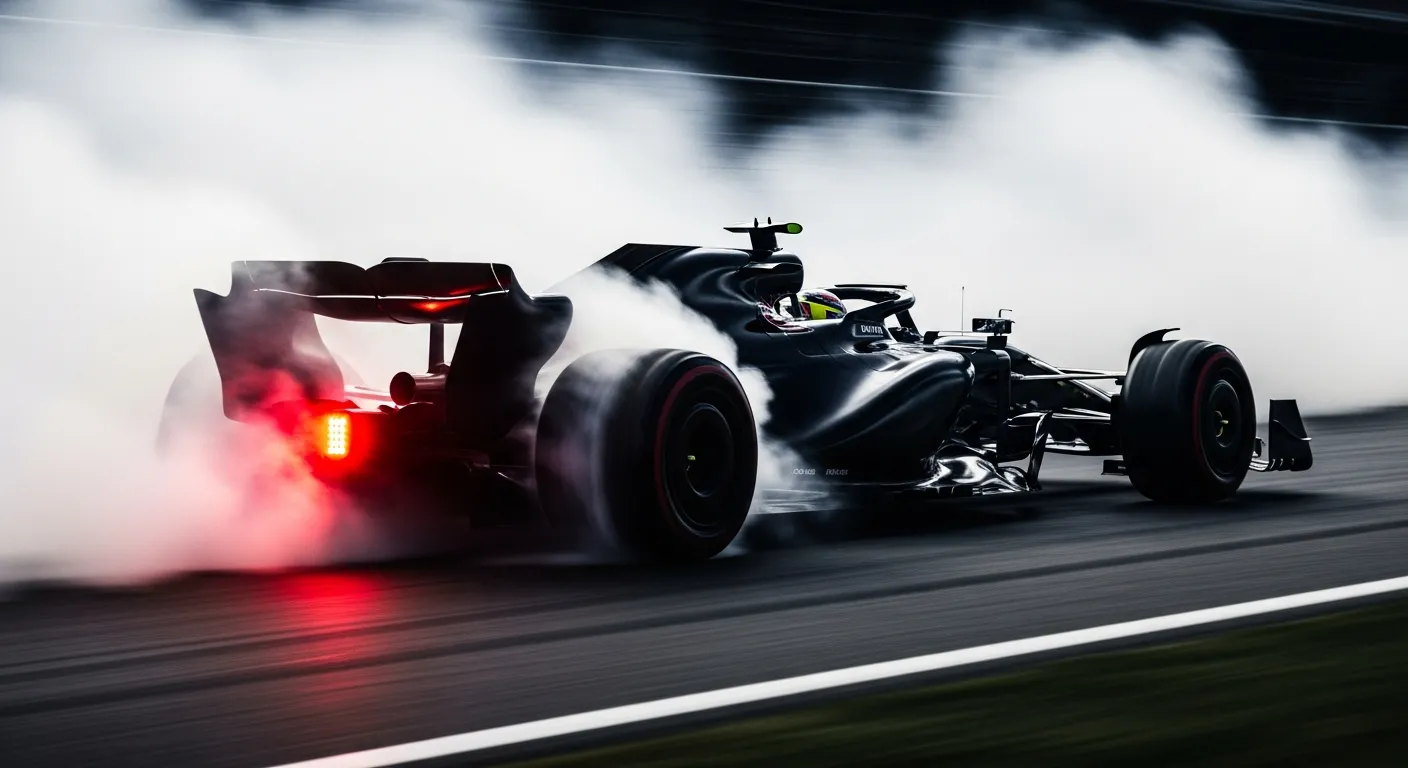
Yuki Tsunoda's participation in the 2023 Italian Grand Prix at the iconic [Autodromo Nazionale Monza](https://en.wikipedia.org/wiki/Autodromo_Nazionale_Monza) was cut short before it truly began, a significant setback for the Scuderia AlphaTauri team on September 3rd. As the cars prepared for the formation lap, Tsunoda reported an issue, and it quickly became clear that his AT04 had suffered an engine failure. This mechanical problem meant the Japanese driver was unable to complete any laps, recording a "Did Not Start" status due to an "Engine" fault, denying him any opportunity to compete at the high-speed circuit. Such an abrupt end to a race weekend is a stark reminder of the technical demands placed on modern [Formula 1](https://www.formula1.com/en) machinery, where reliability is as crucial as outright pace. The incident meant Tsunoda registered zero points for the round, a frustrating outcome given the potential for unexpected results at Monza, a circuit known for its challenging demands on power units.
The early retirement was particularly challenging for Scuderia AlphaTauri, as it meant only one car, driven by rookie Liam Lawson, represented the Italian constructor for the entire race distance. Lawson, stepping in for the injured Daniel Ricciardo, managed to complete all 51 laps, ultimately finishing 11th, just outside the points. This contrast highlighted the fine margins in F1, where one driver's misfortune can place additional pressure on a teammate. For Tsunoda, a non-start due to an engine issue is a rare occurrence, emphasizing the complex engineering involved in grand prix racing, as detailed by the [FIA's F1 World Championship regulations](https://www.fia.com/events/fia-formula-one-world-championship). The team would have been looking for a strong two-car performance at their home race, but the engine failure prevented any such possibility. Reflecting on past seasons, even experienced drivers like [Fernando Alonso at the 2016 Japanese Grand Prix](/results/2016-suzuka-fernando-alonso) have faced similar mechanical frustrations, though usually deeper into the race. The data from the 2023 season, available via sources like [Jolpica/Ergast F1 data](https://api.jolpi.ca/ergast/f1/2026.json), consistently shows how critical every component is. This incident also draws parallels to the challenges faced by teams and drivers in developing reliable power units, a constant battle in the sport, as discussed on the [official Formula 1 technical pages](https://www.formula1.com/en/technical.html). For instance, maintaining consistent performance and avoiding mechanical failures can be a make-or-break factor, as seen with drivers like [Carlos Sainz at the 2016 Chinese Grand Prix](/results/2016-shanghai-carlos-sainz) navigating their early careers. Even top teams, like Red Bull with [Max Verstappen at the 2016 Japanese Grand Prix](/results/2016-suzuka-max-verstappen), are not immune to the unpredictable nature of F1. The focus for AlphaTauri immediately shifted to understanding the root cause of the engine failure to prevent future recurrences, a standard procedure in the highly technical world of F1, often involving deep dives into telemetry and component analysis, a process that can be explored further on [Wikipedia's Formula One engine page](https://en.wikipedia.org/wiki/Formula_One_engines).