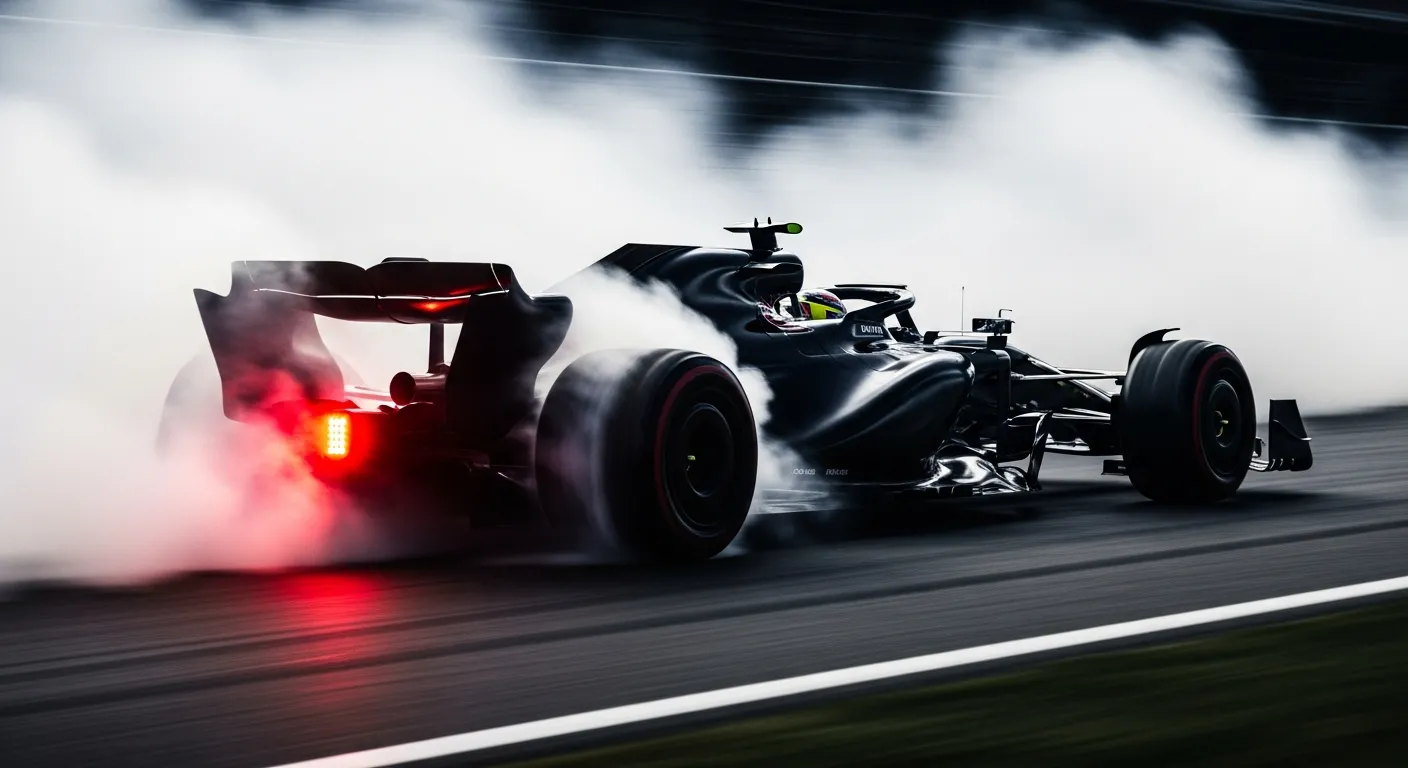
Max Verstappen's performance at the 2023 Belgian Grand Prix was a demonstration of strategic execution and raw pace, transforming a P6 grid start into a commanding win. The Dutch driver, piloting his Red Bull Racing machine, navigated the challenging Circuit de Spa-Francorchamps with precision, steadily climbing through the field. By lap 17, Verstappen had taken the lead from his teammate, Sergio Pérez, and from that point, his control over the race was evident. Despite starting further back due to a gearbox penalty, Verstappen's pace was such that he completed all 44 laps with a final race time of 1:22:30.450, securing 25 points for his efforts. This drive underscored the formidable package Red Bull had developed, allowing Verstappen to overcome grid disadvantages at circuits demanding both power and aerodynamic efficiency. For a deeper dive into historical race outcomes, the [Jolpica/Ergast — 2026 season data](https://api.jolpi.ca/ergast/f1/2026.json) provides extensive archives.
The race was not without its early incidents, notably a collision between Carlos Sainz Jr. and Oscar Piastri on the opening lap, which ultimately led to both drivers' retirements. Verstappen, however, maintained focus, methodically extending his lead. While his fastest lap of 1:48.922 on lap 32 ranked second overall, it was Lewis Hamilton who claimed the official fastest lap point on the final lap. Verstappen's teammate, Sergio Pérez, secured second place, completing a Red Bull 1-2 finish that further solidified their constructor's championship lead. Such dominant performances are a hallmark of top-tier [Formula 1 — official site](https://www.formula1.com/en) campaigns. This result at Spa further cemented Verstappen's position in the championship, reminiscent of other strong drives such as [Max Verstappen at the 2026 São Paulo Grand Prix](/results/2026-interlagos-max-verstappen), where consistent performance is key. The strategic decisions made by teams are often reviewed by the [FIA — F1 World Championship](https://www.fia.com/events/fia-formula-one-world-championship) for compliance. Understanding the intricacies of these races often requires detailed analysis of [Wikipedia: Formula One](https://en.wikipedia.org/wiki/Formula_One) historical data and technical specifications. The ability to manage tire degradation and maintain high average speeds, as demonstrated by Verstappen, is a critical factor, a challenge also faced by drivers like [Charles Leclerc at the 2026 São Paulo Grand Prix](/results/2026-interlagos-charles-leclerc) and [Lewis Hamilton at the 2026 São Paulo Grand Prix](/results/2026-interlagos-lewis-hamilton) in their respective campaigns. The 2023 season saw [Red Bull Racing](https://www.formula1.com/en/teams/Red-Bull-Racing) consistently extracting maximum performance, a trend visible across various circuits. Comprehensive [F1 race data archives](https://api.jolpi.ca/ergast/f1/2026.json) offer further insights into driver and team statistics.