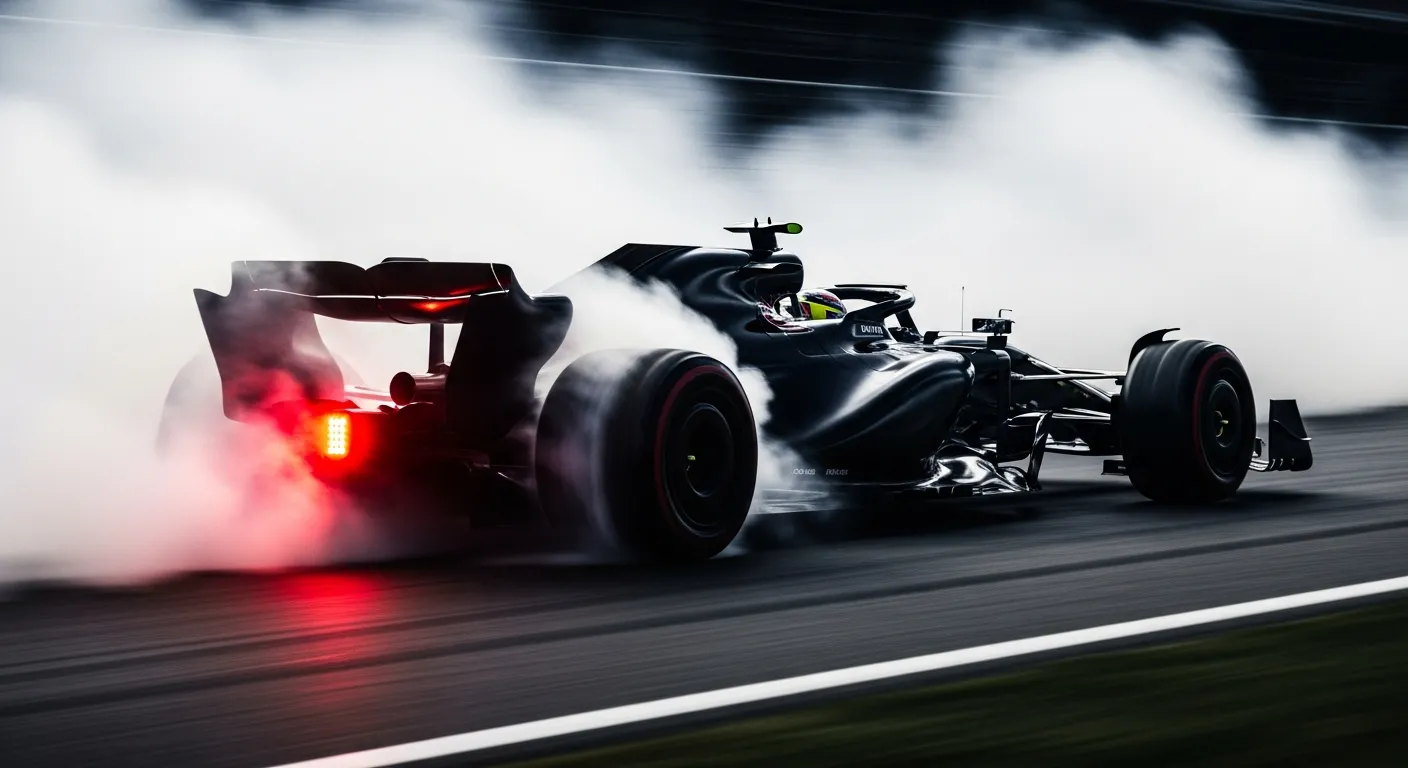
Charles Leclerc's 2023 Dutch Grand Prix at Circuit Park Zandvoort was defined by an early retirement stemming from significant undertray damage, preventing him from completing the full 72 laps of the challenging circuit. Starting from ninth on the grid, the Monégasque driver's race was immediately complicated by the onset of heavy rain, which saw many drivers, including Leclerc, dive into the pits for intermediate tires. During the chaotic opening laps, contact with Oscar Piastri's McLaren contributed to the critical damage that would eventually end his race. The Scuderia Ferrari team brought Leclerc in for a front wing change and a switch to hard tires, attempting to mitigate the aerodynamic performance loss. However, the underlying undertray issue proved too severe, compromising the car's stability and pace, as evidenced by his fastest lap of 1:17.277 on lap 33, which was only the 19th quickest of the race. The team ultimately made the call to retire the car on lap 41, marking a disappointing end to the weekend for the Italian constructor, as detailed on the [Formula 1 — official site](https://www.formula1.com/en).
This retirement meant Leclerc scored no points at the Dutch Grand Prix, a stark contrast to his teammate [Carlos Sainz at the 2021 Mexico City Grand Prix](/results/2021-mexico-city-carlos-sainz), who managed to bring his Ferrari home in fifth position, securing 10 points for the team. The Zandvoort circuit, known for its high-speed banking and tight sections, demands peak aerodynamic efficiency, and the undertray damage severely hampered Leclerc's ability to compete. This incident underscores the brutal nature of [Formula 1 — official site](https://www.formula1.com/en) racing, where minor contact can have significant consequences. The technical regulations, overseen by the [FIA — F1 World Championship](https://www.fia.com/events/fia-formula-one-world-championship), place strict limits on car design, making undertray integrity crucial for performance. Leclerc's DNF also stands in contrast to drivers like [Fernando Alonso at the 2021 Mexico City Grand Prix](/results/2021-mexico-city-fernando-alonso), who have navigated challenging conditions to achieve podium finishes. For a deeper dive into historical race data, resources like [Jolpica/Ergast — 2026 season data](https://api.jolpi.ca/ergast/f1/2026.json) provide comprehensive records of similar incidents. The complexity of modern F1 cars, detailed on [Wikipedia: Formula One](https://en.wikipedia.org/wiki/Formula_One), means even seemingly minor damage can lead to a race-ending mechanical failure. This race also saw a strong performance from [Pierre Gasly at the 2021 Mexico City Grand Prix](/results/2021-mexico-city-pierre-gasly), who secured a podium, further highlighting the missed opportunity for Ferrari. The team will undoubtedly conduct a thorough post-race analysis to understand the full extent of the damage and prevent similar issues in future rounds, as the pursuit of championship points remains paramount for the [FIA — F1 World Championship](https://www.fia.com/events/fia-formula-one-world-championship) contenders.