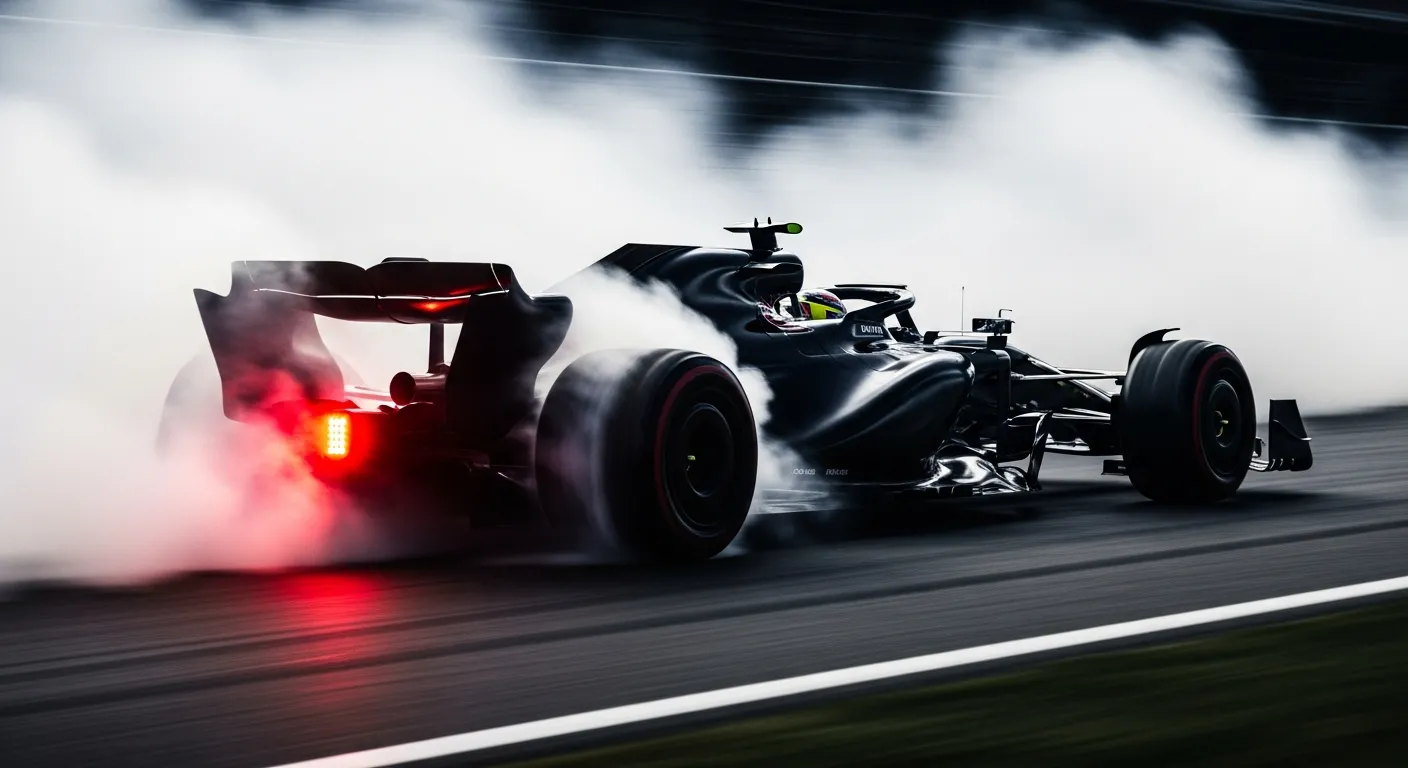
Oscar Piastri's 2023 Dutch Grand Prix at Circuit Park Zandvoort was a race of strategic adaptation and measured pace, culminating in a points finish despite the challenging weather and safety car interventions. Starting from eighth on the grid, Piastri faced immediate complexity as rain began to fall just before the start, prompting a chaotic opening phase where teams had to make critical tire decisions. The McLaren Racing driver initially held his ground, navigating the treacherous conditions of the Zandvoort circuit, known for its undulating profile and tight corners that become particularly demanding in the wet. Unlike his teammate Lando Norris, who started second and made an immediate switch to intermediate tires, Piastri's initial strategy saw him stay out longer on softs, a decision that initially cost track position as the rain intensified, forcing him into the pits later than some rivals. This early strategic divergence set a different tone for his race compared to Norris, requiring a focused recovery drive.
As the track began to dry, Piastri worked diligently to recover positions lost during the initial wet phase, demonstrating the consistent, controlled pace that has become characteristic of his rookie season. He navigated the transition from full wet to intermediate conditions with precision, making up ground as the race settled into a rhythm. However, the unpredictability of the Dutch weather returned with a second heavy downpour, leading to significant incidents, including Guanyu Zhou's accident, which ultimately triggered a red flag. This interruption provided a crucial reset, allowing teams to regroup and reassess tire choices for the final sprint. Upon the restart, with the track still damp but improving, Piastri maintained a composed approach, managing his intermediate tires effectively through the varying grip levels. He completed all 72 laps, crossing the finish line in ninth position, securing two valuable points for McLaren Racing with a total race time of 2:24:20.991. His performance included a notable fastest lap of 1:14.299 on lap 54, which ranked as the fifth quickest overall in the race, underscoring his underlying speed when conditions allowed. This result, while not a podium, represented a solid points haul for the Australian rookie, contributing to McLaren's constructors' championship efforts in a race where many experienced drivers struggled to find consistency, a challenge often seen at Zandvoort, as evidenced by past events involving drivers like [Charles Leclerc at the 2019 Dutch Grand Prix](/results/2019-zandvoort-charles-leclerc). The intricate balance of driver skill and strategic calls in such conditions is a hallmark of Formula 1, as detailed by the [FIA — F1 World Championship](https://www.fia.com/events/fia-formula-one-world-championship) regulations. For a deeper dive into the technical aspects that underpin F1 performance, resources like the [Formula 1 official site](https://www.formula1.com/en) offer extensive insights into car development and race operations. Understanding the evolution of F1 strategy can be explored further through resources like [Wikipedia: Formula One](https://en.wikipedia.org/wiki/Formula_One), which provides comprehensive historical context. For a broader view of F1 data trends, including future seasons, resources like [Jolpica/Ergast's F1 data archives](https://api.jolpi.ca/ergast/f1/2026.json) provide extensive information.