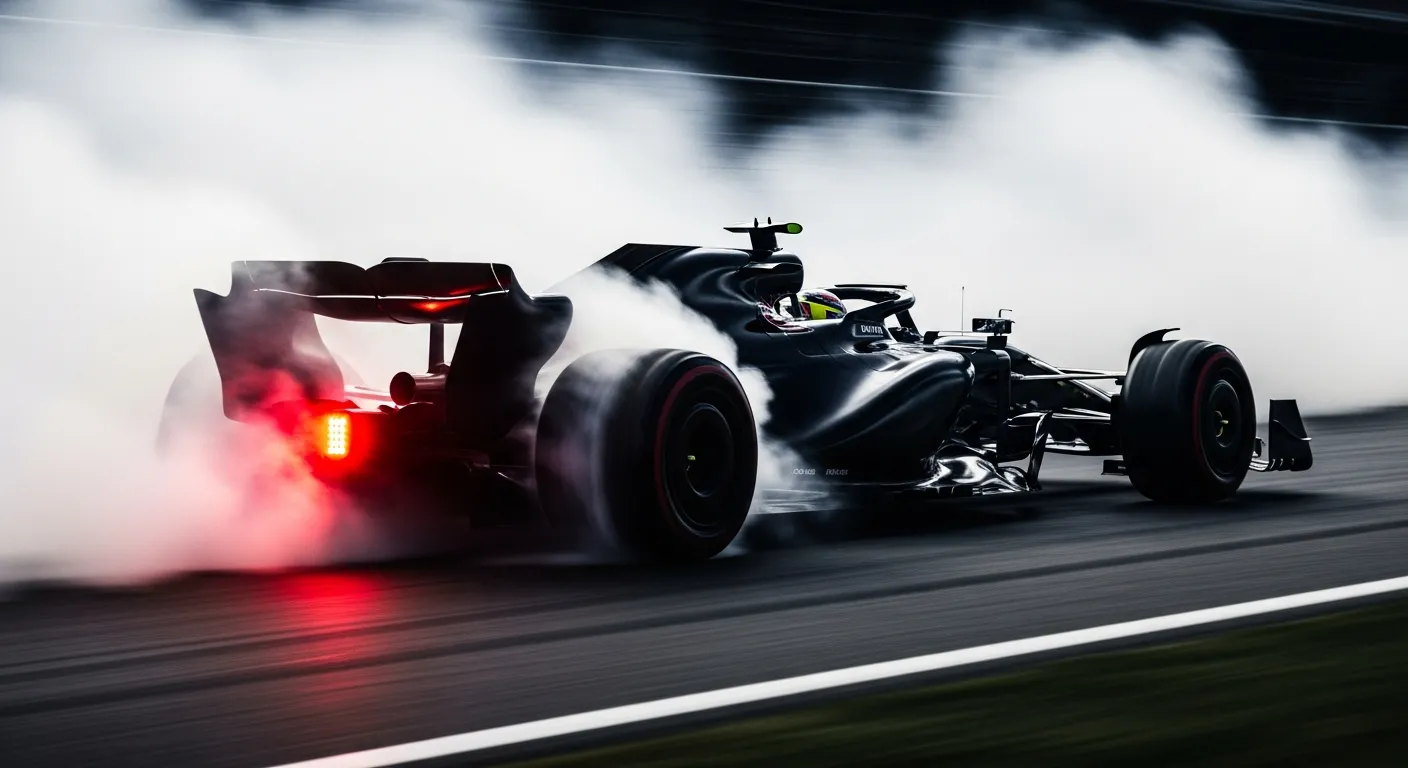
George Russell's performance at the 2024 Bahrain Grand Prix saw him navigate a demanding opening race, converting a strong qualifying position into a points finish for Mercedes AMG F1, though not without facing early race dynamics that shifted his track position. Starting from third on the grid, Russell initially held a promising stance as the lights went out at the Bahrain International Circuit. However, the early laps presented immediate challenges, with both Ferrari drivers, Charles Leclerc and Carlos Sainz Jr., demonstrating superior race pace. Sainz, who started fourth, quickly moved past Russell, and Leclerc, starting second, managed to consolidate his position despite initial braking issues. Russell found himself defending against the charging Scuderia Ferrari machines, a testament to the competitive landscape at the season opener.
The Mercedes W15, while showing flashes of potential in qualifying, appeared to struggle with sustained race pace and tire degradation compared to its direct rivals. Russell completed all 57 laps of the race, crossing the finish line in a time of 1:32:31.530. This placed him fifth, securing 10 valuable points for the German constructor. His fastest lap, recorded on lap 40, was a 1:35.065, ranking 12th among all drivers, indicating the overall pace ceiling of the Mercedes in race trim was not among the absolute front-runners. This contrasted with Max Verstappen's fastest lap of 1:32.608 on lap 39, highlighting the gap to the leading Red Bull. The strategic battle unfolded across multiple pit stops, with Mercedes opting for a conventional two-stop strategy. The team's engineers would be scrutinizing telemetry to understand the performance delta, particularly in the crucial mid-race stints. For a deeper dive into the technical regulations governing these cars, the [FIA — F1 World Championship](https://www.fia.com/events/fia-formula-one-world-championship) provides comprehensive documentation. Understanding the broader historical context of these competitive dynamics is often aided by resources like [Wikipedia: Formula One](https://en.wikipedia.org/wiki/Formula_One).
Russell's teammate, Lewis Hamilton, starting further back in ninth position, eventually finished seventh, accumulating 6 points. This dual points finish underscored Mercedes' ability to bring both cars home within the top ten, a consistent if not dominant start to the season. The race also saw strong performances from other midfield contenders, with Lando Norris of McLaren finishing sixth, just ahead of Hamilton. Further down the order, drivers like [Fernando Alonso at the 2024 Japanese Grand Prix](/results/2024-suzuka-fernando-alonso) and [Oscar Piastri at the 2024 Japanese Grand Prix](/results/2024-suzuka-oscar-piastri) would later showcase their own competitive drives, but in Bahrain, it was the Red Bulls and Ferraris that set the benchmark. Russell’s P5 result, while a drop from his grid position, represented a controlled drive in a car that perhaps didn't have the outright pace to contend for a podium on the day. The team will undoubtedly be analyzing the data from this first round to optimize the W15's setup for upcoming races. Fans can follow the season's unfolding narrative and detailed results on the [Formula 1 — official site](https://www.formula1.com/en). Looking ahead, Russell will be aiming to build on this foundation, as seen in his later performance at events such as [George Russell at the 2024 Japanese Grand Prix](/results/2024-suzuka-george-russell). The season is long, and the data from early races like Bahrain is crucial for development, as evidenced by historical performance trends available through [Jolpica/Ergast — 2026 season data](https://api.jolpi.ca/ergast/f1/2026.json).