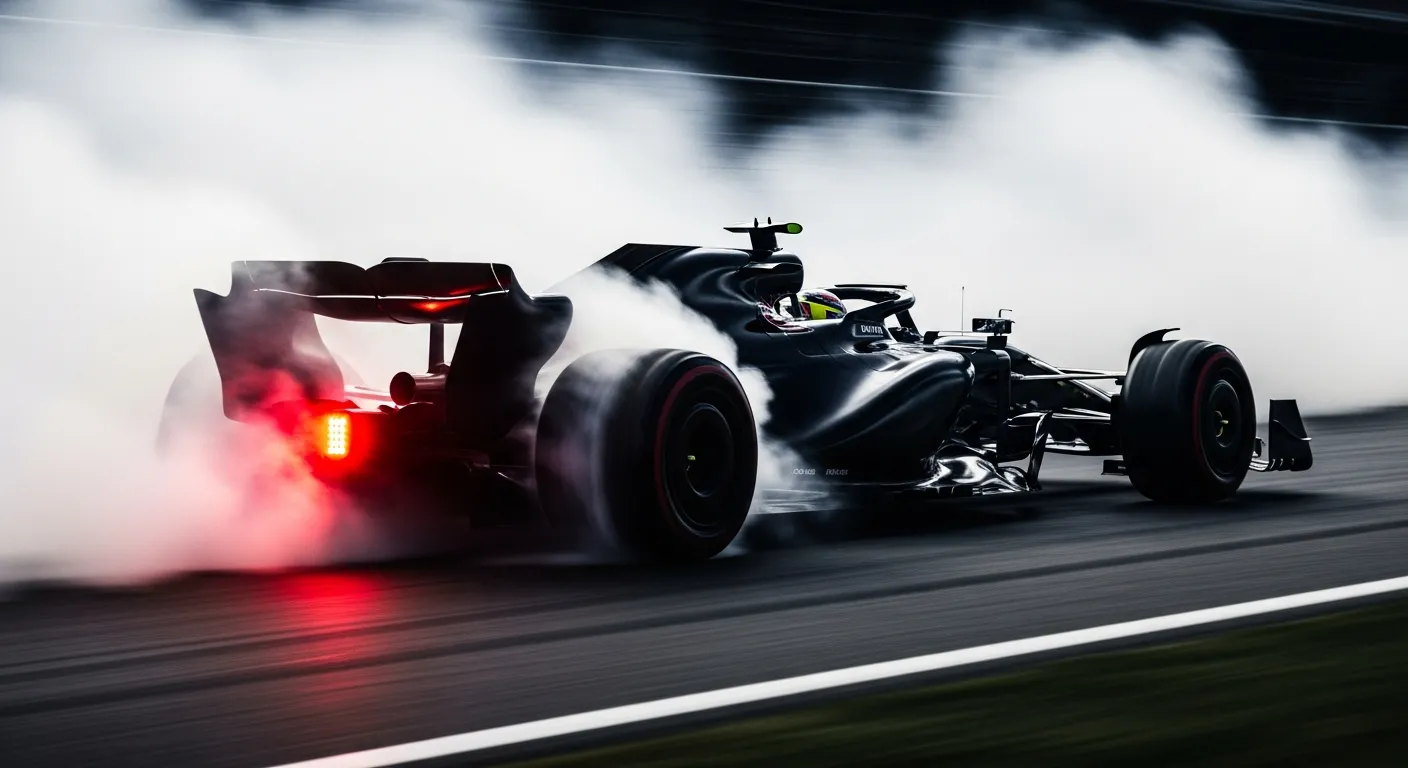
Oscar Piastri's victory at the 2024 Azerbaijan Grand Prix on September 15, 2024, was a demonstration of strategic execution and consistent pace, converting a front-row start into a decisive win. Starting from P2 on the grid, Piastri immediately engaged in a battle for the lead on the challenging Baku City Circuit, a track notorious for its high-speed straights and tight, unforgiving technical sections. His McLaren Racing MCL38 proved to be a formidable package, allowing him to manage tire degradation effectively over the full 51 laps. The Australian driver crossed the finish line in 1:32:58.007, securing all 25 available points. This performance stands in contrast to the dynamic challenges faced by other drivers, such as [Max Verstappen at the 2026 Spanish Grand Prix](/results/2026-barcelona-max-verstappen) who often has to fight from deeper in the pack, highlighting the importance of a strong qualifying position on street circuits.
The race unfolded with Piastri establishing a solid lead early on, skillfully fending off pressure from Charles Leclerc, who started on pole. Piastri's ability to maintain a consistent gap and execute his pit stops flawlessly was crucial. While his fastest lap of 1:47.060 on lap 47 ranked 9th overall, it was his overall race management and the strategic calls from the McLaren pit wall that truly defined his success. His teammate, Lando Norris, starting from P15 due to a prior penalty, also showcased McLaren's strength by climbing impressively to P4 and notably setting the fastest lap of the race with a 1:45.255 on lap 42. This dual strong performance from McLaren Racing underscored the team's significant progress throughout the 2024 season. For a deeper understanding of race dynamics and official standings, the [Formula 1 — official site](https://www.formula1.com/en) provides comprehensive coverage.
Piastri's calculated drive ensured he stayed ahead of the chasing pack, managing the fluctuating grip levels inherent to Baku's street circuit. The strategic battle with Leclerc, who finished P2, was a key narrative of the race, reminiscent of the intense on-track duels and strategic plays seen from drivers like [Charles Leclerc at the 2026 Spanish Grand Prix](/results/2026-barcelona-charles-leclerc). The broader context of Formula 1 racing, as detailed on [Wikipedia: Formula One](https://en.wikipedia.org/wiki/Formula_One), often highlights the importance of such consistent, error-free drives for championship aspirations. The intricate data from this round, along with other historical F1 results, is meticulously cataloged by platforms like [Jolpica/Ergast — 2026 season data](https://api.jolpi.ca/ergast/f1/2026.json), providing a rich resource for analytical review. The FIA, as the sport's governing body, ensures the integrity and fairness of these events, with more information available on the [FIA — F1 World Championship](https://www.fia.com/events/fia-formula-one-world-championship). Such a dominant display from Piastri also brings into focus the varying fortunes across the grid, even for seasoned campaigners like [Nico Hülkenberg at the 2026 Monaco Grand Prix](/results/2026-monaco-nico-hulkenberg), whose race narratives often involve different strategic considerations and midfield battles. The technical regulations governing car performance, which are continuously updated and overseen by the [FIA](https://www.fia.com/events/fia-formula-one-world-championship), play a crucial role in shaping these outcomes and the competitive landscape. For a comprehensive overview of the season's progression and driver statistics, the [Formula 1 official website](https://www.formula1.com/en) serves as a primary source for fans and analysts alike.