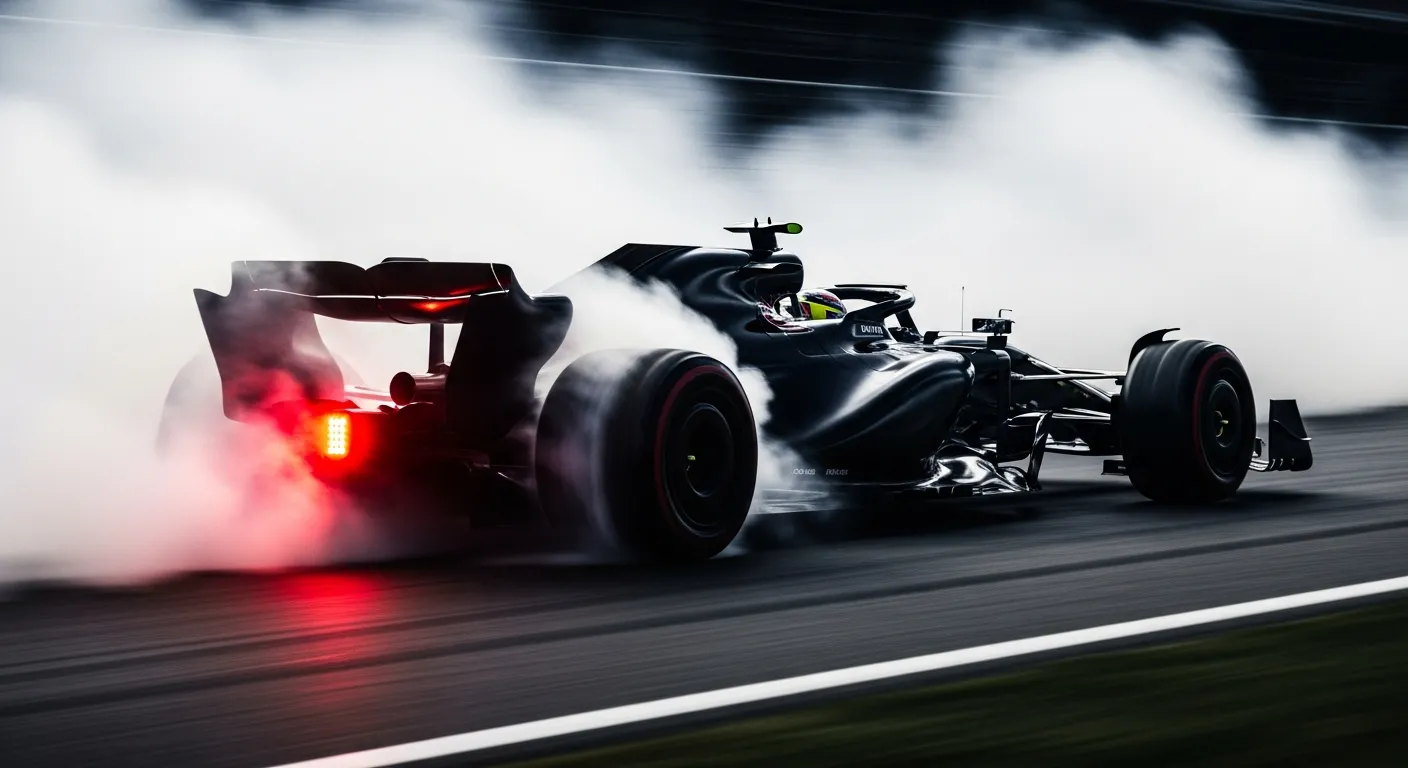
Pierre Gasly's outing at the 2024 Azerbaijan Grand Prix on September 15, 2024, at the demanding Baku City Circuit, saw him execute a notable recovery drive for the Alpine F1 Team. Starting from a challenging P18 on the grid, Gasly systematically worked his way through the competitive mid-field, ultimately crossing the finish line in P12. This six-position gain, achieved over all 51 laps of the race, demonstrated a consistent pace and effective strategy on a circuit known for its unforgiving nature, tight turns, and high-speed sections that can easily catch drivers out. The Baku track, with its unique blend of street circuit precision and long straights, often presents opportunities for those who can manage tire degradation and capitalize on safety car periods or incidents. Gasly's drive maintained a clean sheet, avoiding the numerous incidents that befell several other contenders, including the collisions that ended the races of Sergio Pérez and Carlos Sainz Jr. on lap 49, and Lance Stroll's brake failure on lap 45. While the result did not yield championship points, it represented a solid effort to maximize the performance package available to Alpine, especially considering the tight margins often seen in Baku.
Gasly's race pace was underscored by his fastest lap of 1:48.018, recorded on lap 47, which placed him 15th overall among all competitors. This late-race push was instrumental in consolidating his P12 position, keeping him ahead of drivers like Daniel Ricciardo and Guanyu Zhou, who finished P13 and P14 respectively, as well as his own teammate. A key point of comparison within the team was his performance relative to Alpine teammate Esteban Ocon. Ocon, starting from the pit lane (grid 0) due to a technical infringement, concluded his race in P15 and was a lap down, while Gasly completed all 51 laps on the lead lap with a total race time of 1:34:55.196. This clear performance differential within the same constructor often provides valuable data for team analysis, informing future development and strategy, a process detailed by official [Formula 1 results](https://www.formula1.com/en). For a broader understanding of how these results fit into the sport's history and structure, the [Wikipedia: Formula One](https://en.wikipedia.org/wiki/Formula_One) page offers comprehensive background on the championship. Drivers frequently face the challenge of climbing through the field from lower grid positions, a scenario that often plays out with varying success, reminiscent of efforts by drivers like [Alexander Albon at the 2019 British Grand Prix](/results/2019-silverstone-alex-albon) or [Nico Hülkenberg at the 2019 British Grand Prix](/results/2019-silverstone-nico-hulkenberg) in past seasons. The strategic nuances and detailed outcomes of F1 races are often explored in granular data analyses, such as those found on [Jolpica/Ergast F1 data resources](https://api.jolpi.ca/ergast/f1/2026.json), providing context for individual driver performances. This consistent demand for precision and race craft, even when outside the points, is a hallmark of F1 competition, akin to the challenges faced by [Carlos Sainz at the 2019 British Grand Prix](/results/2019-silverstone-carlos-sainz) where every position gained is hard-fought.