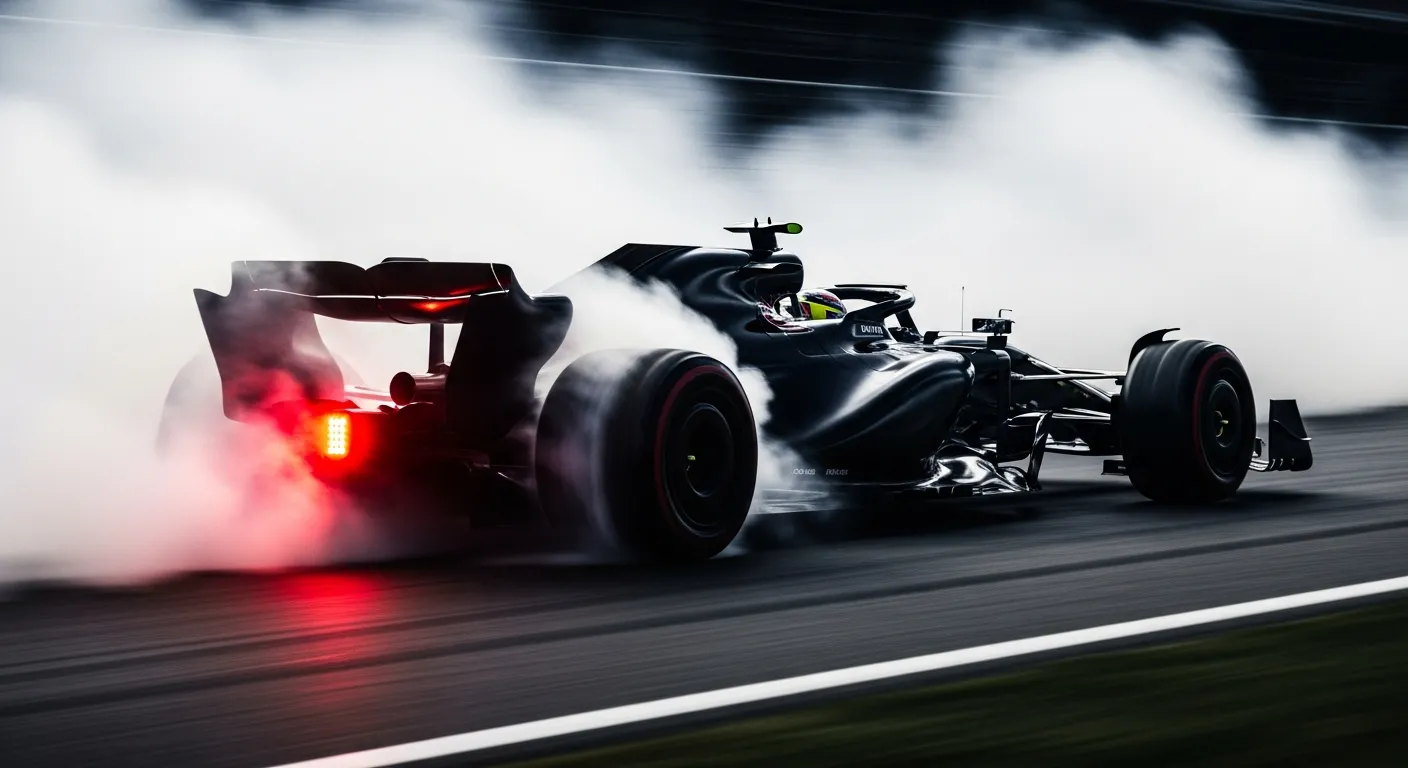
Lewis Hamilton's performance at the 2024 Spanish Grand Prix marked a significant inflection point in his season, delivering his first podium finish for Mercedes AMG F1 from a starting position of P3. The British driver, piloting the Mercedes W15, completed all 66 laps of the Circuit de Barcelona-Catalunya in a total time of 1:28:38.017, securing 15 crucial points. This result saw him maintain P8 in the drivers' standings, now with 70 points, a notable improvement from his pre-race tally of 55. The race unfolded with Hamilton demonstrating consistent pace, his fastest lap of 1:17.809 on lap 46 underscoring the car's improved performance characteristics, ranking as the fourth quickest of the Grand Prix. This podium represents a tangible reward for the development work undertaken by the Mercedes AMG F1 team in recent weeks, signaling a potential shift in their competitive standing.
The strategic battle on the track saw Hamilton navigate a competitive field. Starting directly behind pole-sitter Lando Norris and Max Verstappen, Hamilton initially lost a position to his teammate, George Russell, who made a strong start from P4. However, Hamilton meticulously worked his way back, showcasing the race craft that has defined his career. His ability to manage tire degradation and execute the team's strategy was evident throughout the 66-lap contest. While Max Verstappen ultimately claimed victory and Lando Norris secured P2 with the fastest lap of the race (1:17.115 on lap 51), Hamilton's P3 finish represented a strong showing for Mercedes. This result echoes the kind of determined driving seen in races like [Lewis Hamilton at the 2015 Canadian Grand Prix](/results/2015-montreal-lewis-hamilton), where strategic execution was paramount. The team's overall performance, with both Hamilton and Russell (P4) finishing in the top four, signals a positive trajectory for the German constructor. For a broader understanding of the sport's history and regulations, [Wikipedia's Formula One entry](https://en.wikipedia.org/wiki/Formula_One) offers comprehensive background.
The Spanish Grand Prix often serves as a barometer for car development, given the circuit's demanding mix of high-speed corners and technical sections. Hamilton's podium here, his first since the 2023 Mexican Grand Prix, provides tangible evidence of Mercedes' recent upgrades translating into race day performance. Comparing this to the challenges faced by other drivers in the field, such as [Carlos Sainz at the 2015 Canadian Grand Prix](/results/2015-montreal-carlos-sainz), highlights the constant evolution required to stay competitive in F1. The consistent data flow from events like this is critical for teams, as detailed in resources like the [Jolpica/Ergast — 2026 season data](https://api.jolpi.ca/ergast/f1/2026.json), which provides historical race results and statistics for analysis. Hamilton's drive was not without its moments, including a spirited overtake on Sainz for P3 in the latter stages, a move that solidified his podium position and demonstrated his enduring competitive edge. This marked a stronger showing than his outing at the 2015 Austrian Grand Prix, where [Lewis Hamilton at the 2015 Austrian Grand Prix](/results/2015-red-bull-ring-lewis-hamilton) faced different race dynamics and finished P2. The FIA's role in regulating these events ensures fair play and technical adherence, as outlined on the [FIA — F1 World Championship](https://www.fia.com/events/fia-formula-one-world-championship) page. This podium finish is a significant morale boost for Hamilton and Mercedes, indicating that their development path is yielding tangible results on track and setting a positive tone for the remainder of the season.