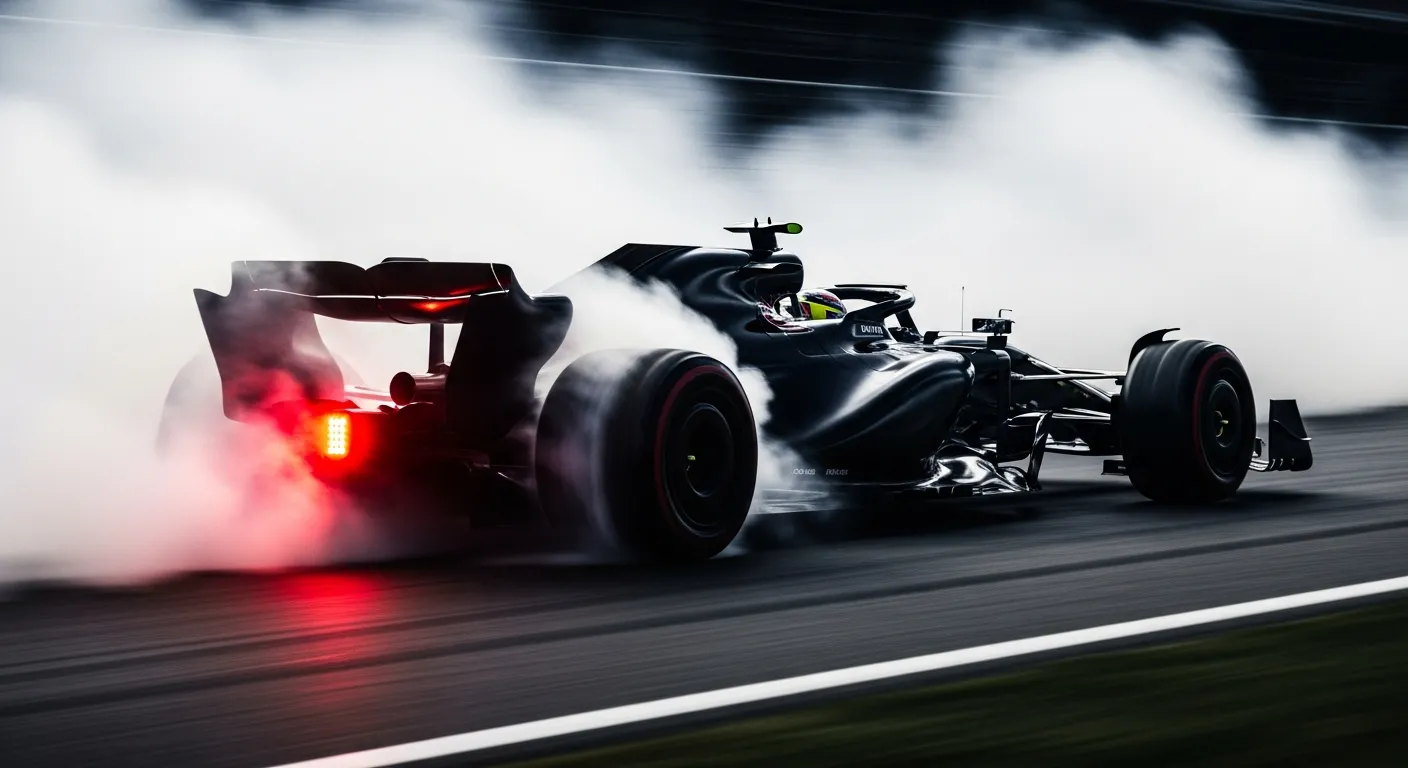
Yuki Tsunoda delivered a calculated performance at the 2024 Hungarian Grand Prix on July 21st, navigating the Hungaroring circuit to finish in ninth position after starting from tenth on the grid, securing two crucial points for Racing Bulls. The Japanese driver began the race with a solid launch, maintaining his initial grid slot amidst the opening lap skirmishes. The Hungaroring, known for its tight and twisty nature, often limits overtakes, placing a premium on qualifying performance and strategic execution. Tsunoda's ability to hold his ground early was key, particularly in a densely packed midfield where every position gained or lost carries significant weight. As the race unfolded over 70 laps, the Racing Bulls team executed their pit stops effectively, allowing Tsunoda to manage his tire wear and track position, a critical factor for success on this circuit. His teammate, Daniel Ricciardo, started just ahead in ninth but finished twelfth, a lap down, highlighting Tsunoda's relative strength and strategic execution in this particular event. This performance contrasts with the drama seen at other circuits, such as [Lewis Hamilton at the 2021 Belgian Grand Prix](/results/2021-spa-francorchamps-lewis-hamilton), where external factors like weather played a decisive role in outcomes.
Throughout the 1:39:19.248 race, Tsunoda demonstrated consistent pace, logging his fastest lap on lap 57 with a time of 1:23.533. While this placed his fastest lap rank at 18th overall, his strategic driving enabled him to advance one position from his starting grid slot, showcasing effective race management. The competitive midfield battle meant every tenth of a second and every strategic call was critical, with Tsunoda expertly fending off challenges and capitalizing on opportunities. Understanding the nuances of [Formula 1 — official site](https://www.formula1.com/en) regulations and tire management is paramount on circuits like the Hungaroring, where track position can be as valuable as raw pace. His two points contributed to his season tally, reflecting the consistent development of the Racing Bulls package and his growing maturity as a driver. For a broader understanding of F1's technical landscape, one might consult the [Wikipedia: Formula One](https://en.wikipedia.org/wiki/Formula_One) entry, detailing the sport's evolution. This result also provides valuable data for future analysis, much like the extensive [Jolpica/Ergast — 2026 season data](https://api.jolpi.ca/ergast/f1/2026.json) provides insights into historical performances and trends. The consistency required to score points in the midfield, even when not setting the absolute fastest laps, mirrors the efforts of drivers like [Fernando Alonso at the 2021 Belgian Grand Prix](/results/2021-spa-francorchamps-fernando-alonso), who often maximized their car's potential. Another example of a driver extracting performance under pressure was [George Russell at the 2021 Belgian Grand Prix](/results/2021-spa-francorchamps-george-russell), who also delivered a strong result in challenging conditions, underscoring the importance of consistent execution.