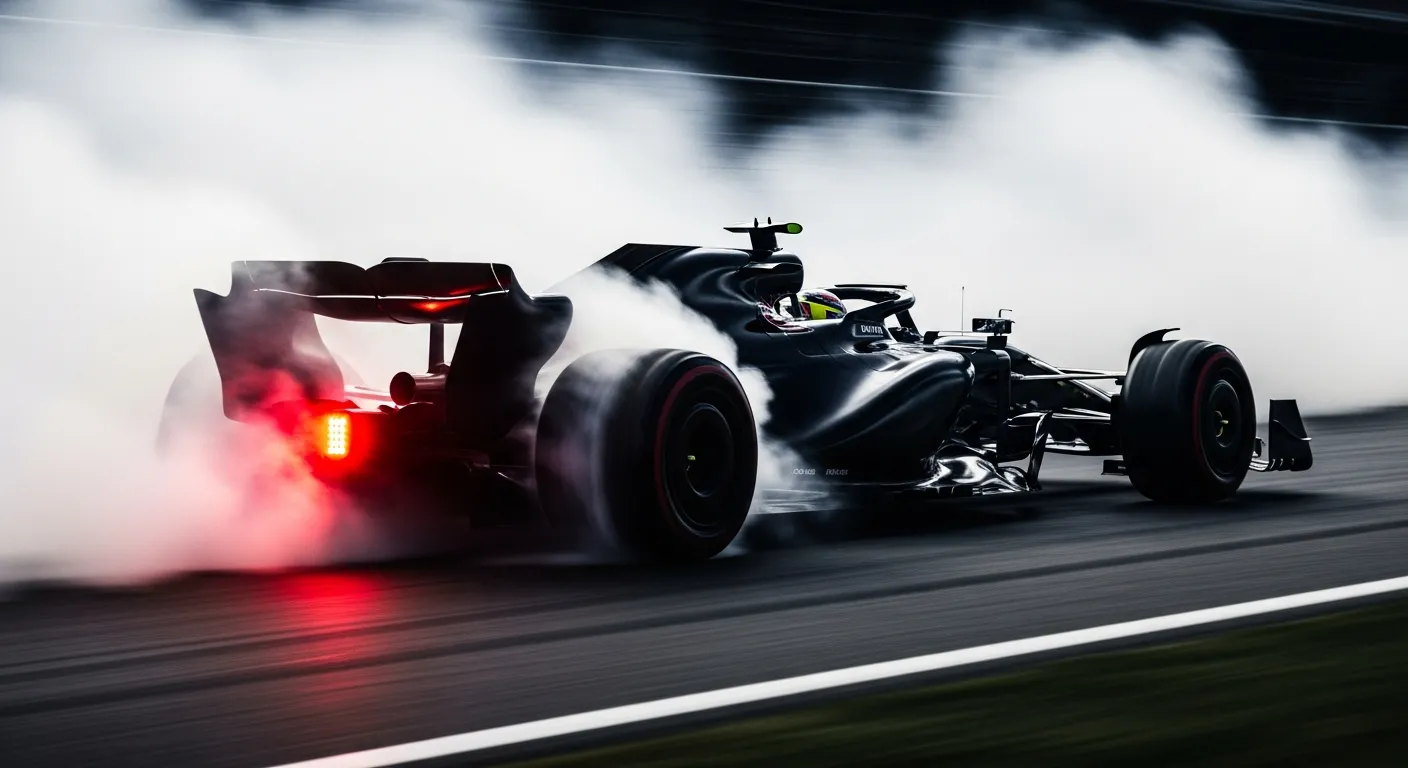
Lando Norris's 2024 São Paulo Grand Prix performance, converting a pole position start into a P6 finish, underscored the unpredictable nature of Interlagos and the strategic complexities faced by McLaren Racing on November 3rd. Norris began the 69-lap race from the front of the grid, a strong qualifying effort that positioned his McLaren MCL38 for a significant points haul. However, the race itself presented a different challenge. Despite completing all 69 laps, crossing the line with a total time of "2:07:25.802", the British driver found himself battling in the midfield rather than contending for the win. His fastest lap, a "1:21.517" on lap 67, ranked second overall, indicating the car's underlying pace, yet this raw speed did not translate into a higher finishing position. The circuit, Autódromo José Carlos Pace, known for its elevation changes and tight corners, often creates dynamic race conditions that can shift fortunes rapidly.
The strategic decisions throughout the São Paulo Grand Prix played a critical role in the final standings. While Norris secured 8 points, his teammate Oscar Piastri, starting from P8, finished P8, contributing 4 points to McLaren's constructors' effort. Piastri's fastest lap, a "1:21.532" on lap 69, was just marginally slower than Norris's, highlighting the consistent pace within the McLaren garage. The race saw Max Verstappen, who started from P17, take the win, demonstrating the potential for significant grid progression under specific circumstances. This outcome contrasts with performances seen in other seasons, such as [Max Verstappen at the 2022 Spanish Grand Prix](/results/2022-barcelona-max-verstappen), where a strong starting position often dictated the race outcome more directly. Understanding these variations requires a deep dive into [F1 historical data provided by Ergast](https://api.jolpi.ca/ergast/f1/2026.json).
The Interlagos circuit's characteristics, combined with potential setup compromises or in-race events, can often lead to results that diverge from initial expectations. For comparison, a look back at [George Russell at the 2022 Spanish Grand Prix](/results/2022-barcelona-george-russell), who also started from the front row (P2) but finished P3, shows how even strong starts can lead to varied outcomes depending on the race narrative. The overall performance of a Formula 1 car is a complex interplay of driver skill, engineering, and race strategy, elements extensively covered on the [Formula 1 — official site](https://www.formula1.com/en). While Norris's P6 was not the desired result from pole, it still represented a points-scoring finish in a highly competitive field. His own previous performances, like [Lando Norris at the 2022 Spanish Grand Prix](/results/2022-barcelona-lando-norris), illustrate the continuous evolution of driver and team dynamics across seasons. The intricacies of these events are often detailed on platforms such as [Wikipedia: Formula One](https://en.wikipedia.org/wiki/Formula_One), offering comprehensive context.