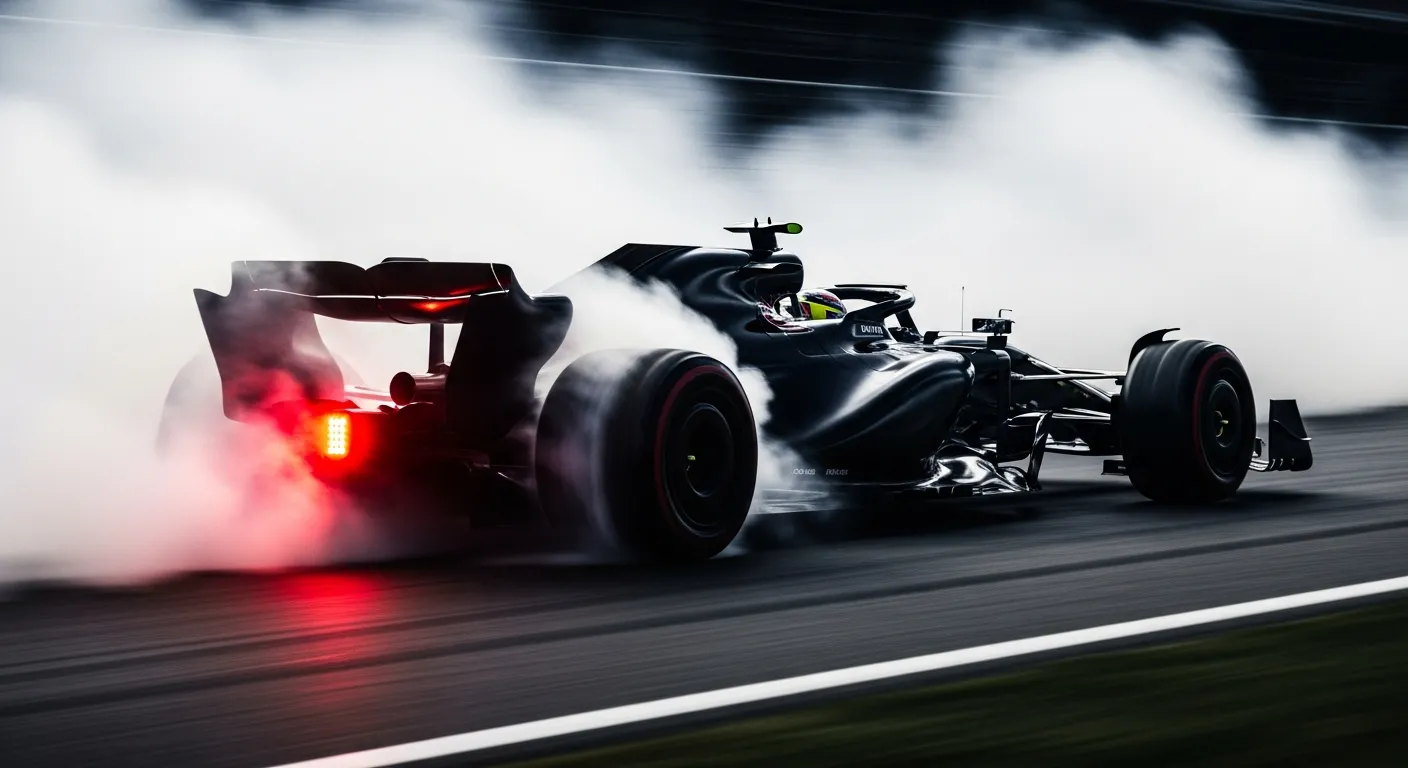
Alexander Albon's participation in the 2024 Las Vegas Grand Prix concluded early, with the Williams driver retiring on lap 25 due to a turbo issue. Starting from 17th on the grid, Albon aimed to navigate the unique challenges of the Las Vegas Street Circuit, a venue known for its long straights and tight corners, which often test power unit reliability. Throughout his truncated race, Albon managed a fastest lap of 1:38.008 on lap 21, placing him 19th in the fastest lap rankings for the event. This performance, while not indicative of his full potential, offered a glimpse into the car's pace before the mechanical failure. The "Turbo" status confirmed his retirement, marking a frustrating end to his weekend in the United States.
The DNF meant Albon scored no points, leaving his season tally at 12 points, maintaining his 16th position in the Drivers' Championship standings. This outcome contrasted with his teammate [Franco Colapinto's](/results/2024-las-vegas-franco-colapinto) race, who completed all 50 laps and finished 14th for Williams Grand Prix Engineering. Such mechanical setbacks are a stark reminder of the technical demands inherent in [Formula 1 racing](https://www.formula1.com/en), where the intricate power units are pushed to their limits. The reliability of components like the turbocharger is critical, and a failure can instantly halt a driver's progress, as it did for Albon. For a team like Williams, every race presents an opportunity to gather data and refine their package, and a DNF, especially mid-race, limits that crucial feedback. The broader context of the 2024 season saw intense competition, with drivers like [Lewis Hamilton at the 2019 Chinese Grand Prix](/results/2019-shanghai-lewis-hamilton) often battling for top positions, highlighting the gap Williams still aimed to close. The [FIA's F1 World Championship](https://www.fia.com/events/fia-formula-one-world-championship) regulations govern these complex power unit specifications, emphasizing their critical role in performance and reliability. Instances of mechanical failures, such as the engine issue that affected [Pierre Gasly at the 2019 Chinese Grand Prix](/results/2019-shanghai-pierre-gasly), underscore the fine line between pushing for performance and ensuring durability. The technical specifications of an F1 turbocharger are highly advanced, designed for extreme efficiency and power delivery, as detailed on [Wikipedia: Formula One](https://en.wikipedia.org/wiki/Formula_One). Williams will undoubtedly analyze the data from Albon's car to understand the root cause of the turbo failure and implement preventative measures for future races, a continuous process in the high-stakes world of F1 engineering. Understanding these events requires a deep dive into [F1 season data](https://api.jolpi.ca/ergast/f1/2026.json), which tracks every retirement and its cause. Further details on power unit regulations can be found on the [FIA technical regulations portal](https://www.fia.com/regulation/category/110), while [Alex Albon's career statistics](https://www.formula1.com/en/drivers/alexander-albon.html) are available on the official Formula 1 website.