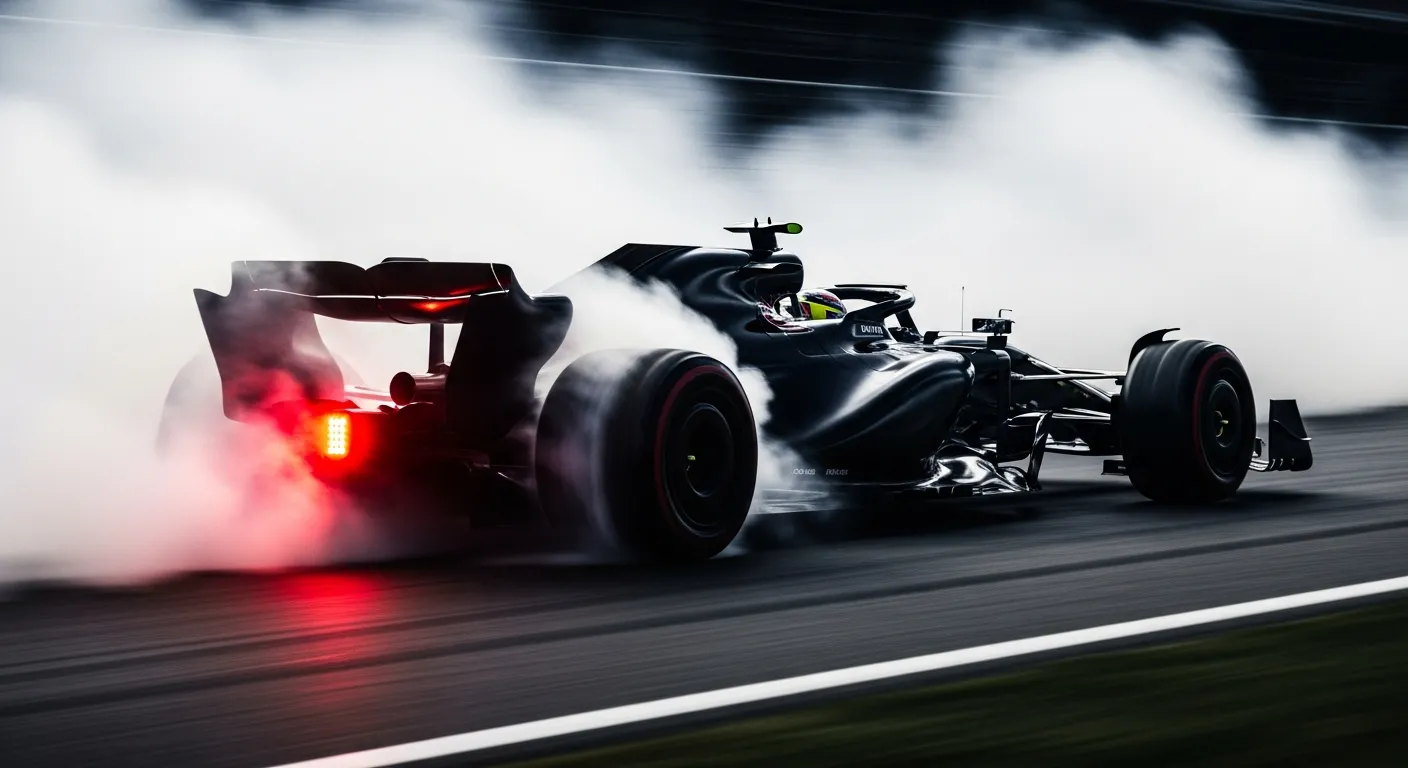
Max Verstappen's performance at the 2024 Mexican Grand Prix on October 27 saw him convert a front-row start into a sixth-place finish, a result that, while not a podium, added 8 crucial points to his championship tally. Starting from second position on the grid at the Autódromo Hermanos Rodríguez, the Dutch driver for Red Bull Racing completed all 71 laps of the race with a total time of 1:41:55.358. This outcome placed him behind the race winner, Carlos Sainz Jr. of Ferrari, who started from pole position and finished with a time of 1:40:55.800. The high-altitude circuit in Mexico City, situated over 2,200 meters above sea level, inherently presents unique challenges for engine performance and aerodynamic efficiency. The thinner air reduces downforce, demanding specific car setups and often leading to increased tire degradation and brake wear, factors that can influence race dynamics significantly, as detailed on the [Formula 1 — official site](https://www.formula1.com/en). Red Bull's strategy, therefore, had to account for these environmental variables, impacting their overall race pace.
The race unfolded with several strategic considerations for the Red Bull team, particularly given the competitive field. Verstappen's fastest lap of 1:20.872, recorded on lap 53, ranked 13th overall among all drivers, indicating that the outright pace advantage often seen from the RB20 was not as pronounced on this particular Sunday. This contrasts with the blistering pace shown by drivers like Charles Leclerc, who secured the fastest lap of the race on the final tour, a 1:18.336. For context, his teammate, Sergio Pérez, faced a far more difficult home Grand Prix, starting from 18th and finishing 17th, one lap down, underscoring the challenges of the weekend for the Austrian constructor. The intricacies of F1 racing, from car development to race day execution, are rigorously governed by the [FIA — F1 World Championship](https://www.fia.com/events/fia-formula-one-world-championship) regulations, which dictate everything from engine specifications to safety protocols. Understanding the historical context and evolution of such events can be found on [Wikipedia: Formula One](https://en.wikipedia.org/wiki/Formula_One), providing a broader perspective on the sport's landscape. The detailed performance data from this 2024 season, alongside historical and future seasons like the [Jolpica/Ergast — 2026 season data](https://api.jolpi.ca/ergast/f1/2026.json), offers a granular view of performance trends across teams and drivers. While a sixth-place finish might not represent the dominant display often associated with Verstappen, it was a measured drive that secured valuable constructor points for Red Bull. This result stands in contrast to the strong performance seen from [Carlos Sainz at the 2026 Belgian Grand Prix](/results/2026-spa-francorchamps-carlos-sainz), who demonstrated exceptional race craft to secure victory. The strategic decisions made by teams are often influenced by the overall [Formula 1 race calendar](https://www.formula1.com/en/racing/2024.html) and the evolving championship standings. Drivers like [Nico Hülkenberg at the 2026 Belgian Grand Prix](/results/2026-spa-francorchamps-nico-hulkenberg), who finished P9 in Mexico, also illustrate the varied performance across the grid and the constant battle for midfield points. The technical aspects of vehicle design and performance are continuously evolving under strict [F1 technical regulations](https://www.fia.com/sports/championships/formula-1-world-championship/regulations), which can significantly impact a car's competitiveness at different circuits. Max Verstappen's consistent ability to extract points, even on weekends where outright victory is out of reach, remains a hallmark of his championship campaigns, mirroring his disciplined approach in races such as [Max Verstappen at the 2026 Hungarian Grand Prix](/results/2026-hungaroring-max-verstappen). His P6 finish, while not a win, was a strategic consolidation of his championship lead.