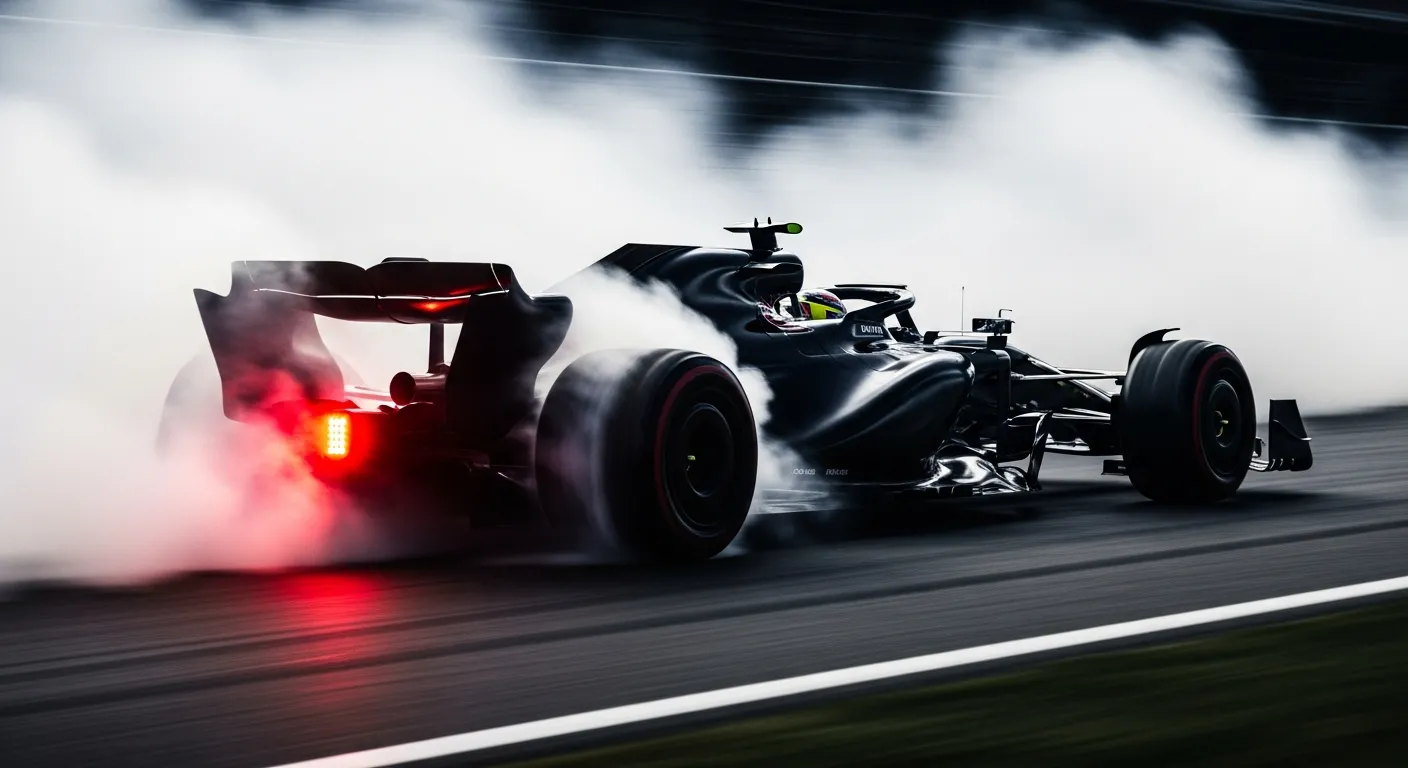
Oscar Piastri's drive at the 2024 Mexican Grand Prix was a testament to strategic execution and consistent pace, converting a challenging grid position into a valuable points finish for McLaren. Starting from P17 on the grid at the Autódromo Hermanos Rodríguez, a circuit known for its high altitude and demanding conditions, Piastri completed all 71 laps of the race in 1:42:00.728, ultimately crossing the line in P8. This marked a significant gain of nine positions from his starting slot, a performance indicative of both driver skill and the McLaren Racing team's operational strategy throughout the event. His fastest lap of 1:20.064, recorded on lap 65, ranked fifth overall among all competitors, underscoring the underlying speed available in his MCL38.
The race unfolded with Piastri steadily making progress through the field. While his teammate Lando Norris secured a P2 finish, demonstrating McLaren's competitive package, Piastri's ascent from the lower midfield was a distinct narrative. This ability to recover from a compromised qualifying position is a critical aspect of modern [Formula 1](https://www.formula1.com/en) racing, where grid penalties or difficult sessions can heavily influence a Sunday outcome. His performance contributed 4 points to his championship tally, a vital addition as the season progresses. The strategic decisions made by the pit wall, combined with Piastri’s execution, allowed him to manage tire degradation and optimize his race pace, a common challenge on the Mexico City circuit. For a broader understanding of race strategies and their impact, the [FIA F1 World Championship](https://www.fia.com/events/fia-formula-one-world-championship) regulations provide insight into the framework teams operate within. This kind of diligent recovery drive echoes the consistent pressure applied by seasoned drivers like [Lewis Hamilton at the 2015 Australian Grand Prix](/results/2015-albert-park-lewis-hamilton) in their pursuit of championship points, even when facing varied circumstances. The detailed race data, including lap times and pit stop timings, are meticulously recorded and analyzed, often found in comprehensive [F1 season data archives](https://api.jolpi.ca/ergast/f1/2026.json), which highlight such overtakes and strategic gains. Piastri's ability to extract performance and secure points from a challenging starting position reinforces his standing as a formidable competitor in the current F1 landscape, a trajectory observed in many emerging talents, including [Max Verstappen at the 2015 Chinese Grand Prix](/results/2015-shanghai-max-verstappen) during his early career. The official [Formula 1 website](https://www.formula1.com/en) provides extensive coverage of individual driver performances and team standings, offering further context on how these points contribute to the constructors' battle. This result, while not a podium, represented a solid effort to maximize the outcome from a difficult weekend, a testament to the continuous evolution of drivers and their machinery within [Formula One history](https://en.wikipedia.org/wiki/Formula_One). Such detailed performance metrics are crucial for teams analyzing their weekend, often available through advanced [motorsport data platforms](https://api.jolpi.ca/ergast/f1/2026.json).