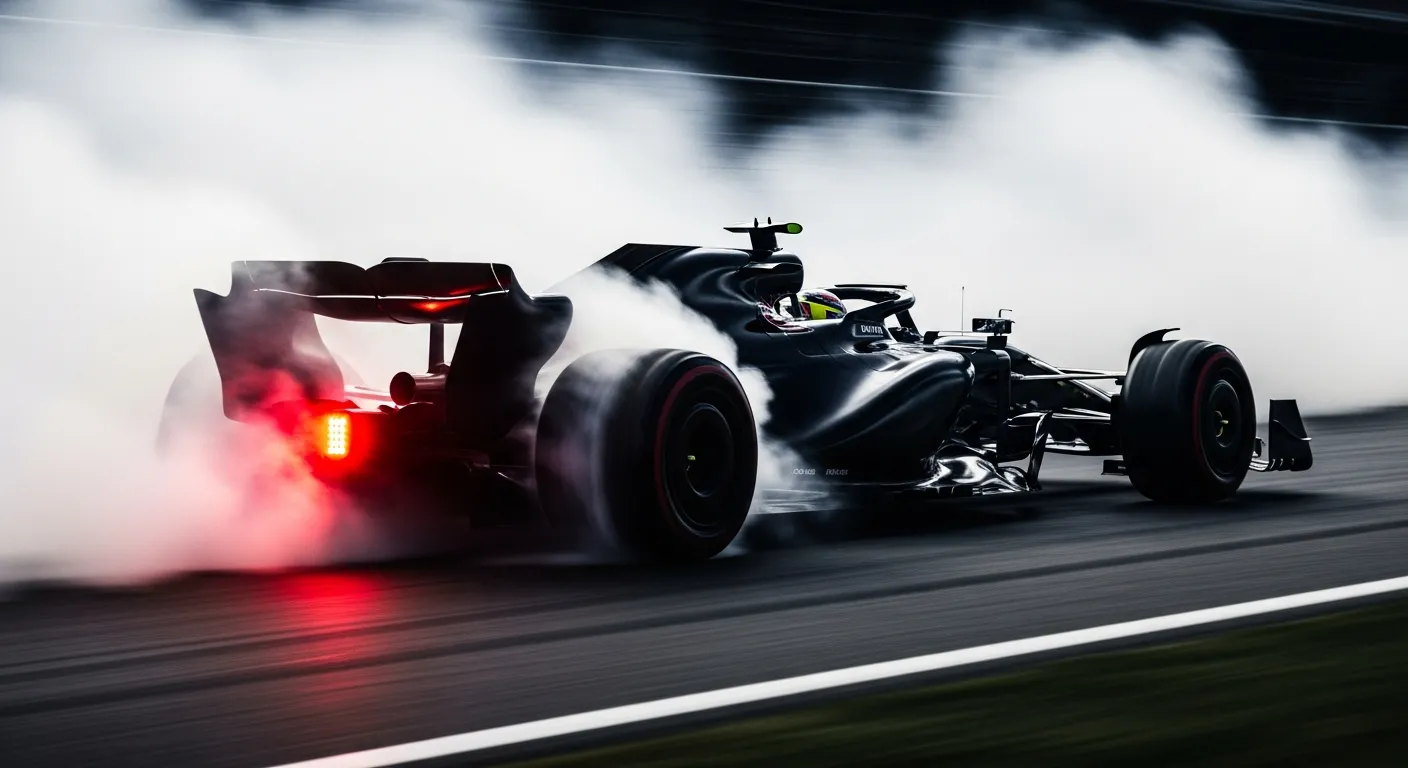
Carlos Sainz's performance at the 2024 Monaco Grand Prix was a study in strategic execution and disciplined driving, ultimately securing a P3 finish for Scuderia Ferrari in a race punctuated by an early red flag. The Spanish driver, starting from P3 on the grid, initially faced a momentary challenge, briefly losing a position in the opening moments. However, the immediate red flag incident on Lap 1, triggered by a substantial collision involving Sergio Pérez, Nico Hülkenberg, Kevin Magnussen, and Esteban Ocon, proved to be a critical turning point. Under the regulations, the grid was reset to the original qualifying order for the restart, effectively negating Sainz's brief drop and allowing him to recommence the race from his P3 slot. This regulatory nuance was a significant advantage on a circuit where track position is notoriously difficult to gain. The subsequent restart saw a largely processional race unfold, a characteristic often associated with the tight confines of the Circuit de Monaco. Sainz demonstrated consistent pace throughout, completing all 78 laps with a total race time of 2:23:23.139. His contribution of 15 points was vital for Scuderia Ferrari, complementing his teammate Charles Leclerc's victory. Sainz's individual performance included a fastest lap on Lap 62, clocking in at 1:14.726, which placed him 5th among all drivers for the quickest single lap of the event. Maintaining focus and managing tires over the extended duration of the race, particularly without further safety car interventions, required a high degree of precision and concentration. The unique demands of Monaco, with its unforgiving barriers and minimal run-off areas, mean that even a slight lapse can have significant consequences, as detailed in the technical specifications available on the [Formula 1 — official site](https://www.formula1.com/en).
This podium finish in Monaco underscores Ferrari's competitive progress in the 2024 season, particularly at a venue that demands a strong chassis and driver confidence. The double podium for the Maranello squad, with Leclerc's dominant win, showcased the team's ability to maximize their package on a street circuit. For Sainz, this result stands in contrast to previous Monaco outings where circumstances varied, and it highlights his evolving consistency. Examining historical race data, such as that provided by [Jolpica/Ergast — 2026 season data](https://api.jolpi.ca/ergast/f1/2026.json), often reveals how driver and team performances fluctuate across different eras and circuit types. Similarly, understanding the broader context of [Wikipedia: Formula One](https://en.wikipedia.org/wiki/Formula_One) history illustrates the enduring challenge and prestige of the Monaco Grand Prix. While Sainz's result here was strong, it's interesting to compare it to other drivers navigating challenging races, such as [Carlos Sainz at the 2019 Mexico City Grand Prix](/results/2019-mexico-city-carlos-sainz) where he finished P8, or the efforts of drivers like [Alexander Albon at the 2019 Mexico City Grand Prix](/results/2019-mexico-city-alex-albon) and [Pierre Gasly at the 2019 Mexico City Grand Prix](/results/2019-mexico-city-pierre-gasly) in their respective campaigns. The ability to maintain position and extract performance under pressure is a hallmark of top-tier F1 driving.