Lewis Hamilton's performance at the 2024 Italian Grand Prix underscored a strategic drive and late-race pace, culminating in a fifth-place finish for Mercedes AMG F1 at the iconic Autodromo Nazionale Monza. Starting from sixth on the grid, Hamilton navigated the high-speed circuit with a calculated approach, ultimately crossing the finish line after 53 laps in a time of 1:15:03.547. This result saw him gain one position from his starting slot, contributing 10 points to his championship tally. His race craft was particularly evident in the final stages, where he recorded the second-fastest lap of the entire race on Lap 53, a 1:21.512, just marginally slower than Lando Norris's overall fastest lap. This late burst of speed highlights the Mercedes' underlying potential and Hamilton's enduring ability to extract maximum performance when it matters most, a characteristic often discussed in broader analyses of [Formula 1 racing](https://en.wikipedia.org/wiki/Formula_One) dynamics and driver capabilities. The race unfolded with intense battles at the front, with Charles Leclerc taking a popular victory for Ferrari on home soil, followed closely by the McLaren duo of Oscar Piastri and Lando Norris, who demonstrated strong form throughout the weekend. Hamilton's drive positioned him effectively within the competitive mid-pack, notably finishing ahead of key rivals like Max Verstappen, who secured sixth, and his Mercedes teammate [George Russell](/results/2026-marina-bay-george-russell), who finished seventh despite starting three positions higher on the grid. The strategic battle for track position and tire management at Monza is always critical, given its unique low-downforce demands, long straights, and heavy braking zones. Hamilton's ability to maintain a strong, consistent pace and secure a top-five position, especially against the formidable McLaren and Ferrari packages that demonstrated superior qualifying speed, showcased consistent execution from both driver and team. The challenge at Monza often lies in balancing straight-line speed with cornering grip, and Mercedes AMG F1's package, while not dominant, allowed Hamilton to make progress. While the ultimate pace to challenge for the podium proved elusive for the Mercedes machine, the team, operating under the stringent guidelines of the [FIA F1 World Championship](https://www.fia.com/events/fia-formula-one-world-championship), managed to optimize their strategy for Hamilton to finish ahead of his teammate, securing valuable constructor points. This outcome provides crucial data for future development, as teams meticulously analyze performance metrics from races like this, including tire degradation, pit stop efficiency, and aerodynamic performance. Such detailed insights, including lap times and race strategies, are often compiled in comprehensive [F1 season data](https://api.jolpi.ca/ergast/f1/2026.json) archives, informing design choices for upcoming seasons. Hamilton's drive, characterized by consistent lap times and a strong finish, draws parallels to other seasoned drivers who consistently extract maximum performance, such as [Oscar Piastri](/results/2026-marina-bay-oscar-piastri)'s mature approach in competitive machinery, or the veteran experience of [Fernando Alonso](/results/2026-marina-bay-fernando-alonso) in challenging conditions, demonstrating the enduring value of experience and strategic acumen in Formula 1. The gain of a position from his grid slot, coupled with a near-fastest lap, indicates a strong closing performance, extracting the maximum possible from the W15 chassis on the day.
Race result · 2024
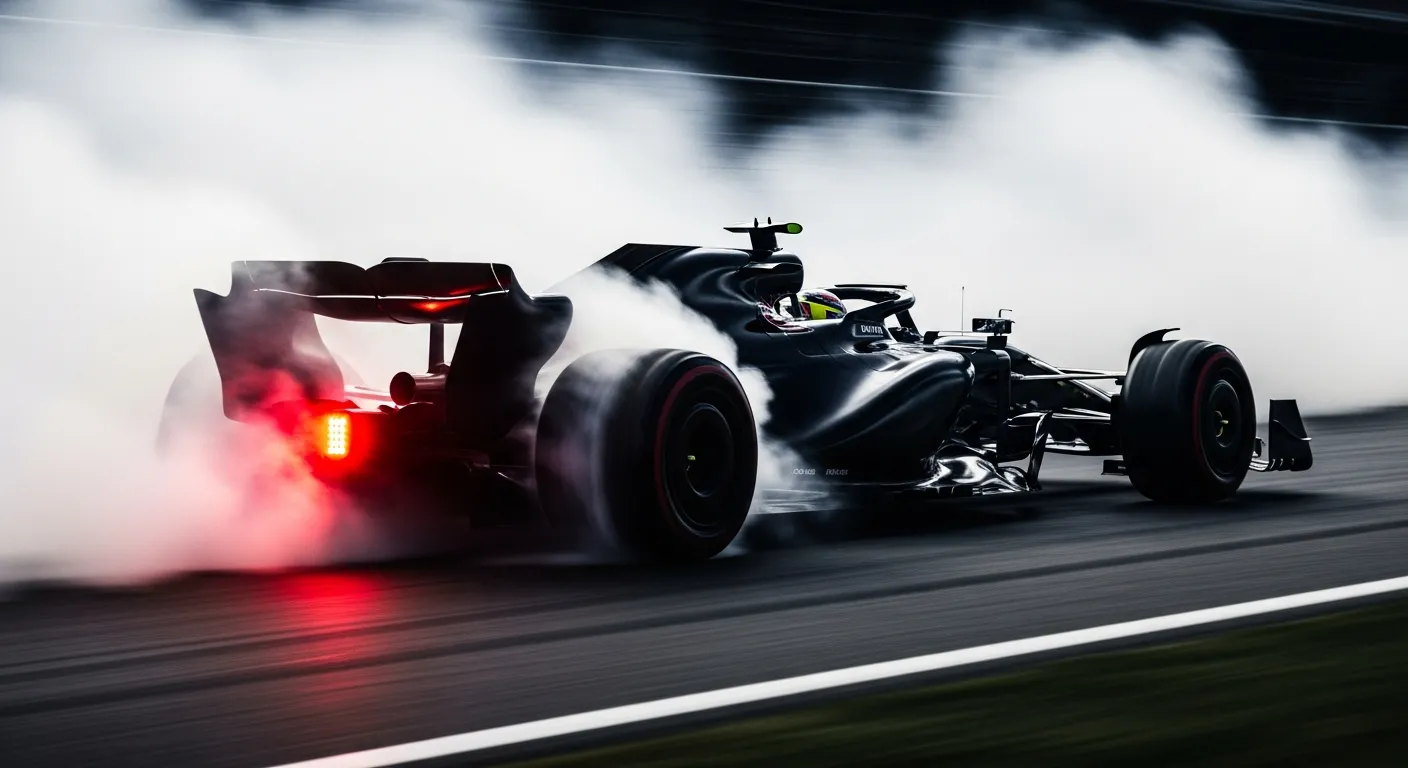
Lewis Hamilton at the 2024 Italian Grand Prix
Lewis Hamilton secured a fifth-place finish at the 2024 Italian Grand Prix, converting a sixth-place grid start into 10 championship points for Mercedes AMG F1 with a strong late-race performance.
- 5th
- 10 pts
- Mercedes AMG F1