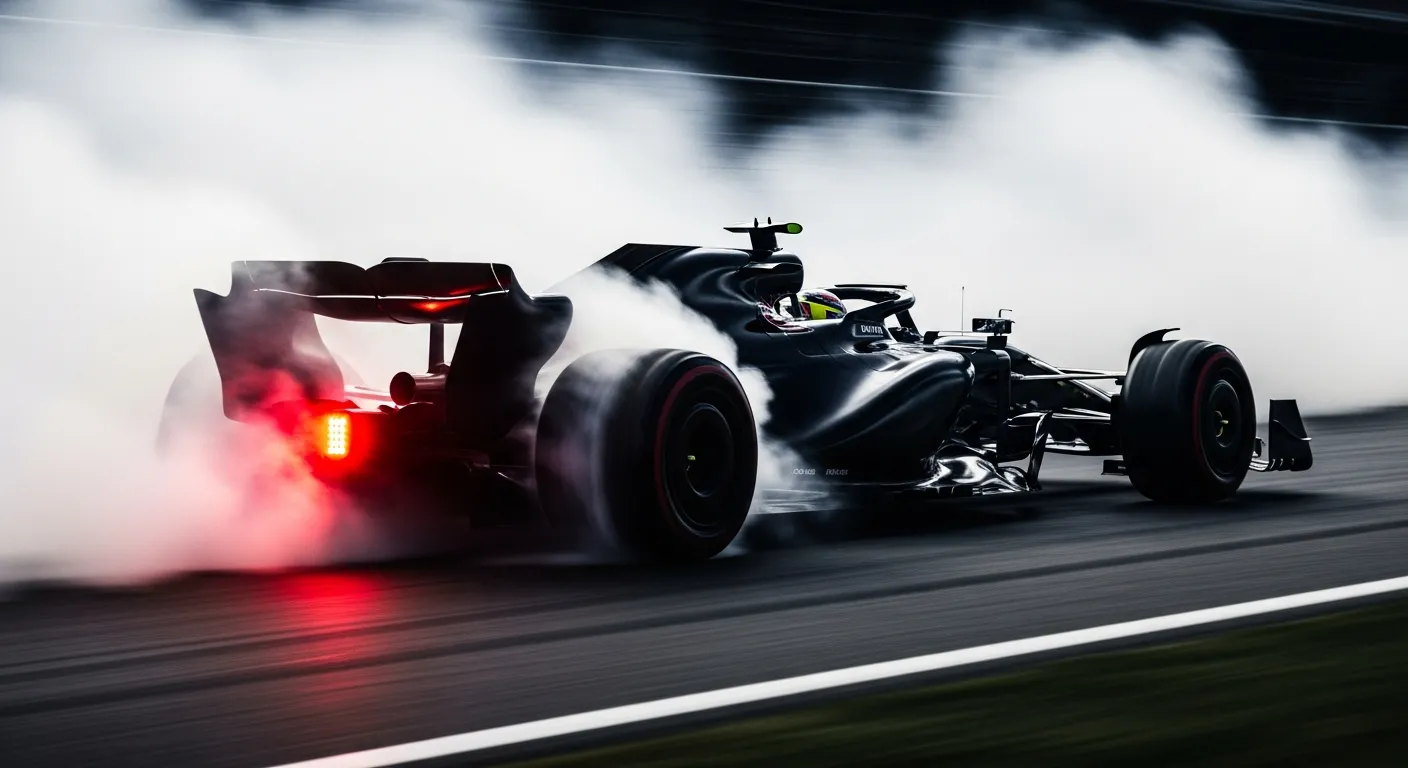
George Russell's performance at the 2025 Australian Grand Prix demonstrated a calculated drive under pressure, culminating in a third-place podium finish for Mercedes AMG F1 at the Melbourne Grand Prix Circuit. Starting from fourth on the grid, Russell navigated a race that saw significant attrition and strategic complexities, ultimately completing all 57 laps with a final recorded time of 1:42:14.785. This result marked a solid start to his 2025 campaign, securing 15 points and establishing a strong benchmark for the season ahead. The British driver maintained a consistent pace throughout the race, with his fastest lap recorded on lap 43 at 1:25.065, placing him 11th in the overall fastest lap rankings for the event. This measured approach allowed him to capitalize on the unfolding race dynamics, particularly as competitors encountered issues.
The race itself was not without incident, impacting several key contenders and shaping the final order. While Russell maintained a clean run, others like [Liam Lawson at the 2026 Emilia Romagna Grand Prix](/results/2026-imola-liam-lawson) faced early exits, with Lawson retiring due to an accident on lap 46, highlighting the unforgiving nature of the Albert Park circuit. Gabriel Bortoleto and Fernando Alonso also saw their races end prematurely, underscoring the challenge of the season opener. Russell's teammate, Kimi Antonelli, starting significantly further back in 16th, delivered a remarkable charge through the field to finish fourth, just behind Russell. Antonelli secured 12 points for Mercedes AMG F1 with a time of 1:42:16.439, demonstrating the overall strength of the Mercedes package. This strong double-points finish underscored the potential of the team at the season opener, suggesting a competitive season for the German constructor. The strategic execution from the Mercedes pit wall, coupled with Russell's consistent driving, proved crucial in a race where reliability and incident avoidance were paramount. The overall landscape of [Formula 1 — official site](https://www.formula1.com/en) often rewards such composed performances, especially in the opening rounds. For a deeper dive into the circuit itself, the [Wikipedia page for the Melbourne Grand Prix Circuit](https://en.wikipedia.org/wiki/Melbourne_Grand_Prix_Circuit) offers historical context.
Russell's climb from fourth on the grid to a podium position required not only raw pace but also astute strategic tyre management and a keen awareness of the evolving track conditions. While Lando Norris took the victory for McLaren, starting from pole and finishing with a dominant time of 1:42:06.304, and [Max Verstappen at the 2026 Emilia Romagna Grand Prix](/results/2026-imola-max-verstappen) secured second for Red Bull with a time of 1:42:07.199, Russell's third place was a testament to his ability to extract performance when it mattered. The gap to the front two, approximately 8 seconds to Norris, indicates the competitive nature of the field at the Albert Park circuit, yet Russell kept a comfortable margin over his teammate. Understanding the nuances of the [FIA — F1 World Championship](https://www.fia.com/events/fia-formula-one-world-championship) regulations and how they influence car development is key to these early season performances. The detailed race data available through platforms like [Jolpica/Ergast — 2026 season data](https://api.jolpi.ca/ergast/f1/2026.json) offers a granular look at these outcomes, showing Russell's consistent lap times. His ability to maintain his position ahead of his rookie teammate, despite Antonelli's impressive charge from 16th, also highlights his experience and refined race craft. The dynamic between teammates, particularly in a strong performance like this, is always a point of interest in the broader context of [Wikipedia: Formula One](https://en.wikipedia.org/wiki/Formula_One) racing. This strong start positions Russell well for future rounds, much like how [Lando Norris at the 2026 Emilia Romagna Grand Prix](/results/2026-imola-lando-norris) demonstrated his winning capabilities in another season. The strategic battle and the ability to manage the car over a full race distance were evident in Russell's drive, securing valuable points for Mercedes. Further analysis of team strategies can be found on various [F1 technical analysis sites](https://www.formula1.com/en/latest/technical.html).