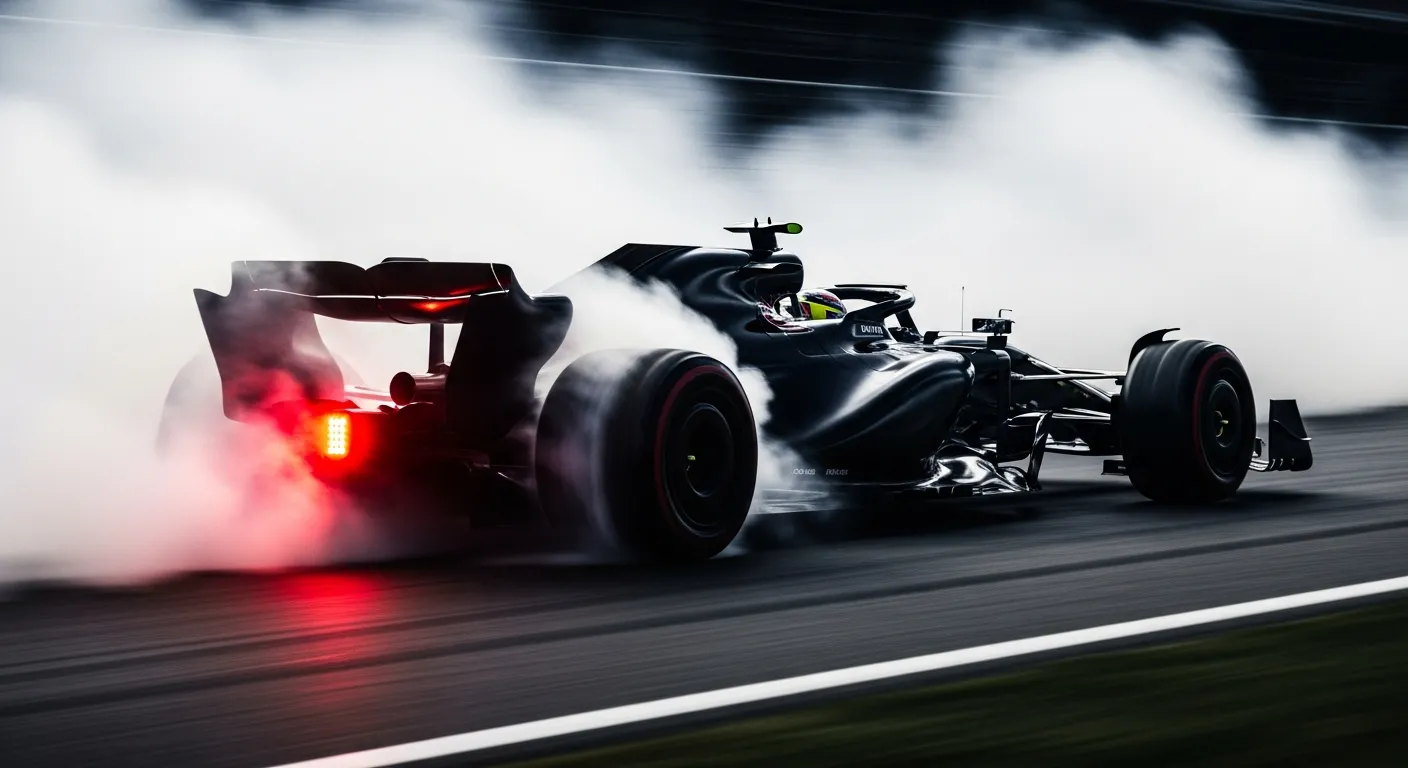
Esteban Ocon's performance at the 2025 Spanish Grand Prix on the Circuit de Barcelona-Catalunya was a study in maintaining position within the competitive mid-field, ultimately finishing where he began. Starting from 16th on the grid, the Haas F1 Team driver completed all 66 laps of the race, crossing the finish line in the same 16th position with a total time of 1:33:29.572. This result, while not yielding any championship points, reflected a consistent if unspectacular run in a race dominated by McLaren's Oscar Piastri, who took the win from pole position. The Circuit de Barcelona-Catalunya is known for its demanding layout, often proving a stern test for car and driver alike, as detailed on the [Formula 1 — official site](https://www.formula1.com/en). Understanding these circuit nuances is crucial for strategic planning, a key aspect of any [Formula 1 Grand Prix](https://www.formula1.com/en).
Throughout the 66-lap event, Ocon demonstrated solid race management, recording his fastest lap on lap 47 with a time of 1:18.624, which placed him 15th overall in the fastest lap rankings for the Grand Prix. This was a notable improvement over his Haas teammate, Oliver Bearman, who started two positions ahead in 14th but finished 17th, posting a fastest lap of 1:18.907 on lap 63. The intra-team battle saw Ocon gain ground on his teammate by the checkered flag, a small victory within the broader context of the Haas F1 Team's weekend. Such detailed race metrics are often compiled and analyzed by various [data sources like Jolpica/Ergast](https://api.jolpi.ca/ergast/f1/2026.json) to track driver and team performance trends across the season.
The Spanish Grand Prix, round 9 of the 2025 season, saw a mix of fortunes across the grid. While Ocon navigated the race to its conclusion, other drivers faced challenges. Kimi Antonelli, for instance, retired with "Oil pressure" on lap 53, and Alexander Albon suffered "Collision damage" after 27 laps. For Ocon, finishing all laps was a testament to reliability, a factor that can be as crucial as raw pace in the demanding environment of [Formula One racing](https://en.wikipedia.org/wiki/Formula_One). This consistency is a trait seen in other drivers who navigate challenging races, such as [Pierre Gasly at the 2018 Chinese Grand Prix](/results/2018-shanghai-pierre-gasly), who also completed his race without scoring points in a mid-field car.
Comparing Ocon's Spanish GP to his previous outings, or even to a historical race like [Esteban Ocon at the 2018 Chinese Grand Prix](/results/2018-shanghai-esteban-ocon), highlights the varying competitive landscapes across seasons and teams. While the Haas F1 Team aims for consistent points finishes, races like Barcelona underscore the tight competition. The broader championship landscape, overseen by the [FIA — F1 World Championship](https://www.fia.com/events/fia-formula-one-world-championship), rewards every point, making non-scoring finishes impactful on overall standings. Veteran drivers like [Fernando Alonso at the 2018 Chinese Grand Prix](/results/2018-shanghai-fernando-alonso) have often spoken about the importance of maximizing every opportunity, even when points seem out of reach. Ocon's drive, while not point-scoring, ensured the Haas car completed the full race distance, providing valuable data for future development. The comprehensive race data, including lap times and positions, is meticulously recorded and available through various [F1 data archives](https://api.jolpi.ca/ergast/f1/2026.json).