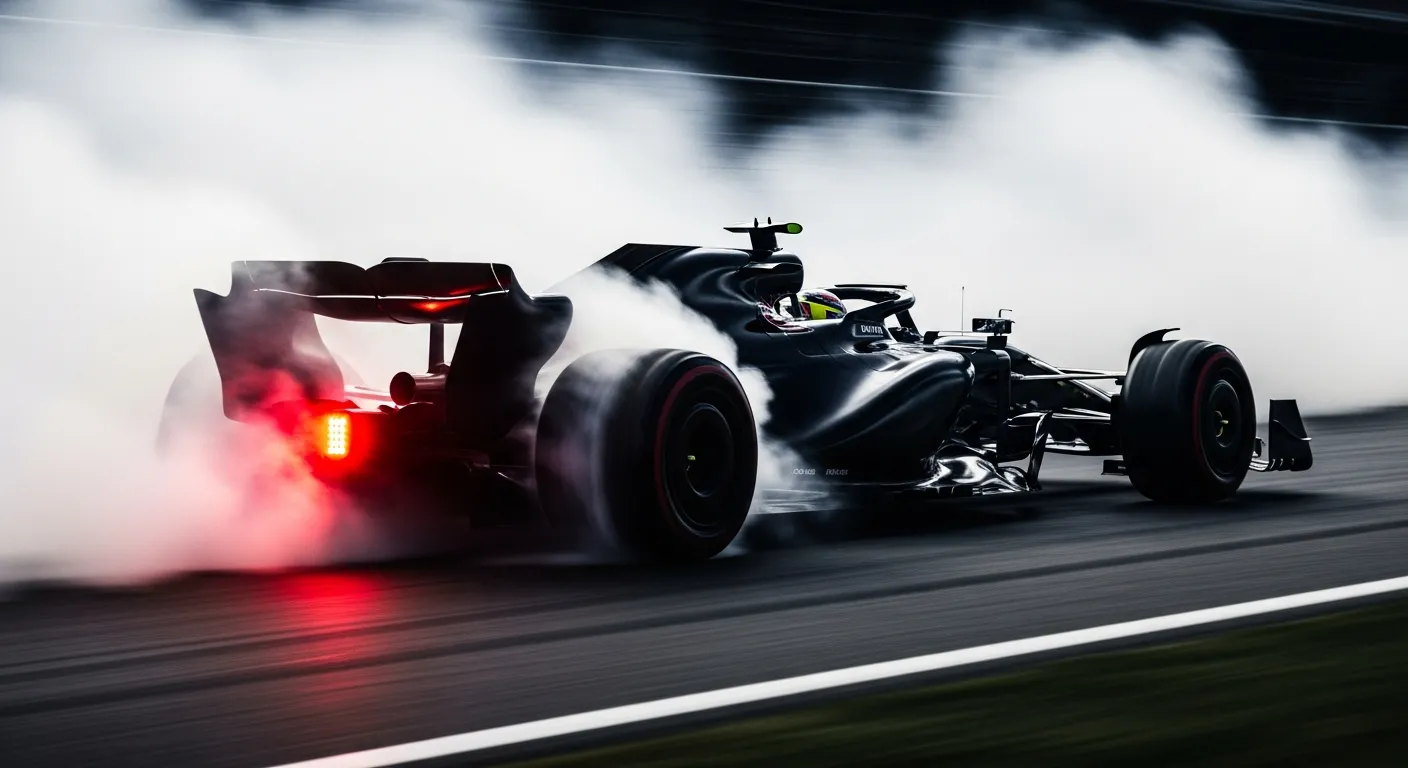
Esteban Ocon navigated the 2025 United States Grand Prix at the Circuit of the Americas to a 15th-place finish, an outcome that saw him gain two positions from his 17th-place grid start. The Haas F1 Team driver completed all 56 laps, logging a total race time of 1:35:23.204. While Ocon brought the VF-25 home, the pace throughout the race meant he remained outside the points-paying positions. His fastest lap, a 1:39.263 on lap 31, was the 18th quickest of the race, indicating the car's general performance envelope relative to the field. This result mirrors the challenge many drivers face when starting deep in the pack, striving for every position, much like [Fernando Alonso at the 2015 Emilia Romagna Grand Prix](/results/2015-imola-fernando-alonso) who also battled for track position. The intricacies of tire management and strategic calls are always critical at a circuit like COTA, known for its diverse corner profiles and elevation changes, as detailed by the [Formula 1 — official site](https://www.formula1.com/en) circuit analysis. Understanding the technical aspects of modern F1 cars, including their aerodynamic design, is essential for comprehending these performance nuances, a subject explored in depth on [Wikipedia: Formula One](https://en.wikipedia.org/wiki/Formula_One).
The performance of the Haas F1 Team saw a split outcome, with Ocon's teammate, Oliver Bearman, securing two points with a 9th-place finish after starting 8th. Bearman's fastest lap of 1:39.119 on lap 32 was marginally quicker than Ocon's, underscoring the tight margins within the team. For Ocon, the weekend in Austin represented a continuation of a season where consistently extracting points has been a primary objective for the American outfit. Evaluating driver performance requires considering the full scope of [FIA — F1 World Championship](https://www.fia.com/events/fia-formula-one-world-championship) regulations and how they impact car development. Drivers like [Nico Hülkenberg at the 2015 Emilia Romagna Grand Prix](/results/2015-imola-nico-hulkenberg) have often found themselves in similar battles for midfield supremacy, where small gains in race pace can make a significant difference. The detailed race data, such as that available through [Jolpica/Ergast — 2026 season data](https://api.jolpi.ca/ergast/f1/2026.json), provides granular insights into lap times and strategic execution. This data is crucial for teams to analyze post-race, informing future car setups and driver coaching. The consistent collection of performance metrics is a cornerstone of competitive racing, as highlighted by various analyses on the [Formula 1 official website](https://www.formula1.com/en). The challenges faced by Ocon, in this context, are not unique, with drivers like [Carlos Sainz at the 2015 Emilia Romagna Grand Prix](/results/2015-imola-carlos-sainz) also demonstrating the difficulties of converting mid-grid starts into significant points, highlighting the competitive nature of the field. Further insights into the sport's evolution and technical specifications can be found on [Wikipedia's Formula One technical regulations page](https://en.wikipedia.org/wiki/Formula_One_regulations).