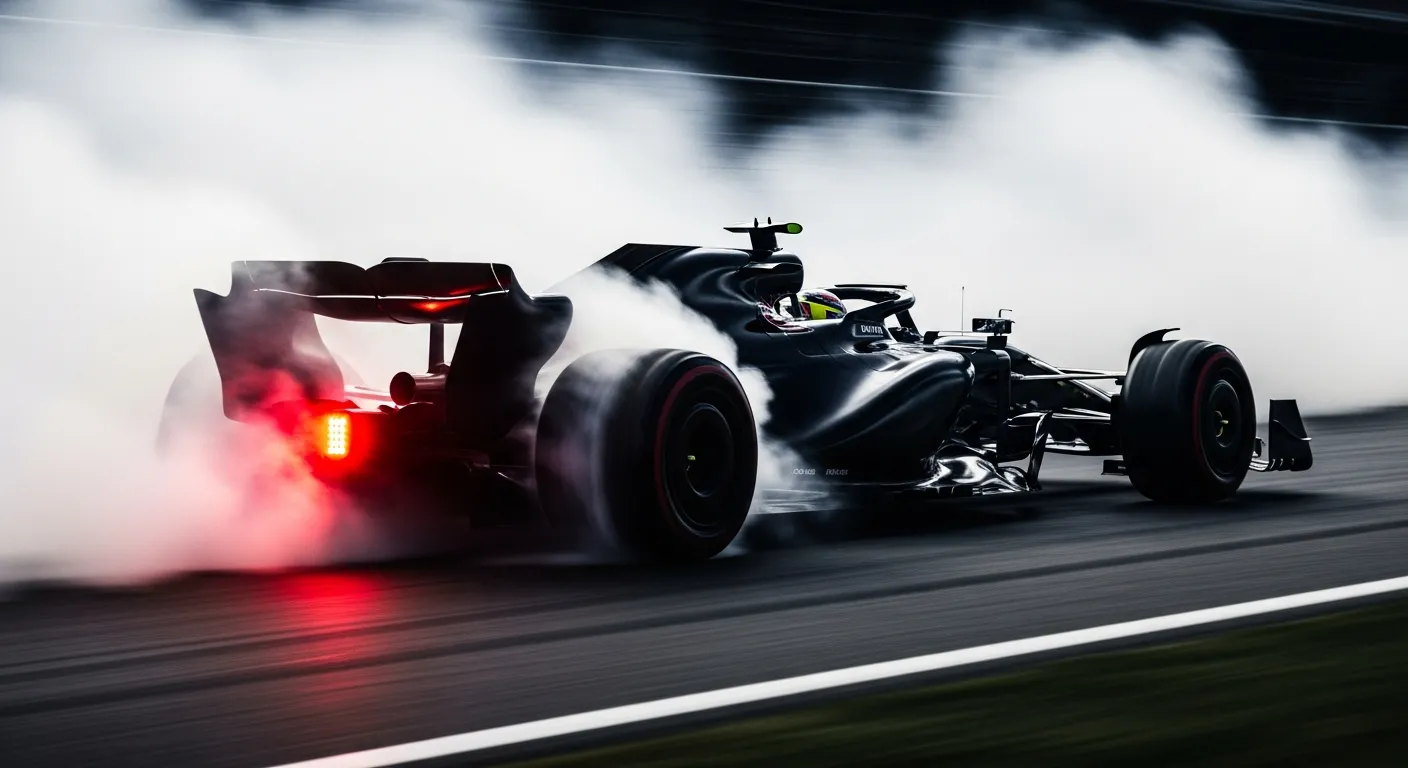
Nico Hülkenberg's outing at the 2025 Hungarian Grand Prix saw him navigate the Hungaroring's demanding layout, making a five-place gain from his starting position of 18th to finish 13th for Kick Sauber, albeit a lap down. The German driver, known for his consistent race craft, demonstrated a late-race surge, recording his fastest lap of "1:20.013" on lap 68, which placed him 6th overall in the fastest lap standings for the event. This burst of pace in the penultimate lap, while impressive, was not enough to convert into championship points on a circuit where track position is notoriously critical. The Hungarian Grand Prix, held on August 3rd, 2025, proved challenging for many in the midfield, with the tightly wound Hungaroring offering limited overtaking opportunities, a characteristic well-documented by [Formula 1 — official site](https://www.formula1.com/en). Starting from 18th on a track like the Hungaroring presents an immediate strategic disadvantage, requiring exceptional race management and opportunistic driving to make significant progress through the field, a common challenge in [F1 World Championship events](https://www.fia.com/events/fia-formula-one-world-championship).
The performance within the Kick Sauber garage was notably divergent. While Hülkenberg fought to gain positions from the back of the grid, his teammate, Gabriel Bortoleto, delivered a strong showing, starting 7th and converting that into a 6th place finish, adding 8 valuable points to his championship tally. This stark contrast underscores the varying fortunes and operational challenges that can define a race weekend for a constructor. Hülkenberg completed 69 laps, one shy of the race winner, Lando Norris, who completed the full 70 laps. His efforts to climb through the field from a grid position of 18th to a finishing position of 13th showcased his ability to manage tires and extract performance over a race distance, a skill often highlighted in analyses of veteran drivers like [Fernando Alonso at the 2015 Monaco Grand Prix](/results/2015-monaco-fernando-alonso) on similarly challenging street circuits. For a deeper dive into F1 racing dynamics and its historical evolution, [Wikipedia: Formula One](https://en.wikipedia.org/wiki/Formula_One) offers extensive context. The strategic nuances of the 2025 season, including tire management and pit stop timings, are often influenced by the [FIA — F1 World Championship regulations](https://www.fia.com/events/fia-formula-one-world-championship), which dictate much of the technical and sporting framework. Hülkenberg's race, while not yielding points, was a testament to his persistent driving, reminiscent of his earlier career drives such as [Nico Hülkenberg at the 2015 Emilia Romagna Grand Prix](/results/2015-imola-nico-hulkenberg), where he also demonstrated a capacity to improve his grid position. The detailed race data, including lap times and positions, is meticulously tracked by data providers like [Jolpica/Ergast — 2026 season data](https://api.jolpi.ca/ergast/f1/2026.json), providing the foundation for such analyses. Understanding the full scope of a driver's season requires looking at the broader context, much like examining the early career trajectory of emerging talents such as [Max Verstappen at the 2015 Monaco Grand Prix](/results/2015-monaco-max-verstappen). The ability to extract a competitive fastest lap late in the race, even when out of the points, can signify underlying car potential or a driver's capacity to push when the fuel load is low and tires are optimized, an aspect race engineers keenly observe on the [official Formula 1 website](https://www.formula1.com/en).