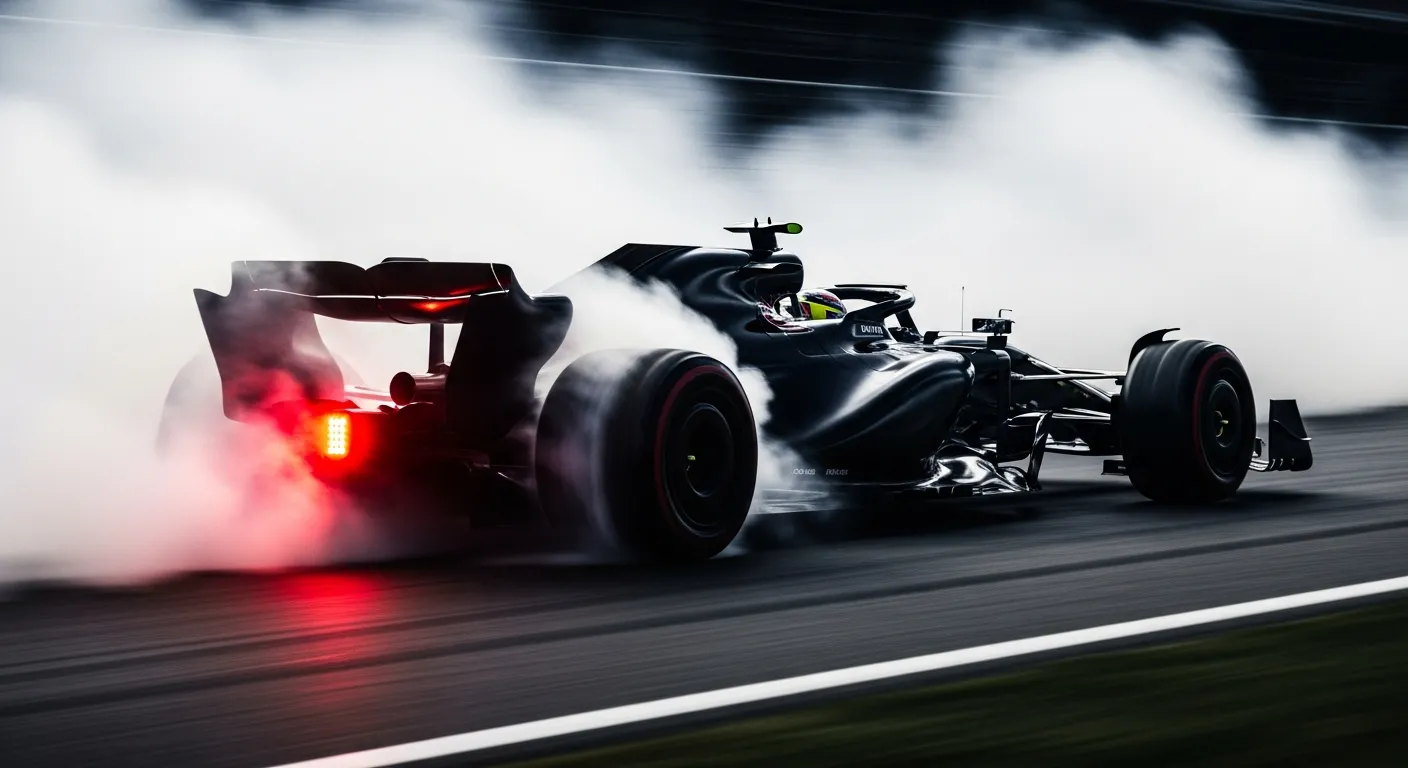
Oliver Bearman's performance at the 2025 Saudi Arabian Grand Prix saw him improve two positions from his P15 grid start to finish P13 for the Haas F1 Team on the demanding Jeddah Corniche Circuit. This result, achieved on April 20, 2025, marked a consistent run for the young British driver, who completed all 50 laps of the race in a total time of 1:22:25.952. While no points were secured, Bearman demonstrated race management by moving up the order in a competitive field, finishing ahead of his teammate, Esteban Ocon. His P13 finish, just over a minute behind race winner Oscar Piastri, underscores the tight margins within the F1 midfield.
The race saw Bearman maintain a steady pace throughout, culminating in his fastest lap of 1:33.238 on the final lap, placing him 13th in the overall fastest lap rankings for the event. This late-race pace suggests a disciplined approach to tire management and an understanding of track evolution, crucial skills on a circuit known for its high-speed corners and unforgiving walls. His teammate, Esteban Ocon, starting four positions behind Bearman in P19, finished P14, indicating a closely matched performance within the Haas garage, though Ocon's fastest lap of 1:34.309 was notably slower. The American team continues to seek consistent points-scoring opportunities, and races like these provide valuable data for future development, as outlined by the [Formula 1 — official site](https://www.formula1.com/en). The Jeddah Corniche Circuit, with its high average speeds and proximity to barriers, demands absolute precision, a characteristic often discussed when evaluating driver performances on street circuits across the [FIA — F1 World Championship](https://www.fia.com/events/fia-formula-one-world-championship) calendar.
Bearman's outing in Jeddah can be contrasted with other drivers' experiences on high-speed street circuits. The technical regulations for such circuits often push teams to the limits of aerodynamic efficiency, a challenge that drivers like [Esteban Ocon at the 2026 Emilia Romagna Grand Prix](/results/2026-imola-esteban-ocon) will continue to face. The data from events like the Saudi Arabian Grand Prix is critical for understanding car performance across different track types, influencing strategic decisions for upcoming rounds. Bearman's ability to bring the car home in P13, ahead of his teammate, provides a benchmark for his progress within the Haas team. This result, while not yielding points, was a solid, undramatic execution of a race plan, positioning him for future opportunities. The focus for Haas will be on finding the incremental gains needed to break into the top ten consistently, a challenge that many midfield teams, including Aston Martin with drivers like [Lance Stroll at the 2026 Emilia Romagna Grand Prix](/results/2026-imola-lance-stroll), regularly contend with. The intricate details of race strategy and car setup are often discussed in broader terms on platforms like [Wikipedia: Formula One](https://en.wikipedia.org/wiki/Formula_One), providing context to individual race outcomes. Future performance analysis, often drawing on comprehensive datasets like those available through [Jolpica/Ergast — 2026 season data](https://api.jolpi.ca/ergast/f1/2026.json), will reveal how this result contributes to his long-term trajectory. Drivers like [Oliver Bearman at the 2026 Emilia Romagna Grand Prix](/results/2026-imola-oliver-bearman) will continue to refine their craft, seeking to convert strong qualifying performances into points finishes. The Jeddah performance, while not a headline grabber, was a testament to his consistent driving and the team's ability to manage the race distance without incident, a foundational element for any developing driver in Formula 1.