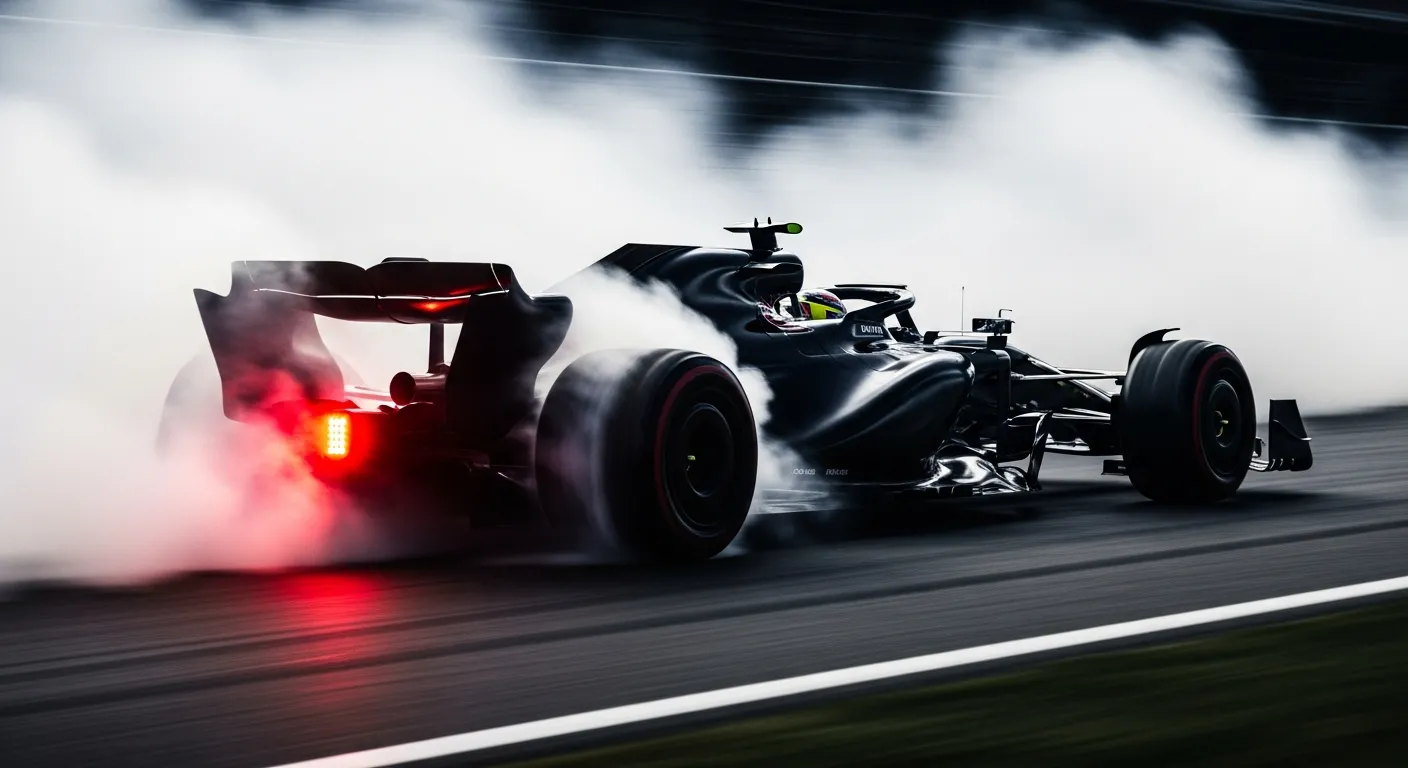
Isack Hadjar's 2025 Qatar Grand Prix was defined by an abrupt end to his race, culminating in a Puncture on lap 55 that forced his retirement from the Lusail International Circuit. Starting from a promising sixth position on the grid, the Racing Bulls driver had been navigating the challenging conditions of the penultimate round of the [FIA F1 World Championship](https://www.fia.com/events/fia-formula-one-world-championship). The early stages of the race saw Hadjar maintaining a competitive pace, evidenced by his fastest lap of 1:24.317 on lap 52, which was the 12th quickest overall, demonstrating moments of the speed his Racing Bulls machine was capable of. This performance contrasts with the unfortunate early exit of [Nico Hülkenberg at the 2018 Monaco Grand Prix](/results/2018-monaco-nico-hulkenberg), where a collision ended his race prematurely, highlighting how swiftly fortunes can turn in Formula 1. Hadjar's teammate, Liam Lawson, starting further back in 12th, managed to convert his race into a points finish, securing 9th position and adding 2 points to the team's tally, underlining the potential that was not fully realized for Hadjar. Further insights into driver performance across various circuits can be found on the [Formula 1 — official site](https://www.formula1.com/en).
The incident on lap 55 meant Hadjar completed 55 of the total 57 laps, ultimately being classified in 18th position with no points added to his championship standing. The nature of a puncture can be particularly frustrating, often occurring without warning and immediately compromising a driver's race, a scenario that can be as impactful as the mechanical issues faced by [Charles Leclerc at the 2018 Spanish Grand Prix](/results/2018-barcelona-charles-leclerc). Such unforeseen mechanical failures or external factors are a constant threat in Formula 1, as documented in the comprehensive [Formula 1 — official site](https://www.formula1.com/en) race reports. While the exact cause of Hadjar's puncture was not immediately detailed, it served as a stark reminder of the fine margins in top-tier motorsport, where even a strong qualifying performance, like his grid slot of 6th, can be undone by a single component failure. The broader context of [Wikipedia: Formula One](https://en.wikipedia.org/wiki/Formula_One) history is replete with examples of tire integrity challenges. For a detailed breakdown of the season's performance metrics, further data can be explored via the [Jolpica/Ergast — 2026 season data](https://api.jolpi.ca/ergast/f1/2026.json) archives, which provide historical race results. This outcome inevitably impacted his championship standing, as he remained on 51 points, dropping one place from 9th to 10th. The unpredictable elements of racing, from tire degradation to track debris, remain a critical factor, as seen in the challenges faced by [Lance Stroll at the 2018 Spanish Grand Prix](/results/2018-barcelona-lance-stroll) who also suffered a DNF. Comprehensive [F1 season data](https://api.jolpi.ca/ergast/f1/2026.json) often highlights these critical race-ending incidents.