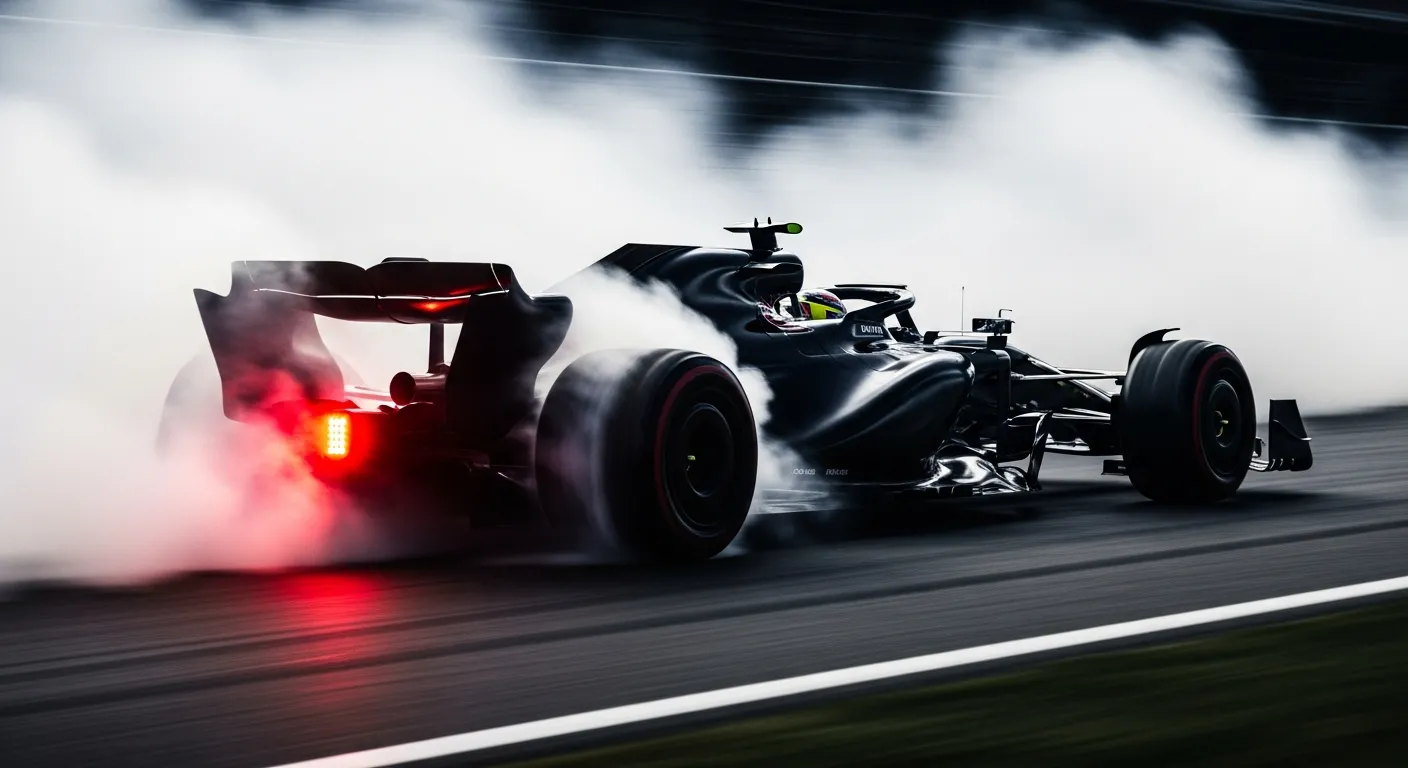
Lewis Hamilton's performance at the 2025 Qatar Grand Prix on November 30, 2025, saw him navigate the demanding Lusail International Circuit to a 12th-place finish for Scuderia Ferrari, an outcome that yielded no championship points. Starting from a challenging 17th position on the grid, Hamilton completed all 57 laps, recording a total race time of 1:25:55.971. While he did manage to improve five positions from his starting grid slot, the pace was not sufficient to break into the top ten point-scoring positions. His teammate, Charles Leclerc, starting from 10th, secured 8th place and 4 points for Ferrari, illustrating a notable performance delta within the team on this particular weekend. The broader landscape of the 2025 [Formula 1 — official site](https://www.formula1.com/en) season has seen intense competition, a factor that often amplifies the impact of a difficult qualifying session. The strategic nuances of a Grand Prix, especially at circuits like Lusail with its high-speed sections and demanding corners, are crucial for any team aiming for consistent points finishes, as detailed by the [FIA — F1 World Championship](https://www.fia.com/events/fia-formula-one-world-championship) regulations regarding car performance and race conduct.
Hamilton's fastest lap of the race, a 1:24.848, was achieved on lap 52, placing him 14th in the overall fastest lap rankings for the event. This lap time was notably off the pace of the race's quickest, Oscar Piastri's 1:22.996, set on lap 44. The competitive field saw Max Verstappen take the win from a P3 grid slot, with Oscar Piastri, who started on pole, finishing second, and Carlos Sainz Jr. completing the podium for Williams Grand Prix Engineering. Sainz Jr.'s drive, moving from 7th on the grid to 3rd, demonstrated the potential for significant gains through strategic execution and consistent pace, a performance that echoes the kind of strategic precision seen from drivers like [Carlos Sainz at the 2025 British Grand Prix](/results/2025-silverstone-carlos-sainz). The granular data from this round, accessible via platforms like [Jolpica/Ergast — 2026 season data](https://api.jolpi.ca/ergast/f1/2026.json), offers a comprehensive view of driver and constructor performance, which analysts routinely use to project future outcomes and evaluate race strategies. For context, drivers such as [Alexander Albon at the 2025 British Grand Prix](/results/2025-silverstone-alex-albon) have also faced uphill battles from lower grid positions, requiring astute race management to gain ground against a tightly packed midfield. The complexities of tire degradation and pit stop timing at Lusail, a track known for its demanding conditions and high temperatures, likely played a significant role in the race narrative for many, including [Yuki Tsunoda at the 2025 British Grand Prix](/results/2025-silverstone-yuki-tsunoda) who managed to secure a point from 15th on the grid. This Qatar result, while not point-scoring for Hamilton, adds another data point to his final season with Ferrari, underscoring the challenges of maximizing performance in a highly competitive era of [Formula One](https://en.wikipedia.org/wiki/Formula_One). The strategic choices made by teams, from car setup to in-race management, are paramount, as frequently highlighted by various [technical reports from Formula 1](https://www.formula1.com/en/latest/technical.html) experts and independent analyses. The continuous evolution of car design and aerodynamic principles also plays a role in these outcomes, as explored in detailed [F1 technical analyses](https://www.formula1.com/en/latest/technical.html).