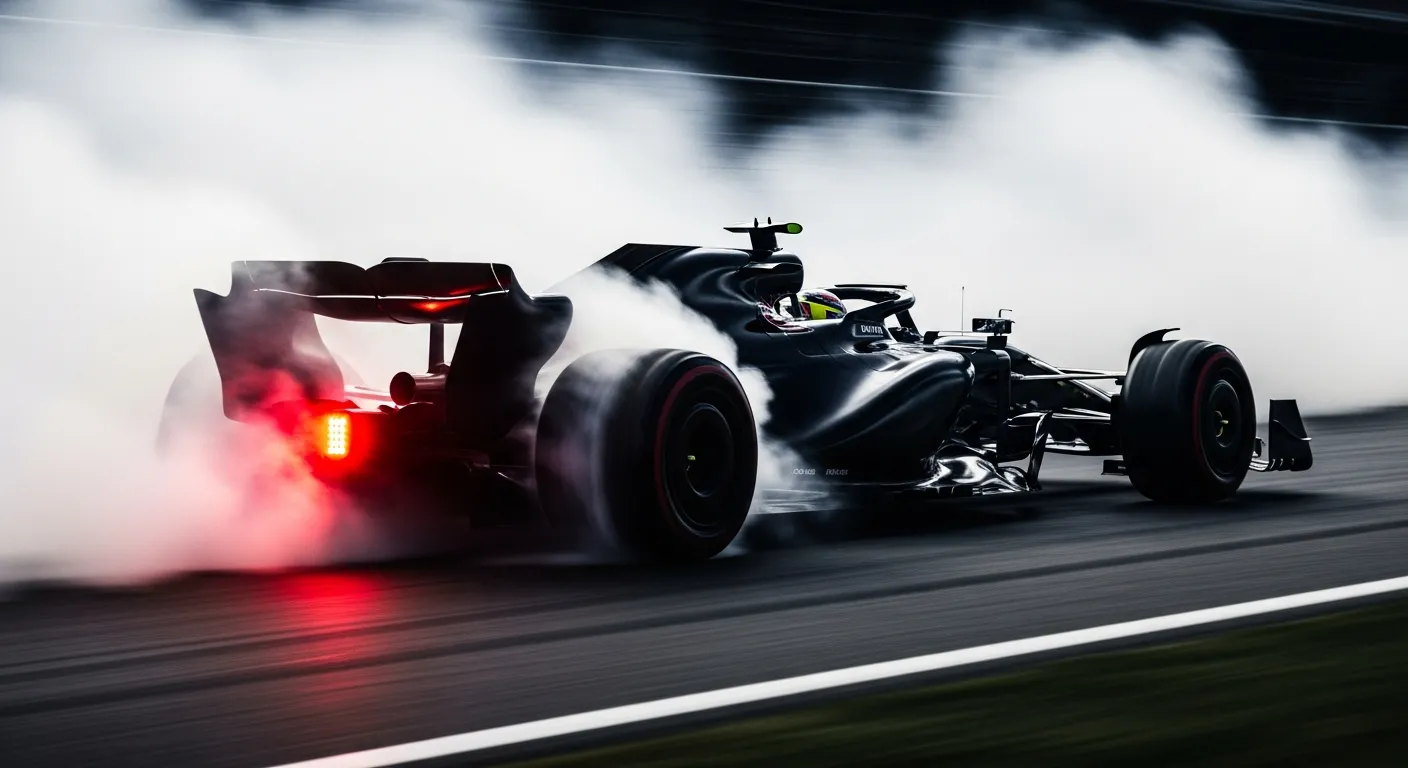
Nico Hülkenberg's 2025 Qatar Grand Prix at the [Lusail International Circuit](https://en.wikipedia.org/wiki/Lusail_International_Circuit) concluded abruptly, marking a significant disruption to his season as he retired on lap 6 due to a collision. Starting from P11 on the grid, the Kick Sauber driver had little opportunity to establish a rhythm or execute his race strategy before the incident occurred. His fastest lap of 1:28.139, recorded on lap 5, placed him 20th overall for that metric, a clear indicator of the severely limited running he achieved before his race was cut short. This early exit meant zero points for the German driver, a stark contrast to his teammate Gabriel Bortoleto, who completed all 57 laps and finished P13 for Kick Sauber, albeit also outside the points. The official status of "Collision" for Hülkenberg's retirement, as documented in the [official FIA F1 World Championship results](https://www.fia.com/events/fia-formula-one-world-championship), always leaves questions about what might have been, especially when a driver starts from a mid-pack position with potential to move forward into scoring positions. The team's immediate focus would have shifted to understanding the sequence of events that led to the incident and assessing the damage to the C45 chassis, a critical step in any [Formula 1 incident review](https://www.formula1.com/en/latest/article.formula-1-collision-review-process.html).
This incident at Lusail represented a challenging moment in Hülkenberg's 2025 campaign, particularly given his reputation for consistent race finishes and point-scoring opportunities. For context, his performance here contrasts sharply with his more robust showing at events like the [2024 Las Vegas Grand Prix](/results/2024-las-vegas-nico-hulkenberg), where he successfully navigated a complex street circuit to a points finish. The data available for the [2026 season](https://api.jolpi.ca/ergast/f1/2026.json) will reveal how such incidents impact team strategies and driver pairings moving forward, as constructors continually refine their operational protocols. While the race ultimately saw Max Verstappen claim victory from P3, and Oscar Piastri secure P2 after starting on pole, Hülkenberg's early departure meant he was a spectator for much of the action, unable to contend with the likes of [Charles Leclerc at the 2024 Qatar Grand Prix](/results/2024-lusail-charles-leclerc) or the eventual winner of this race, Max Verstappen, who also had a strong showing at the [2024 Qatar Grand Prix](/results/2024-lusail-max-verstappen). Such early retirements underscore the unpredictable nature of [Formula One racing](https://en.wikipedia.org/wiki/Formula_One), where even a strong qualifying effort can be undone by an unforeseen incident within the opening laps. The Kick Sauber engineering team would undoubtedly analyze the telemetry and on-board footage to understand the dynamics of the collision and inform future race preparations, leveraging insights often detailed in the technical analyses found on the [Formula 1 — official site](https://www.formula1.com/en). This meticulous review is standard practice across the grid, aiming to mitigate risks and improve future outcomes for drivers like Hülkenberg.