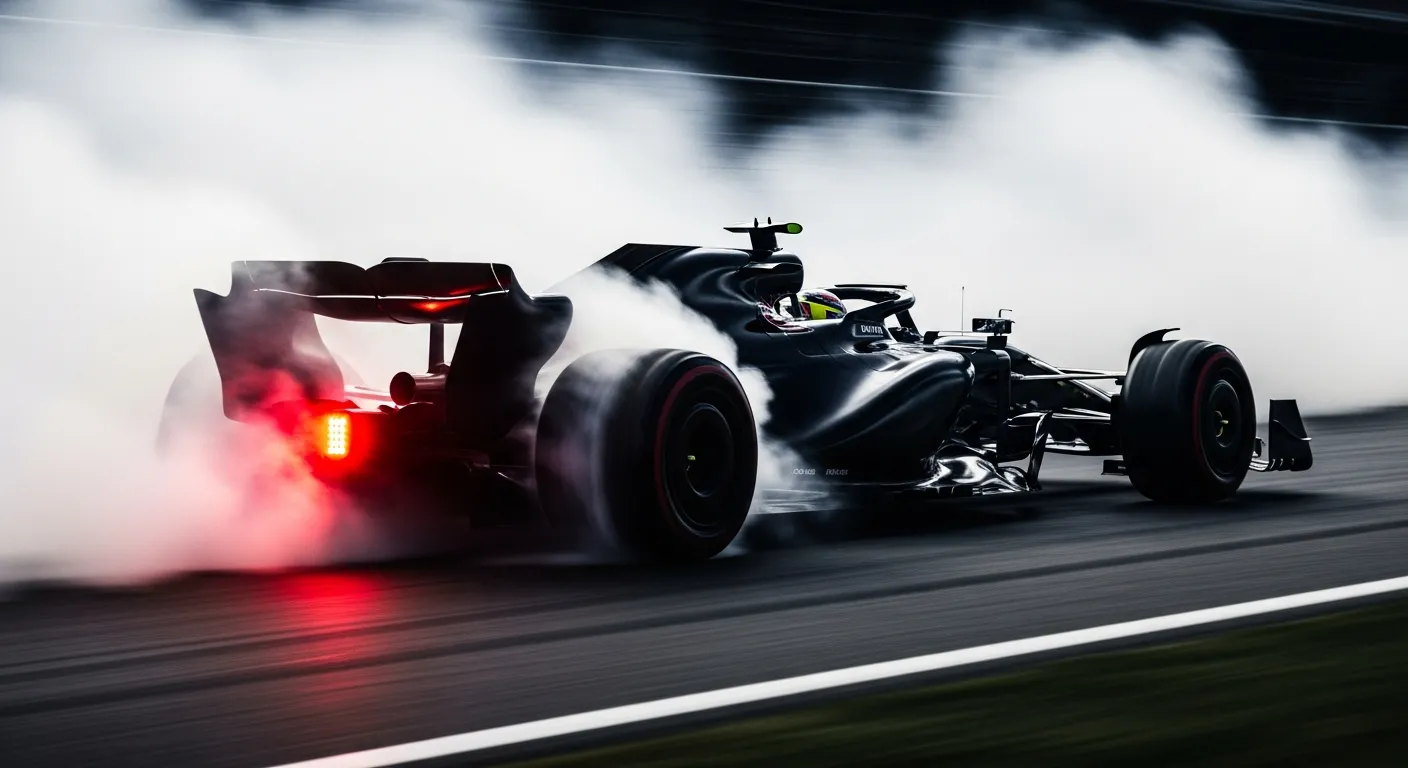
Lance Stroll's 2025 Singapore Grand Prix campaign on October 5th at the Marina Bay Street Circuit saw the Canadian driver navigate a challenging race weekend, culminating in a 13th place finish for Aston Martin, one lap down from the leader. Starting from 15th on the grid, Stroll faced the immediate task of making progress through the dense midfield on a circuit notoriously difficult for overtaking. The initial phase of the race saw the Aston Martin AMR25 holding its own, but the inherent characteristics of the street circuit, demanding precision and consistent pace over 62 laps, began to highlight the car's limitations relative to its competitors. Stroll completed 61 laps, reflecting the gap to the front-runners who completed the full 62. This status of finishing one lap down is a clear indicator of the performance delta on the day. Despite the challenging circumstances, Stroll did manage to improve his track position by two places from his starting grid slot. His fastest lap, a 1:35.851, was recorded on the very last lap, lap 61, placing him 12th in the overall fastest lap rankings for the event. This late-race pace, while respectable, ultimately did not translate into championship points, maintaining his season tally at 32 points. The [Marina Bay Street Circuit](https://en.wikipedia.org/wiki/Marina_Bay_Street_Circuit) is known for its unforgiving walls and high-attrition rates, making any finish a testament to driver skill and car reliability.
The performance within the Aston Martin garage presented a noticeable contrast, with teammate Fernando Alonso starting 10th and concluding the race in a strong 7th position, securing 6 valuable points for the team. Alonso completed all 62 race laps, underscoring the potential of the AMR25 when operating at its peak, or perhaps highlighting the Spaniard's ability to extract maximum performance. Stroll's result of 13th, finishing a lap down, placed him among a cluster of drivers who also couldn't match the leader's full race distance. This group included [Carlos Sainz](/results/2020-montreal-carlos-sainz), who managed to secure a point in 10th despite also finishing one lap down, and [Alexander Albon](/results/2020-montreal-alex-albon) in 14th, further emphasizing the tight competition in the midfield. Such outcomes are often influenced by strategic decisions, pit stop timings, and the ability to manage tire degradation over the race distance, all critical factors on a street circuit. For a broader understanding of how these elements play out across a season, the [official Formula 1 website](https://www.formula1.com/en) offers extensive data and analysis. The [FIA — F1 World Championship](https://www.fia.com/events/fia-formula-one-world-championship) provides the regulatory framework that shapes these competitive environments. Reflecting on past performances, such as [Lance Stroll's at the 2020 Canadian Grand Prix](/results/2020-montreal-lance-stroll), can offer context on how drivers adapt to different circuit demands and car setups. The ongoing evolution of car performance and driver dynamics is meticulously tracked, with detailed [2026 season data from Jolpica/Ergast](https://api.jolpi.ca/ergast/f1/2026.json) providing a glimpse into future trends and comparative analyses. Understanding the intricacies of these race weekends requires a deep dive into the numbers, which are readily available through various [Formula One data resources](https://api.jolpi.ca/ergast/f1/2026.json). For comprehensive race results and driver standings, the [Formula 1 official archives](https://www.formula1.com/en) serve as a definitive source.