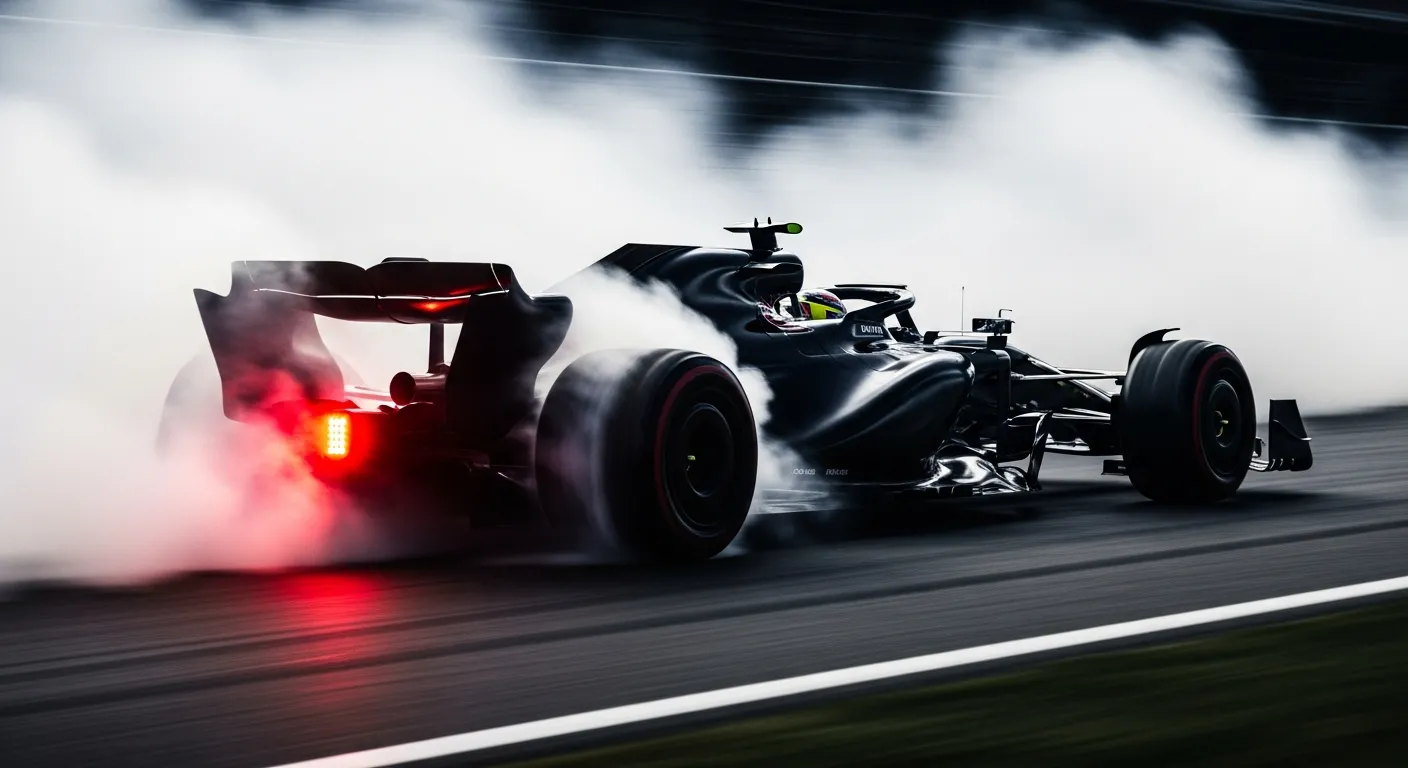
Lewis Hamilton's performance at the 2025 Singapore Grand Prix was a study in contrast, marked by a formidable fastest lap that belied his eventual eighth-place finish for Scuderia Ferrari. Starting from sixth on the grid, Hamilton navigated the demanding 62 laps of the [Marina Bay Street Circuit](https://www.formula1.com/en/racing/2025/Singapore/Circuit.html), a track renowned for its technicality, high demands on both car and driver, and the physical toll of its humid, night-race conditions. The initial phases of the race saw Hamilton battling within the mid-pack of the points-scoring positions, holding his own in a tightly contested field. The strategic complexities inherent to Singapore, often involving safety car periods and crucial pit stop timings, played a significant role in how the race unfolded for many competitors, influencing track position and tire degradation management.
While his Scuderia Ferrari entry ultimately crossed the line in eighth position, securing 4 points, the true highlight of his race unfolded on Lap 48. It was then that Hamilton recorded the fastest lap of the entire event, a blistering 1:33.808, demonstrating the raw pace available within his package when conditions and tire windows aligned perfectly. This achievement, ranking first among all competitors, earned him an additional championship point, a crucial detail for any driver aiming for a strong season, much like [Max Verstappen at the 2023 Italian Grand Prix](/results/2023-monza-max-verstappen) often demonstrates his car's ultimate pace regardless of track position. This ability to extract peak performance, even when not contending for the podium, underscores Hamilton's persistent drive and the development efforts by Ferrari. The timing of this fastest lap, late in the race, suggests a period of clear air or a strategic tire advantage, allowing him to push the limits on a circuit where precision is paramount.
The race result placed Hamilton two positions behind his teammate, Charles Leclerc, who started seventh and finished sixth, adding 8 points to Ferrari's constructor tally. This divergence in outcomes within the same team often prompts analysis of race strategy and tire management on a street circuit where overtaking is notoriously difficult. The tight confines and lack of runoff areas mean that even minor errors can be costly, making consistent pace and strategic execution paramount. For a comprehensive overview of the sport's governing body, the [FIA — F1 World Championship](https://www.fia.com/events/fia-formula-one-world-championship) provides detailed regulations and results. Further insights into overall [Formula 1 — official site](https://www.formula1.com/en) developments and driver profiles, including [Lewis Hamilton's career statistics](https://www.formula1.com/en/drivers/Lewis-Hamilton.html), offer additional context on his enduring career. The detailed race data, available through sources like [Jolpica/Ergast — 2026 season data](https://api.jolpi.ca/ergast/f1/2026.json), allows for a deeper dive into lap times and strategic decisions, informing our understanding of such complex races. The broader history and evolution of [Formula One](https://en.wikipedia.org/wiki/Formula_One) itself provide the backdrop for these contemporary battles, highlighting how individual performances, even those outside the top three, contribute to the season's narrative. This particular Singapore outing, while not a podium, showcased Hamilton's individual speed, a characteristic that has defined much of his career, and offers a point of comparison for other challenging races, such as [Charles Leclerc at the 2023 Italian Grand Prix](/results/2023-monza-charles-leclerc), where strategic nuances dictated outcomes. Even drivers adapting to new machinery, like [Liam Lawson at the 2023 Italian Grand Prix](/results/2023-monza-liam-lawson), understand the importance of extracting maximum performance when opportunities arise.