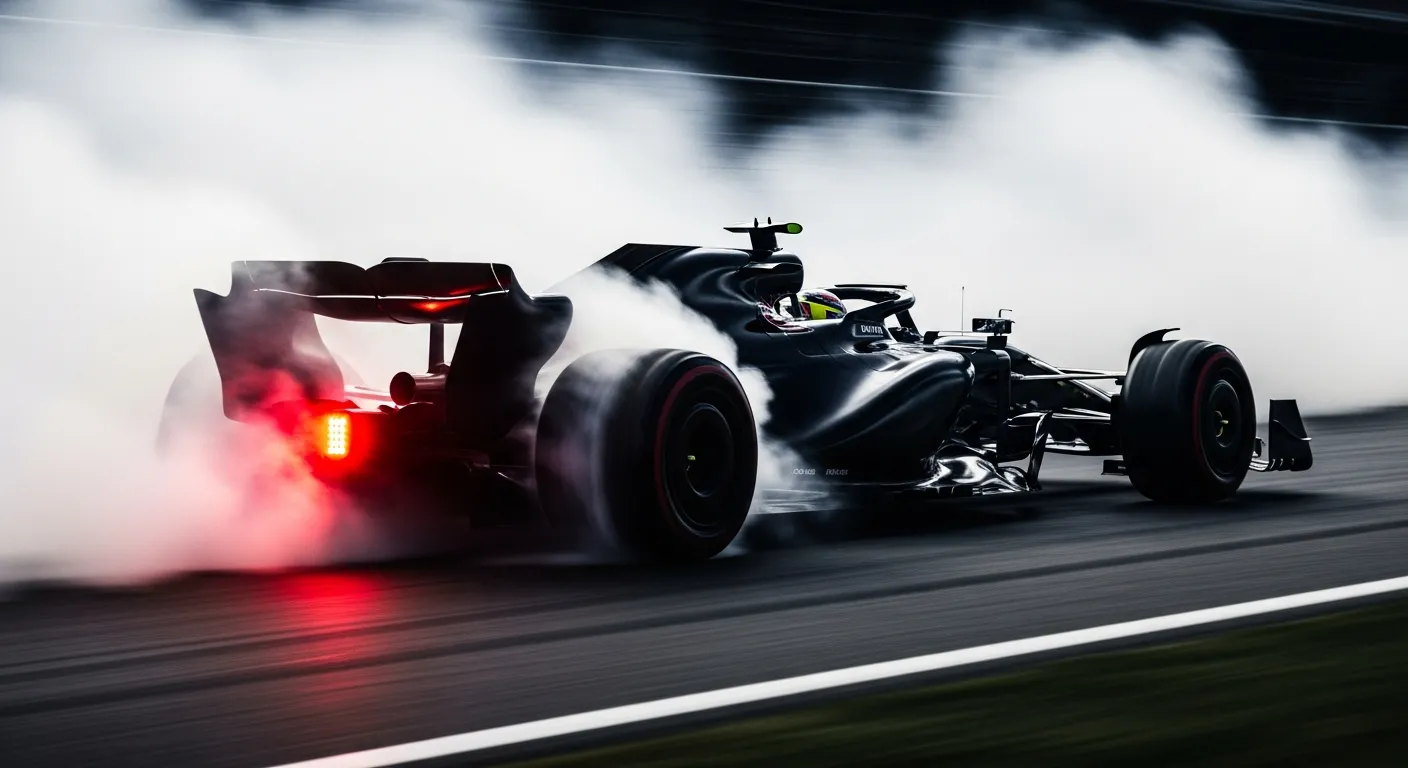
Lewis Hamilton's 2025 Mexican Grand Prix presented a challenging Sunday for Scuderia Ferrari, as the British driver, after qualifying an impressive third on the grid, ultimately crossed the finish line in eighth position. The initial promise of a front-row challenge, with teammate Charles Leclerc starting P2 and finishing P2, did not fully materialize for Hamilton. Throughout the 71 laps at the Autódromo Hermanos Rodríguez, Hamilton maintained a consistent pace, evidenced by his fastest lap of 1:20.601 on lap 50, which ranked sixth overall among all competitors. However, the race progression saw him lose five positions from his starting slot, finishing the event with a total time of 1:38:55.020. This result, while adding four points to his championship tally, marked a deviation from the team's qualifying strength and highlighted the competitive nature of the field at this late stage of the season, a dynamic often seen in high-altitude races where engine performance and tire degradation are critical factors, as detailed by the [official Formula 1 site](https://www.formula1.com/en). Understanding the technical regulations that govern car performance is crucial, information readily available from the [FIA technical guidelines](https://www.fia.com/events/fia-formula-one-world-championship).
The strategic calls and on-track battles saw Hamilton navigating a dense midfield. While his teammate secured a podium, Hamilton found himself in a close fight with drivers like George Russell, who finished P7 for Mercedes AMG F1, and Oliver Bearman, who put in a strong P4 performance for Haas F1 Team. The nuances of race strategy and tire management are often pivotal, a factor that can dramatically shift outcomes from qualifying to race day, a topic frequently analyzed in the broader context of [Formula One racing history on Wikipedia](https://en.wikipedia.org/wiki/Formula_One). Comparing this outing to other challenging races, such as [Lewis Hamilton at the 2014 Hungarian Grand Prix](/results/2014-hungaroring-lewis-hamilton), where strategic gambles played a significant role, offers a broader perspective on how race day unfolds. The raw data from the 2025 season, accessible via [Jolpica/Ergast's F1 data archives](https://api.jolpi.ca/ergast/f1/2026.json), provides granular insight into lap times and race stints, revealing the specific moments where positions are gained or lost. This race also saw other drivers like [Fernando Alonso at the 2014 Dutch Grand Prix](/results/2014-zandvoort-fernando-alonso) face their own unique challenges, underscoring the ever-present variables in Formula 1. The intricate engineering and aerodynamic principles behind F1 car performance are complex, and even a slight setup imbalance can lead to a significant drop in race pace, impacting a driver's ability to hold position. The competitive landscape means every tenth of a second counts, a reality that drivers like [Nico Hülkenberg at the 2014 Dutch Grand Prix](/results/2014-zandvoort-nico-hulkenberg) have also experienced in their careers, as documented in various [official F1 race reports](https://www.formula1.com/en/latest/all.html). For a deeper dive into specific race outcomes and driver statistics, [historical F1 results databases](https://api.jolpi.ca/ergast/f1/current.json) offer comprehensive information.