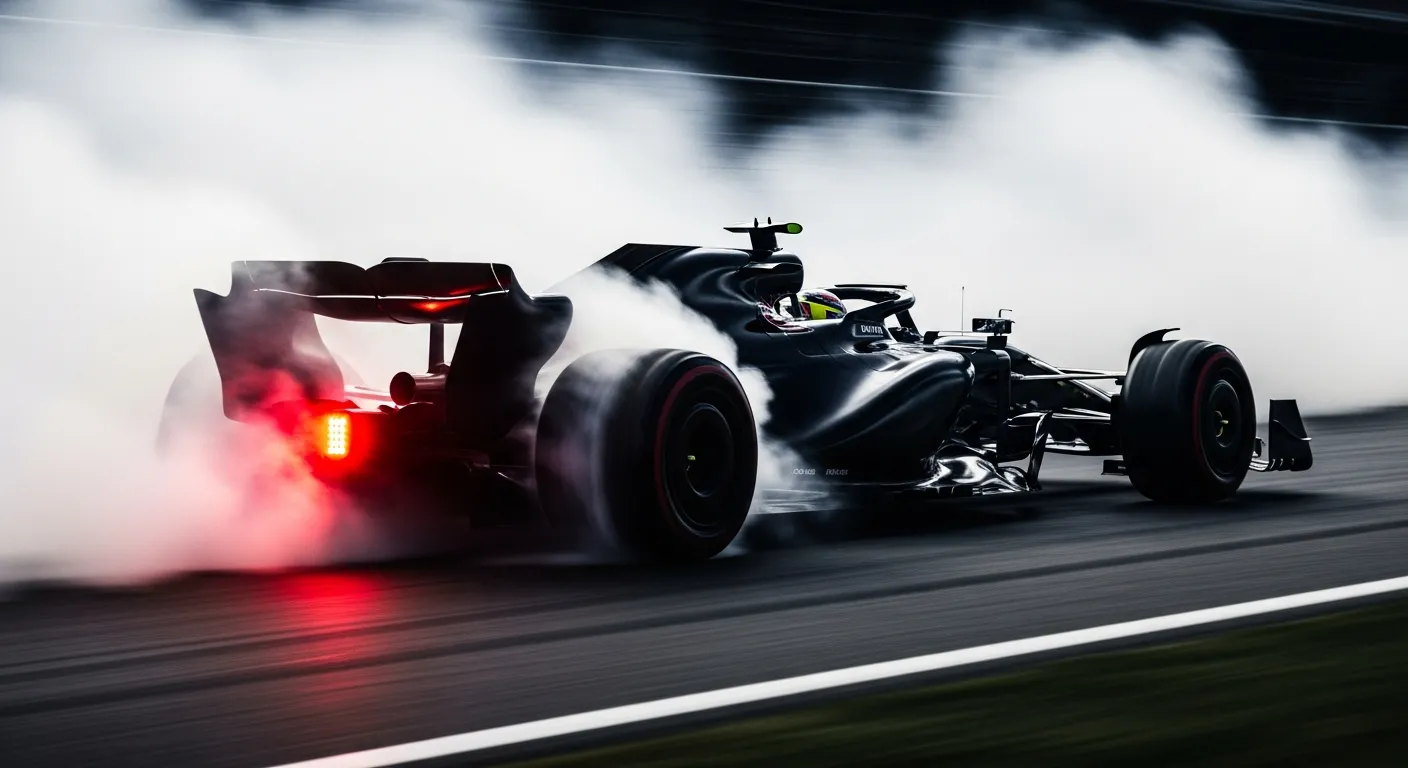
Nico Hülkenberg's 2025 Mexican Grand Prix at the Autódromo Hermanos Rodríguez was cut short by a critical handling issue, marking a significant setback for the German driver and the Kick Sauber F1 Team. Starting from 13th on the grid, Hülkenberg aimed to leverage his experience to navigate the challenging high-altitude circuit and convert his qualifying position into a points finish. The initial phases of the race saw him attempting to maintain track position amidst a competitive midfield. However, his efforts were ultimately curtailed on lap 25 when the team reported a "Handling" issue, necessitating his retirement from the event. This early exit meant Hülkenberg completed only 25 laps of the 71-lap race, preventing him from registering a final classification or adding to his season's points tally. His fastest lap, recorded on lap 14, was a 1:23.091, placing him 19th in the overall fastest lap rankings for the race, indicating the struggles he faced even before the terminal issue. The contrast with his teammate, Gabriel Bortoleto, who started 16th and managed to finish 10th, securing a single point for Kick Sauber, underscores the technical difficulties Hülkenberg encountered. Such unforeseen mechanical or setup problems are a persistent challenge in Formula 1, often dictating a driver's race outcome irrespective of their on-track performance, as seen with [Fernando Alonso at the 2018 São Paulo Grand Prix](/results/2018-interlagos-fernando-alonso) who also faced a retirement due to brakes.
The Autódromo Hermanos Rodríguez is renowned for its unique demands, primarily due to its high elevation, which significantly impacts engine performance and aerodynamic efficiency. Teams meticulously prepare for these conditions, yet issues can still arise, as was the case for Hülkenberg's Kick Sauber on October 26, 2025. The early retirement meant a lost opportunity for the German driver to battle for midfield positions, especially given the tight competition that saw drivers like [Esteban Ocon at the 2018 São Paulo Grand Prix](/results/2018-interlagos-esteban-ocon) demonstrating the potential for strong results from similar grid positions. For a comprehensive overview of how such technical regulations impact car design and race strategy, the [FIA — F1 World Championship](https://www.fia.com/events/fia-formula-one-world-championship) provides detailed information. While the exact nature of the "Handling" issue was not specified beyond the status code, it highlights the intricate balance teams must strike to ensure car reliability and performance throughout a demanding race weekend. The incident serves as a reminder of the fine margins in F1, where even a slight imbalance or component failure can lead to an abrupt end to a race, a scenario not uncommon in the sport's history, as documented on [Wikipedia: Formula One](https://en.wikipedia.org/wiki/Formula_One). The DNF meant Hülkenberg held his 9th position in the driver standings with 41 points, but critically, he missed a chance to extend that lead or gain ground. This outcome is a stark reminder of the unpredictable nature of grand prix racing, where a strong start can quickly unravel due to technical complications, a challenge often faced by drivers in the competitive midfield, such as [Pierre Gasly at the 2018 São Paulo Grand Prix](/results/2018-interlagos-pierre-gasly). The Kick Sauber team will undoubtedly conduct a thorough analysis of the data from this round, utilizing insights often drawn from extensive historical [Jolpica/Ergast — 2026 season data](https://api.jolpi.ca/ergast/f1/2026.json) to inform future development and prevent recurrence. The team's performance at Mexico City, with one car finishing in the points and the other retiring, encapsulates the fluctuating fortunes that can define a Formula 1 weekend, and will be a key point of discussion as they look ahead.