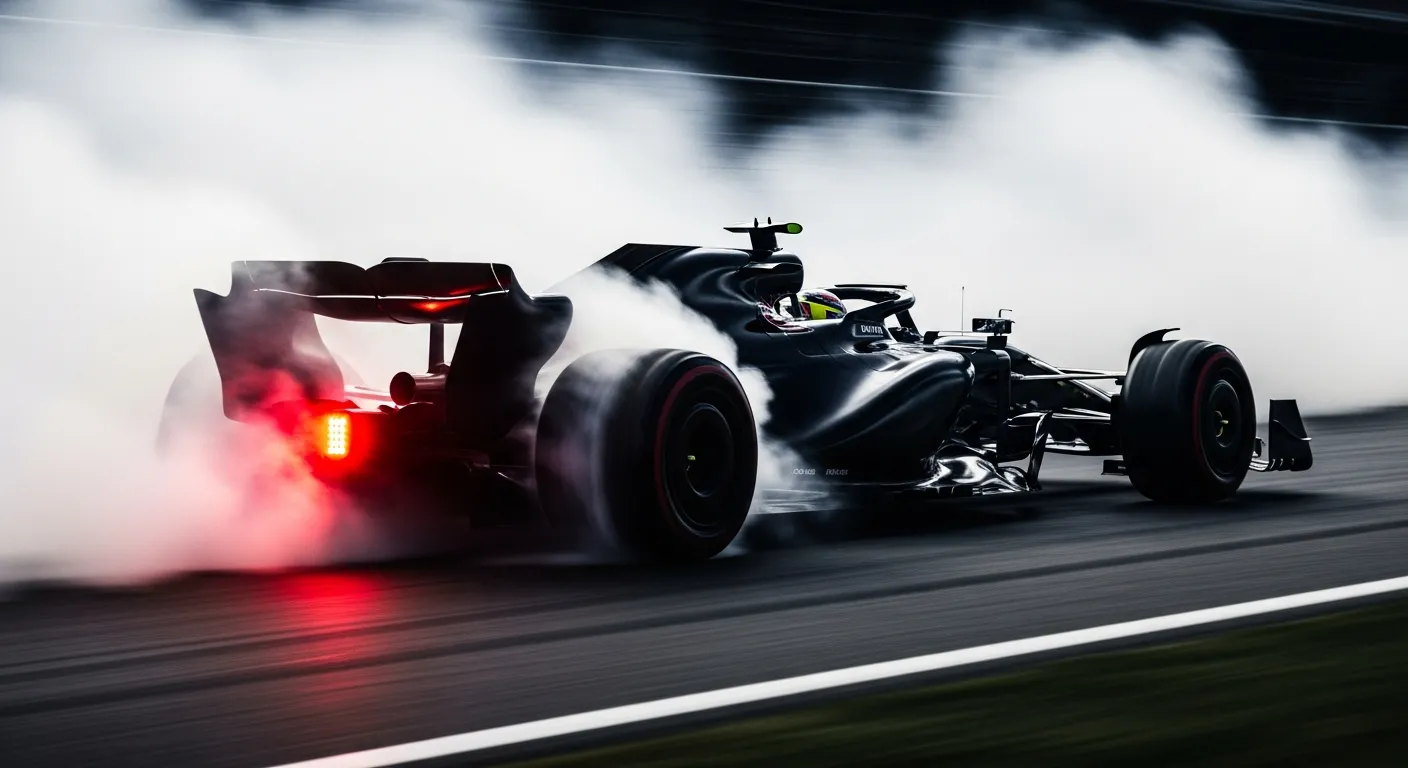
Gabriel Bortoleto's performance at the 2025 Monaco Grand Prix saw him navigate the challenging street circuit to finish 14th, ahead of his Kick Sauber teammate, despite being two laps down. Starting from 16th on the grid, the Brazilian driver demonstrated a consistent race pace, completing 76 laps of the 78-lap event. His fastest lap, a 1:14.884 on lap 38, placed him 12th overall in the fastest lap standings. This specific lap time, achieved mid-race, was quicker than his teammate's best and quicker than several other drivers who finished behind him, indicating a clear individual effort to push the limits of the Kick Sauber C45 chassis on a circuit known for punishing even minor errors. Improving two positions from his starting grid slot on a track where overtaking is notoriously difficult is a testament to disciplined driving, minimizing mistakes where others faltered.
The unique demands of the [Circuit de Monaco](https://www.formula1.com/en/circuits/monaco.html) often equalize performance disparities to some extent, yet the Kick Sauber F1 Team found itself in the familiar midfield battle, striving for any advantage. Bortoleto's ability to maintain a clean race, especially given the early incidents that saw Fernando Alonso retire with an engine issue and Pierre Gasly with collision damage, was crucial. His teammate, [Nico Hülkenberg at the 2016 São Paulo Grand Prix](/results/2016-interlagos-nico-hulkenberg), finished two positions behind him in 16th, also completing 76 laps, with a fastest lap time of 1:15.223. This head-to-head comparison within the team highlights Bortoleto's relative strength on the day, consistently outpacing his more experienced teammate in key metrics. The race itself was won by Lando Norris, who completed all 78 laps, underscoring the significant performance gap to the front-runners that Kick Sauber, like many teams, contends with. For a deeper dive into historical race outcomes and driver statistics, the [Jolpica/Ergast — 2026 season data](https://api.jolpi.ca/ergast/f1/2026.json) provides extensive records that illustrate the varying fortunes of teams and drivers across seasons.
While championship points remained elusive for Bortoleto and Kick Sauber at Monaco, the strategic objective often shifts to data gathering and maintaining reliability on such a demanding circuit. Finishing the race, even two laps down, provides invaluable telemetry for the [Kick Sauber F1 Team](https://www.formula1.com/en/teams/Kick-Sauber.html) engineers, aiding future development. Drivers like [Esteban Ocon at the 2016 São Paulo Grand Prix](/results/2016-interlagos-esteban-ocon) and [Carlos Sainz at the 2016 São Paulo Grand Prix](/results/2016-interlagos-carlos-sainz) have similarly navigated seasons where consistent finishes, rather than outright points, built foundational experience. The overall landscape of [Formula 1](https://en.wikipedia.org/wiki/Formula_One) racing, governed by the [FIA — F1 World Championship](https://www.fia.com/events/fia-formula-one-world-championship), consistently tests a driver's ability to extract every ounce of performance, particularly on circuits like Monaco where precision is paramount. Bortoleto's drive, while not yielding championship points, provided valuable mileage and experience in a high-pressure environment, a crucial aspect of development for any driver in the [Formula 1 — official site](https://www.formula1.com/en) ecosystem, as they aim to climb the ranks in the competitive world of grand prix racing.