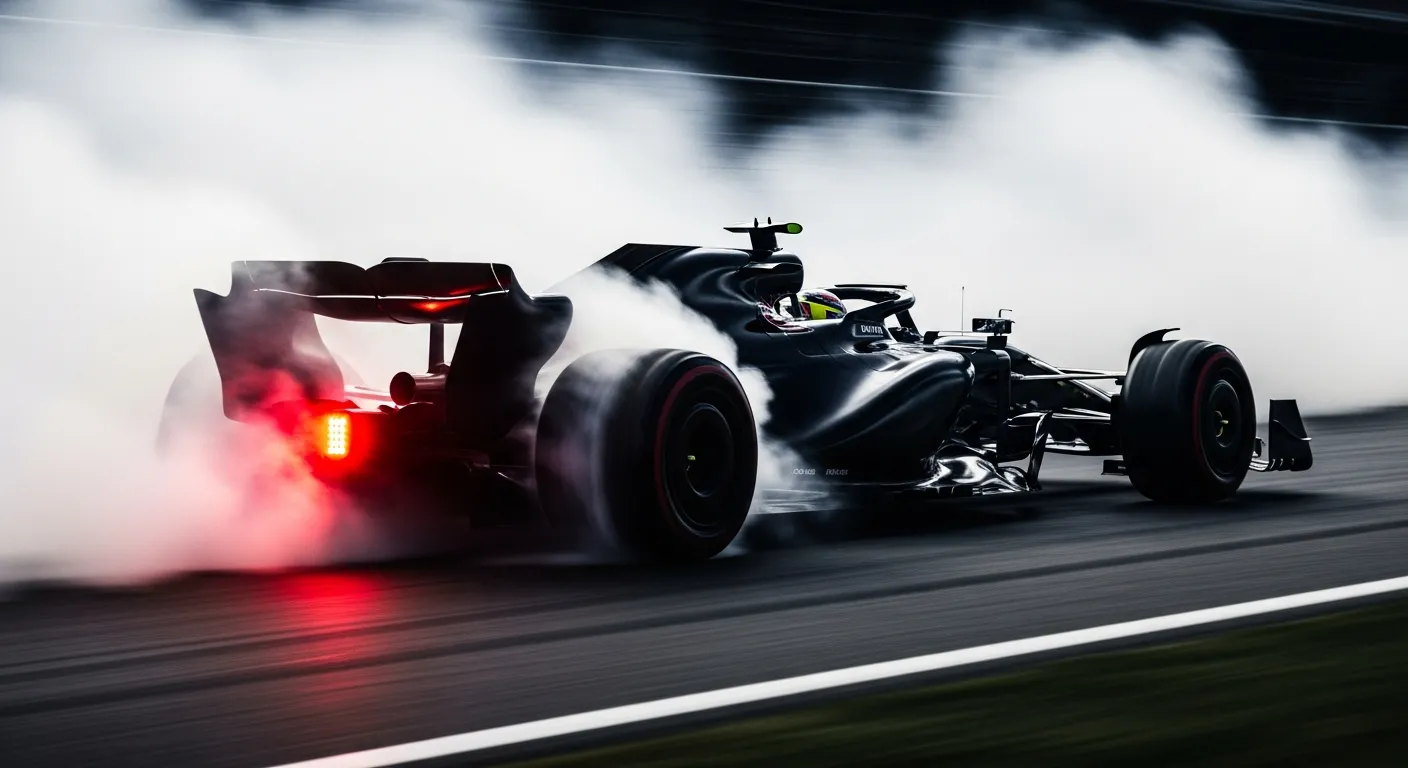
George Russell's 2025 Monaco Grand Prix weekend for Mercedes AMG F1 saw him navigate the demanding Circuit de Monaco from a starting position of 14th to an 11th-place finish, just outside the points, completing 76 laps. The narrow streets of Monte Carlo often present a unique challenge for overtaking, and Russell's progression through the field was a testament to managing the race's inherent complexities without significant incident. His final lap, the 76th, registered a 1:13.405, positioning it as the second-fastest lap of the entire race, only surpassed by Lando Norris's 1:13.221 on the final lap. This raw pace, demonstrated late in the race, suggests that the Mercedes W16 had underlying performance, but the circuit's characteristics and grid position limited its translation into a stronger result. The team's strategy, which saw Russell finish two laps down, mirrored that of Carlos Sainz Jr. in 10th and Alexander Albon in 9th, indicating a consistent approach for those outside the lead pack.
The race unfolded with his teammate, Kimi Antonelli, starting one position behind Russell in 15th and finishing 18th, three laps down, with a fastest lap of 1:13.518 on lap 77, ranking third overall. This indicates a challenging weekend for the Mercedes AMG F1 team as a whole, struggling to extract qualifying pace and race position on a track where grid slot is paramount. While Russell's race pace improved towards the end, as evidenced by his second-fastest lap, the initial qualifying deficit proved difficult to overcome. The Monaco Grand Prix, a fixture on the [Formula 1 — official site](https://www.formula1.com/en) calendar, is known for its processionary nature once positions are established, making any significant gains from a mid-pack start a considerable undertaking. The [FIA — F1 World Championship](https://www.fia.com/events/fia-formula-one-world-championship) regulations often influence how teams approach such unique circuits, and Mercedes' performance here suggests they may need to re-evaluate their package for low-speed, high-downforce tracks. For a broader understanding of how such results contribute to the championship, one can consult [Wikipedia: Formula One](https://en.wikipedia.org/wiki/Formula_One). Comparing this outing to other races, such as [Lando Norris at the 2025 Singapore Grand Prix](/results/2025-marina-bay-lando-norris) where McLaren showed strong form, highlights the variability of performance across different circuit types. The detailed [Jolpica/Ergast — 2026 season data](https://api.jolpi.ca/ergast/f1/2026.json) provides a comprehensive look at historical race statistics, offering context for this type of performance. Russell's drive, while not yielding points, showed persistent effort, reflecting the continuous development cycle that defines a Formula 1 season. The challenge for Mercedes will be to convert this underlying pace into tangible results at upcoming rounds. We also saw [Charles Leclerc at the 2025 Singapore Grand Prix](/results/2025-marina-bay-charles-leclerc) deliver a strong performance, further emphasizing the competitive landscape. The strategic decisions made during the race, particularly regarding tire management and pit stops, are crucial on a circuit like Monaco, and the Mercedes team will undoubtedly be analyzing the data from this event. For more in-depth technical analysis, resources like the [official F1 technical regulations](https://www.formula1.com/en/latest/article.understanding-the-f1-technical-regulations.5hGvF9t51q419aW01j5mE0.html) are invaluable. Even though [Lewis Hamilton at the 2025 Singapore Grand Prix](/results/2025-marina-bay-lewis-hamilton) had a different outcome, the consistent pressure on drivers to perform is universal. The [FIA's official event guidelines](https://www.fia.com/events/fia-formula-one-world-championship) also outline the specific procedures for a Grand Prix weekend.