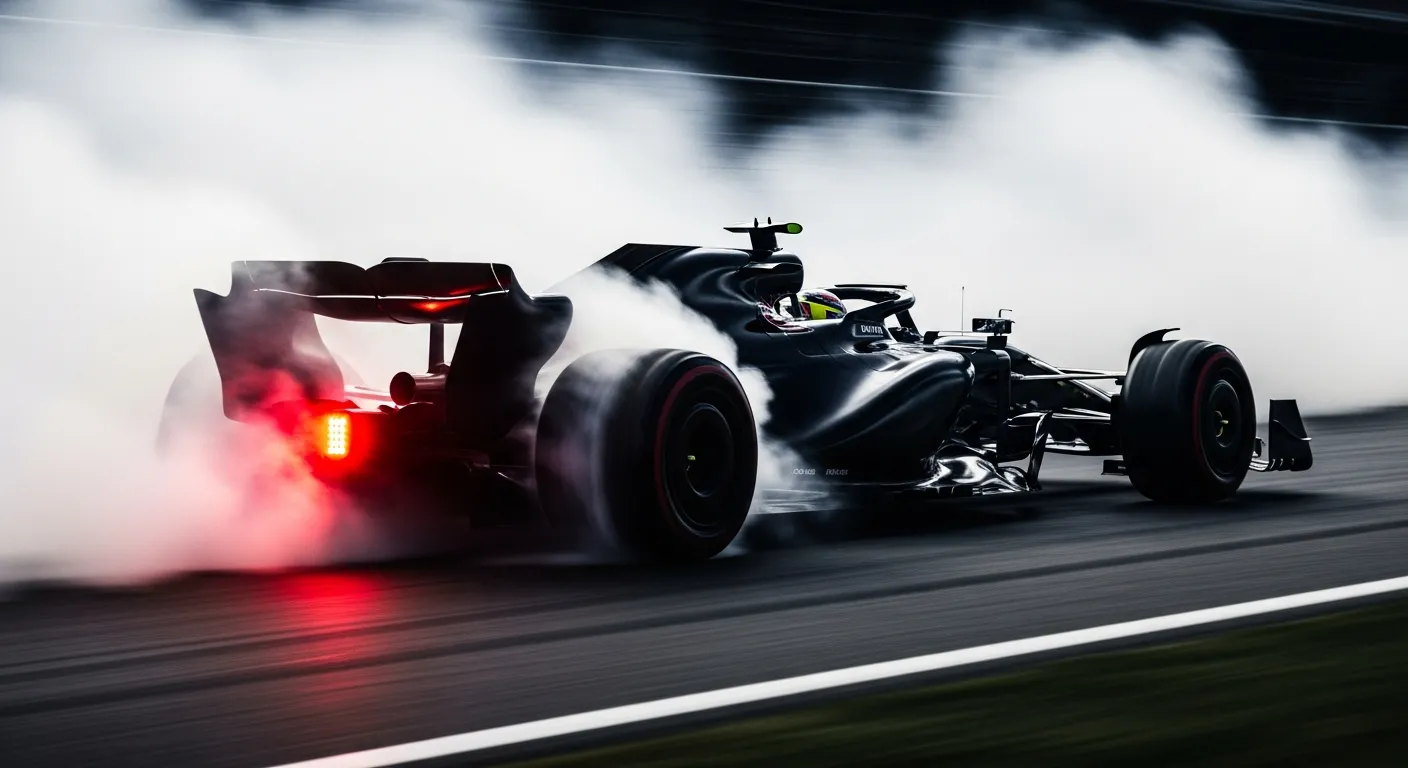
Lewis Hamilton navigated the 2025 Italian Grand Prix at Monza, converting a grid start of 10th into a valuable 6th place finish for Scuderia Ferrari. This performance on September 7, 2025, saw Hamilton complete all 53 laps of the Autodromo Nazionale Monza in 1:14:01.774, securing 8 championship points. His race was characterized by a consistent drive through the field, culminating in a strong points haul on Ferrari's home turf. The high-speed nature of Monza, a circuit renowned for its long straights and chicanes, demands a specific car setup and driver precision. Hamilton's ability to advance four positions from his starting grid demonstrates effective race management and strategic tire usage throughout the Grand Prix weekend, a critical element for success at this historic venue.
The pace of the Ferrari SF-25 allowed Hamilton to push, evidenced by his fastest lap of 1:21.546 on lap 50, which ranked him 6th overall for fastest laps during the race. This late-race pace indicates effective tire management and a car that remained competitive as fuel loads decreased. While his teammate, Charles Leclerc, started from 4th and finished 4th, securing 12 points, Hamilton's drive from a deeper grid slot underscores the team's dual approach to race strategy and the varied challenges each driver faced. Leclerc's own fastest lap, a 1:21.294 on lap 53, highlights the competitive edge Ferrari sought to maintain on their home circuit, pushing until the very end. The overall race was won by Max Verstappen of Red Bull Racing, who started from pole position and finished in 1:13:24.325, further emphasizing the challenge faced by the chasing pack in securing top positions against a dominant competitor. For a broader understanding of F1 regulations and sporting codes, the [FIA — F1 World Championship](https://www.fia.com/events/fia-formula-one-world-championship) provides comprehensive details.
Hamilton's progress through the field was a testament to his experience, as he navigated the competitive mid-pack, making up positions steadily. Drivers like [Alexander Albon at the 2021 Mexico City Grand Prix](/results/2021-mexico-city-alex-albon) have also shown the capacity for significant overtakes from challenging grid positions, though each circuit presents unique demands and opportunities for gaining ground. The granular data from this round, accessible via platforms like [Jolpica/Ergast — 2026 season data](https://api.jolpi.ca/ergast/f1/2026.json), offers a detailed view of individual lap times and race progressions, allowing analysts to dissect specific driver performances and strategic nuances. Understanding the historical context of Formula 1, as documented on [Wikipedia: Formula One](https://en.wikipedia.org/wiki/Formula_One), helps frame such results within the sport's evolving landscape and the perennial pursuit of performance.