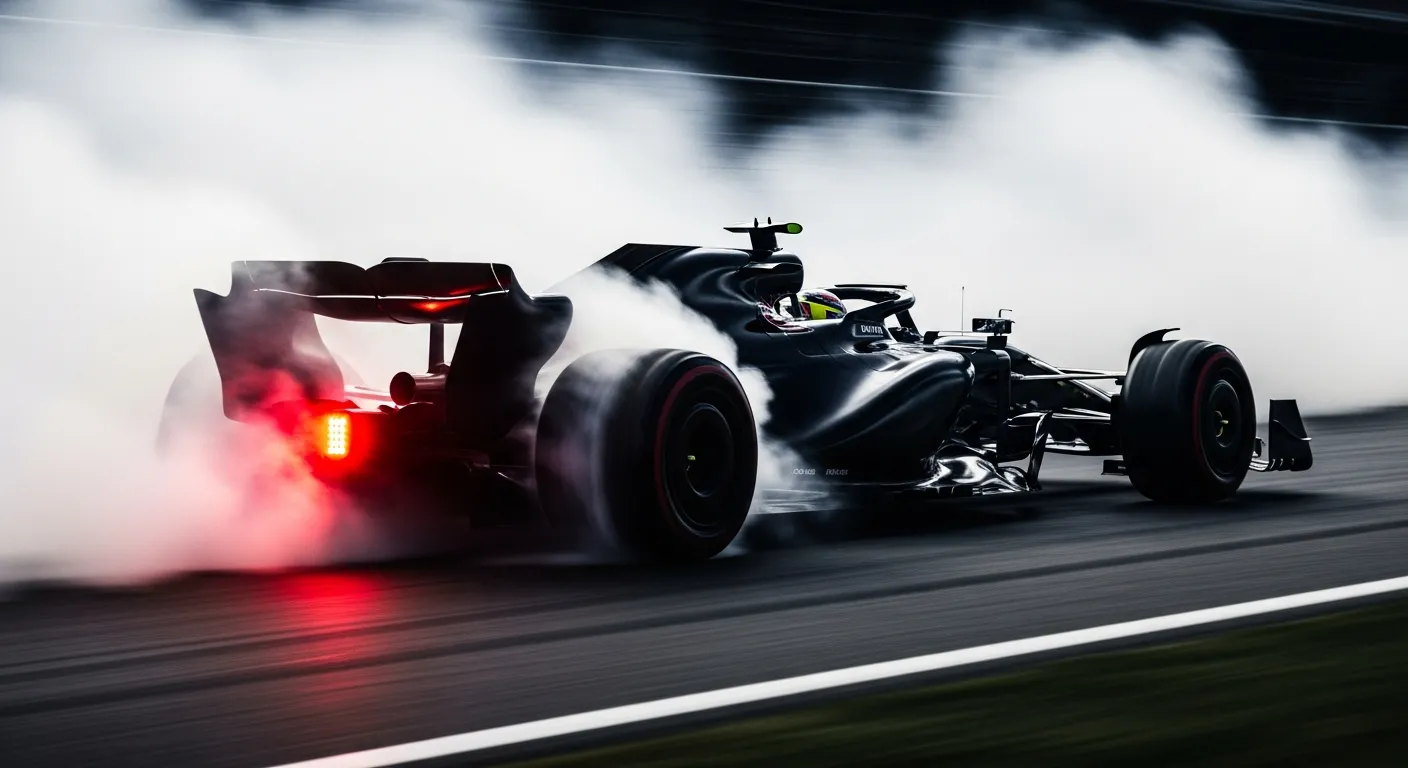
The 2025 Austrian Grand Prix at the Red Bull Ring proved to be a challenging and ultimately unrewarding event for Alexander Albon and Williams Grand Prix Engineering, culminating in an early retirement due to an engine issue. Starting from 12th on the grid, Albon’s race was cut short after just 15 laps, a significant setback for the British constructor. This mechanical failure meant a missed opportunity to convert a mid-pack starting position into potential championship points, a crucial factor for teams navigating the competitive landscape of Formula 1. The inherent demands of the Red Bull Ring circuit, known for its high-speed sections, elevation changes, and heavy braking zones, often test powertrain reliability to its limits, and on this occasion, it was Albon's engine that succumbed to these pressures. For a team like Williams, every opportunity to score points is vital, and an early DNF directly impacts their standing in the Constructors' Championship, a battle often decided by consistency and reliability as much as raw pace.
Adding to Williams' woes, Albon's teammate, Carlos Sainz Jr., also retired from the race on lap 0 due to a brakes issue, marking a double DNF for the team. This compounded the disappointment, as both cars were out before the race had truly begun for one, and very early for the other. Such an outcome is a considerable blow, not only in terms of points but also for the data acquisition that is critical for ongoing development. While Albon managed to log a fastest lap of 1:10.641 on lap 9, placing him 17th in the overall fastest lap standings for the event, this brief display of pace was ultimately overshadowed by the premature end to his run. Incidents of this nature underscore the fine margins in Formula 1, where a single component failure can derail an entire weekend's effort and impact a team's strategic trajectory. For context, other drivers like [Charles Leclerc at the 2022 Azerbaijan Grand Prix](/results/2022-baku-charles-leclerc) and [George Russell at the 2022 Azerbaijan Grand Prix](/results/2022-baku-george-russell) have navigated similar pressures to secure strong finishes, highlighting the contrast in outcomes. The overall results of the 2025 Austrian Grand Prix, available on the [Formula 1 — official site](https://www.formula1.com/en), saw Lando Norris take the win, demonstrating the reliability and performance required to complete the full 70 laps. Understanding the broader context of [Formula One](https://en.wikipedia.org/wiki/Formula_One) racing requires appreciating these mechanical challenges, which are a constant variable across all teams, as detailed by the [FIA — F1 World Championship](https://www.fia.com/events/fia-formula-one-world-championship) regulations. The detailed race data, including Albon's specific lap times and the full field's performance, can be explored through various [Jolpica/Ergast — 2026 season data](https://api.jolpi.ca/ergast/f1/2026.json) archives, offering insights into the race's dynamics. This event serves as a reminder that even a robust starting position, as seen with [Max Verstappen at the 2022 Azerbaijan Grand Prix](/results/2022-baku-max-verstappen) who also faced a DNF, does not guarantee a finish, particularly on circuits like the [Red Bull Ring](https://en.wikipedia.org/wiki/Red_Bull_Ring) that demand peak performance from every component, as outlined on the [Formula 1 — official site](https://www.formula1.com/en) technical pages.