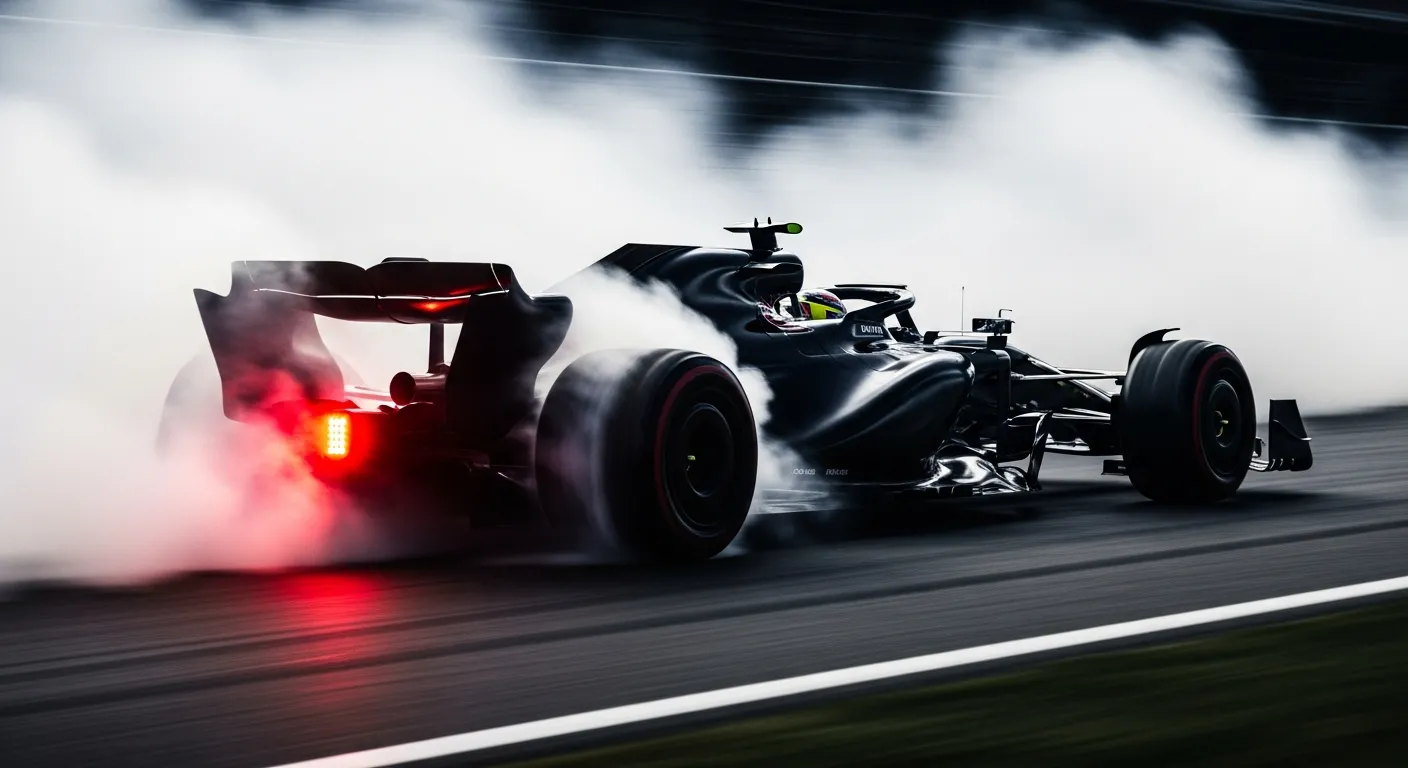
Isack Hadjar's campaign at the 2025 Austrian Grand Prix saw the French driver finish P12 for Racing Bulls, a single position higher than his P13 grid start, yet unable to secure championship points. Starting from the middle of the pack on the Red Bull Ring, Hadjar completed 69 laps, concluding the race one lap down from the leading McLaren. His teammate, Liam Lawson, delivered a stronger performance, starting P6 and maintaining that position to finish P6, securing 8 points for the Italian constructor. This disparity in results underscores the competitive challenges within the midfield, where even minor gains in track position can be hard-won, as seen in the broader context of [Formula 1 — official site](https://www.formula1.com/en) racing. Understanding the full scope of a season's performance often requires examining detailed [Jolpica/Ergast — 2026 season data](https://api.jolpi.ca/ergast/f1/2026.json) trends.
Hadjar's fastest lap of 1:10.204, recorded on lap 40, ranked 16th overall, indicating the Racing Bulls' general pace in race trim. The event was not without its incidents, with high-profile retirements including Max Verstappen and Kimi Antonelli due to collisions, and Alexander Albon exiting with an engine issue. Despite these opportunities for upward movement, Hadjar remained outside the points-paying positions. The fierce midfield battles at circuits like the Red Bull Ring often mean that even a slight improvement in starting position, as was the case for Hadjar, does not guarantee a points finish. For comparison, a driver like [Nico Hülkenberg at the 2019 British Grand Prix](/results/2019-silverstone-nico-hulkenberg) demonstrated significant upward mobility from a P20 start to P9, highlighting the potential for strategic gains. The [FIA — F1 World Championship](https://www.fia.com/events/fia-formula-one-world-championship) regulations ensure a level playing field, yet individual racecraft remains paramount. The broader history of the sport, detailed on [Wikipedia: Formula One](https://en.wikipedia.org/wiki/Formula_One), shows the constant evolution of strategies. Drivers like [Carlos Sainz at the 2019 British Grand Prix](/results/2019-silverstone-carlos-sainz) also navigated challenging midfield conditions, underscoring the consistent pressure in this part of the grid. Further analysis of race data, often available through platforms providing [Jolpica/Ergast — 2026 season data](https://api.jolpi.ca/ergast/f1/2026.json), can reveal the nuances of these performances. The official [Formula 1 — official site](https://www.formula1.com/en) provides comprehensive race reports that often detail these intricate battles.