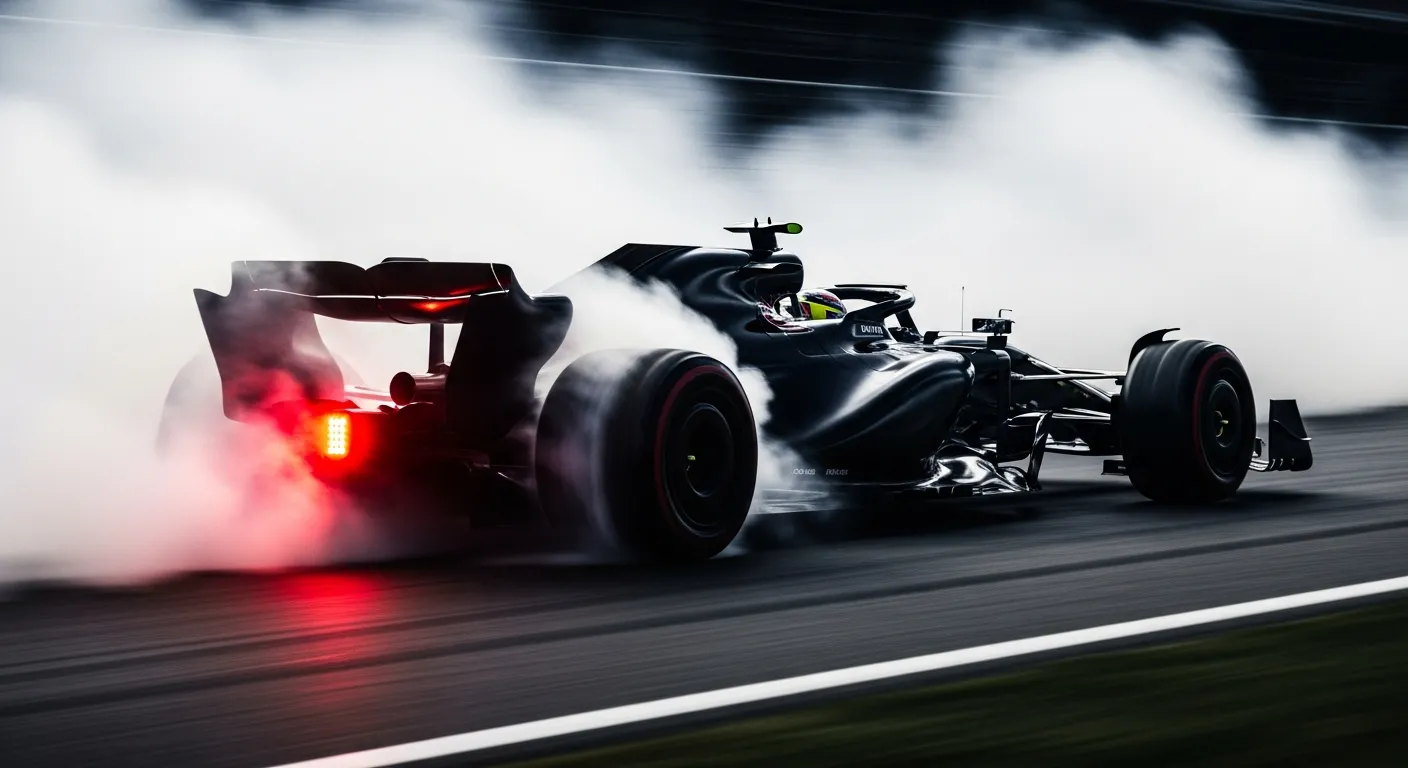
Max Verstappen's campaign at the 2025 British Grand Prix, round 12 of the season, saw a departure from his usual front-running dominance, culminating in a P5 finish for Red Bull Racing despite starting from pole position. The Silverstone Circuit, known for its high-speed challenges and demanding corners, presented a complex scenario where the Dutchman, after completing all 52 laps, crossed the line with a total race time of 1:38:12.516. This result, yielding 10 points, marked a significant shift from his qualifying performance, where he had secured the top grid slot. The race itself was a showcase of varied strategies and unexpected pace from competitors, particularly McLaren's Lando Norris and Oscar Piastri, who secured a formidable 1-2 finish. The performance of Nico Hülkenberg, who climbed from P19 to P3 for Kick Sauber, also highlighted the competitive depth of the field and the unpredictable nature of the sport, a stark contrast to the challenges faced by drivers like [Alexander Albon at the 2021 Azerbaijan Grand Prix](/results/2021-baku-alex-albon) from lower grid positions. Verstappen's fastest lap, a 1:30.179 on lap 49, ranked P5 overall, indicating that while individual lap pace was present, sustained race management and competitive pressure ultimately dictated his final standing. This outcome, while not a disaster, certainly wasn't the expected conversion from pole, prompting analysis of Red Bull's race day execution, a common subject on the [Formula 1 — official site](https://www.formula1.com/en).
The strategic landscape of the British Grand Prix unfolded with several key moments that influenced Verstappen's trajectory. From the initial lights out, the Red Bull Racing machine faced immediate pressure, unable to fully capitalize on its P1 starting advantage. The McLaren duo, in particular, demonstrated superior race pace, making it challenging for Verstappen to maintain his position. While Red Bull aimed to convert pole into victory, the race narrative saw their primary driver navigating fierce competition, ultimately finishing behind Lewis Hamilton's Ferrari and the surprising Kick Sauber of Hülkenberg. This performance stands in contrast to his more dominant outings, like his strong showing at the [2021 Singapore Grand Prix](/results/2021-marina-bay-max-verstappen), where different circuit characteristics and strategic plays often align more favorably. His teammate, Yuki Tsunoda, finished P15, a lap down, underscoring the challenges Red Bull faced as a unit at Silverstone, a situation not entirely dissimilar to the team's varied results in past seasons, as seen with [Yuki Tsunoda at the 2021 Azerbaijan Grand Prix](/results/2021-baku-yuki-tsunoda). For comprehensive race data and historical context, fans can always refer to detailed [Jolpica/Ergast — 2026 season data](https://api.jolpi.ca/ergast/f1/2026.json) archives. The dynamic nature of Formula 1 racing, as outlined by the [Formula 1 — official site](https://www.formula1.com/en) itself, often sees such shifts in form, with teams constantly adapting to evolving technical regulations set by the [FIA — F1 World Championship](https://www.fia.com/events/fia-formula-one-world-championship). Understanding the broader context of the sport, including its history and mechanics, is well-supported by resources like [Wikipedia: Formula One](https://en.wikipedia.org/wiki/Formula_One). This particular Grand Prix serves as a reminder that even from pole, a P5 finish is a tangible outcome in a highly competitive season, demanding constant adaptation from both driver and constructor, a core tenet of the [FIA — F1 World Championship](https://www.fia.com/events/fia-formula-one-world-championship) regulations.