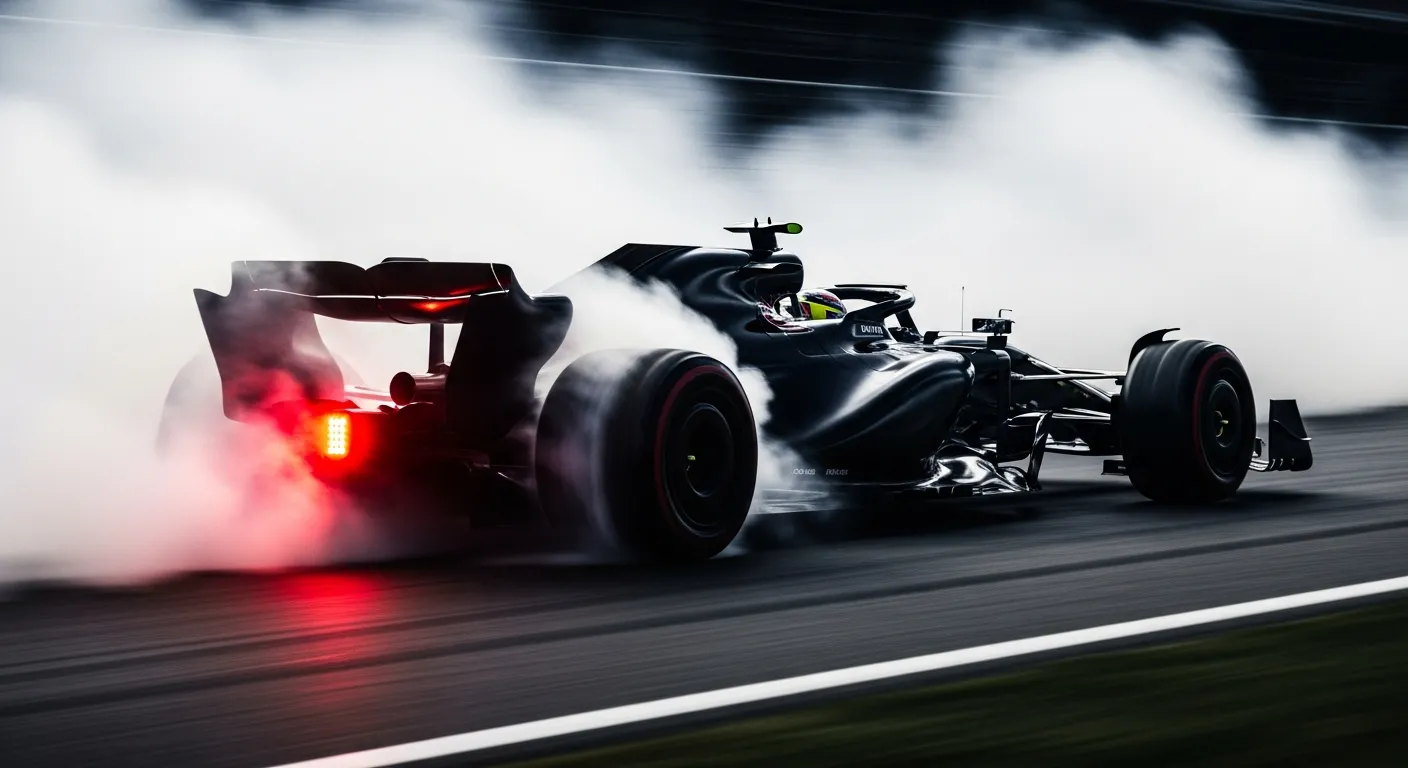
Charles Leclerc's performance at the 2025 Belgian Grand Prix saw him maintain his qualifying pace, converting a third-place grid slot into a consistent podium finish for Scuderia Ferrari at the Circuit de Spa-Francorchamps, a result that solidified his championship standing.
Leclerc, starting from third on the grid, completed all 44 laps of the demanding Spa circuit in a total time of 1:25:42.786, securing 15 crucial points for Scuderia Ferrari. This result positioned him directly behind the McLaren duo, who demonstrated formidable pace throughout the weekend. Oscar Piastri took the win with a commanding time of 1:25:22.601, followed by his teammate Lando Norris, who finished second in 1:25:26.016. The battle at the front was intense, and Leclerc's Ferrari demonstrated solid, consistent pace, successfully holding off the challenge from Max Verstappen. Verstappen, starting fourth, ultimately finished in the same position, just over a second behind Leclerc with a final race time of 1:25:44.332. The strategic execution by Scuderia Ferrari was paramount, involving precise tire management and maintaining optimal track position throughout the race. This was a critical factor on a circuit renowned for its high-speed sections like Eau Rouge and Radillon, coupled with technical corners and significant elevation changes. Navigating these elements effectively requires a deep understanding of vehicle dynamics and race strategy, as outlined in the general principles of [Formula 1 — official site](https://www.formula1.com/en) competition. Leclerc's ability to convert his strong qualifying into a podium finish underscored both his driving skill and the Ferrari team's operational efficiency at this challenging venue.
While Charles Leclerc delivered a robust individual performance, his teammate Lewis Hamilton also contributed to Scuderia Ferrari's points haul. Hamilton, starting from an unlisted grid position, navigated his Ferrari to a respectable seventh place, completing the full 44 laps in 1:26:03.280 and adding 6 points to the team's championship tally. Hamilton's fastest lap, a 1:46.534 recorded on lap 43, was marginally slower than Leclerc's best of 1:46.174, which came on lap 40, indicating a tight performance window between the two Ferrari drivers. The broader field at Spa presented several intriguing narratives. Alexander Albon of Williams, for instance, started fifth and finished sixth, showcasing a strong weekend for his team and highlighting their development, a performance that could be compared to his future efforts, such as at the [Alexander Albon at the 2026 Hungarian Grand Prix](/results/2026-hungaroring-alex-albon). Further down the order, the race also highlighted instances where raw pace didn't necessarily translate into points. Kimi Antonelli, despite finishing 16th for Mercedes, set the fastest lap of the entire race with an impressive 1:44.861 on lap 32. Similarly, Nico Hülkenberg, driving for Kick Sauber, recorded the second fastest lap of 1:45.068 on lap 39, ultimately finishing 12th. These examples underscore the complex interplay of strategy, track position, and pure speed in Formula 1, a dynamic frequently discussed in detailed analyses of the sport's history on [Wikipedia: Formula One](https://en.wikipedia.org/wiki/Formula_One). The comprehensive data from such events is meticulously compiled, offering invaluable insights into driver and constructor performance across seasons, as openly available through resources like the [Jolpica/Ergast — 2026 season data](https://api.jolpi.ca/ergast/f1/2026.json) archives. Ferrari's consistent points haul from both drivers at Spa is a positive indicator for their season, contrasting with the challenges faced by drivers like [Carlos Sainz at the 2026 Hungarian Grand Prix](/results/2026-hungaroring-carlos-sainz) in other contexts, or the tight mid-field battles often involving drivers such as [Yuki Tsunoda at the 2026 Hungarian Grand Prix](/results/2026-hungaroring-yuki-tsunoda) at different rounds.