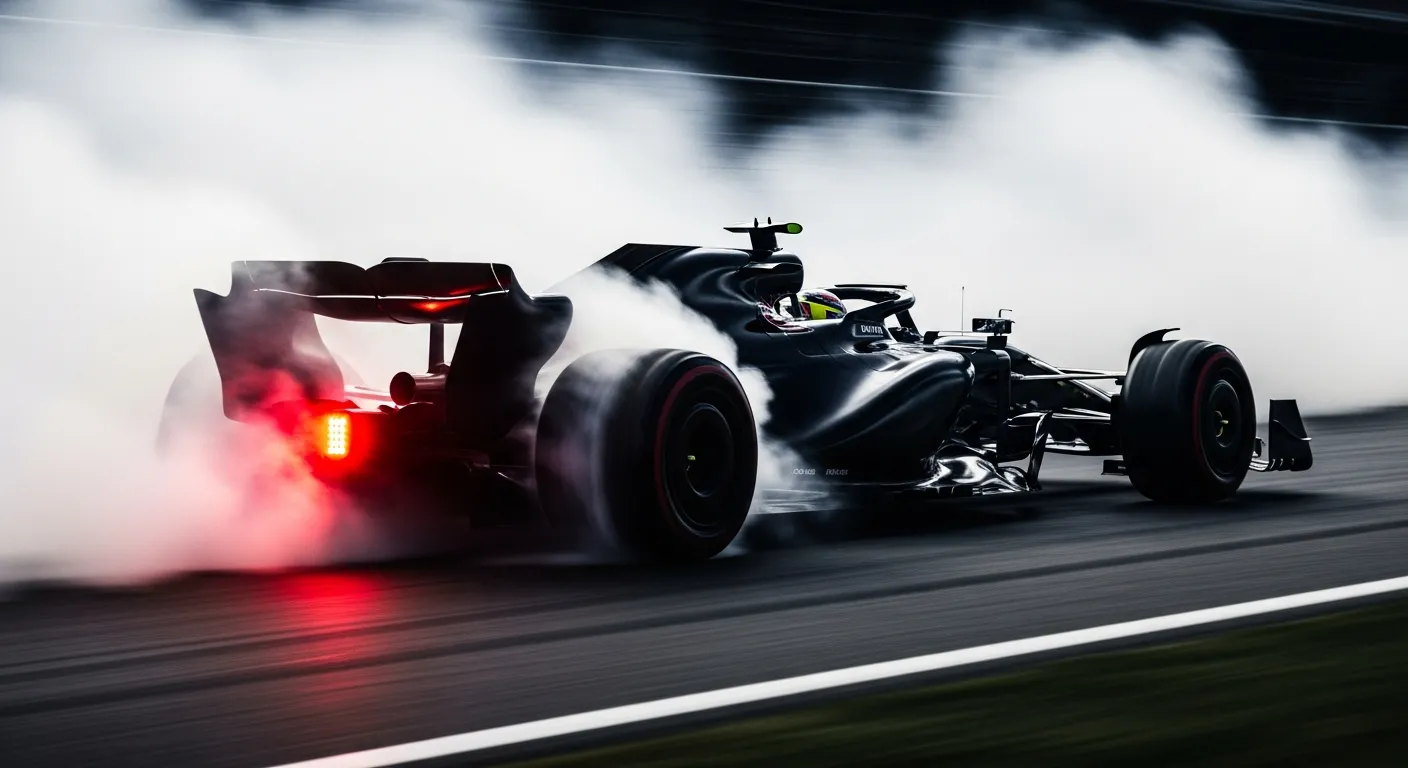
Liam Lawson's 2025 Japanese Grand Prix saw him navigate the Suzuka Circuit for Racing Bulls, starting from 13th on the grid and concluding the 53-lap race in 17th position. The New Zealander completed the race in 1:23:29.717, a performance that, while seeing him finish all laps, did not yield championship points. His fastest lap of 1:32.043, recorded on lap 39, placed him 17th in the speed rankings for the event, indicating the overall pace of the Racing Bulls package at Suzuka. This outcome contrasted with his teammate, Isack Hadjar, who started significantly higher from 7th on the grid and secured a points-scoring 8th place finish, demonstrating a notable performance delta within the team. Hadjar's fastest lap, a 1:31.317 on lap 52, was considerably quicker and ranked 7th overall, further highlighting the differing race trajectories for the two Racing Bulls drivers.
The challenge for Lawson at Suzuka underscored the competitive nature of the midfield in [Formula 1](https://www.formula1.com/en). Despite a clean race without incidents, moving from a grid position of 13th to a finishing position of 17th suggests the Racing Bulls car struggled to maintain track position or make significant progress through the field during the 53-lap event. For a deeper understanding of race results and driver statistics, comprehensive [F1 season data](https://api.jolpi.ca/ergast/f1/2026.json) provides detailed breakdowns. Lawson's performance here, while not scoring points, contributes to the overall [FIA F1 World Championship](https://www.fia.com/events/fia-formula-one-world-championship) narrative for the season. Further analysis of [historical Formula One results](https://api.jolpi.ca/ergast/f1/2026.json) can provide context for such midfield battles. Looking back at his teammate's strong showing, one might compare it to [Isack Hadjar at the 2025 Canadian Grand Prix](/results/2025-montreal-isack-hadjar), where Hadjar also demonstrated a capacity for strong finishes. Understanding the broader context of [Formula One racing](https://en.wikipedia.org/wiki/Formula_One) requires analyzing these individual race outcomes within the larger season. Drivers like [Carlos Sainz at the 2025 Canadian Grand Prix](/results/2025-montreal-carlos-sainz) and even former Racing Bulls driver [Yuki Tsunoda at the 2025 Canadian Grand Prix](/results/2025-montreal-yuki-tsunoda) often face similar pressures to convert qualifying pace into race results. The objective for Racing Bulls will be to analyze the data from Suzuka, especially the performance gap between their two drivers, to optimize their strategy for upcoming rounds on the [official F1 calendar](https://www.formula1.com/en).