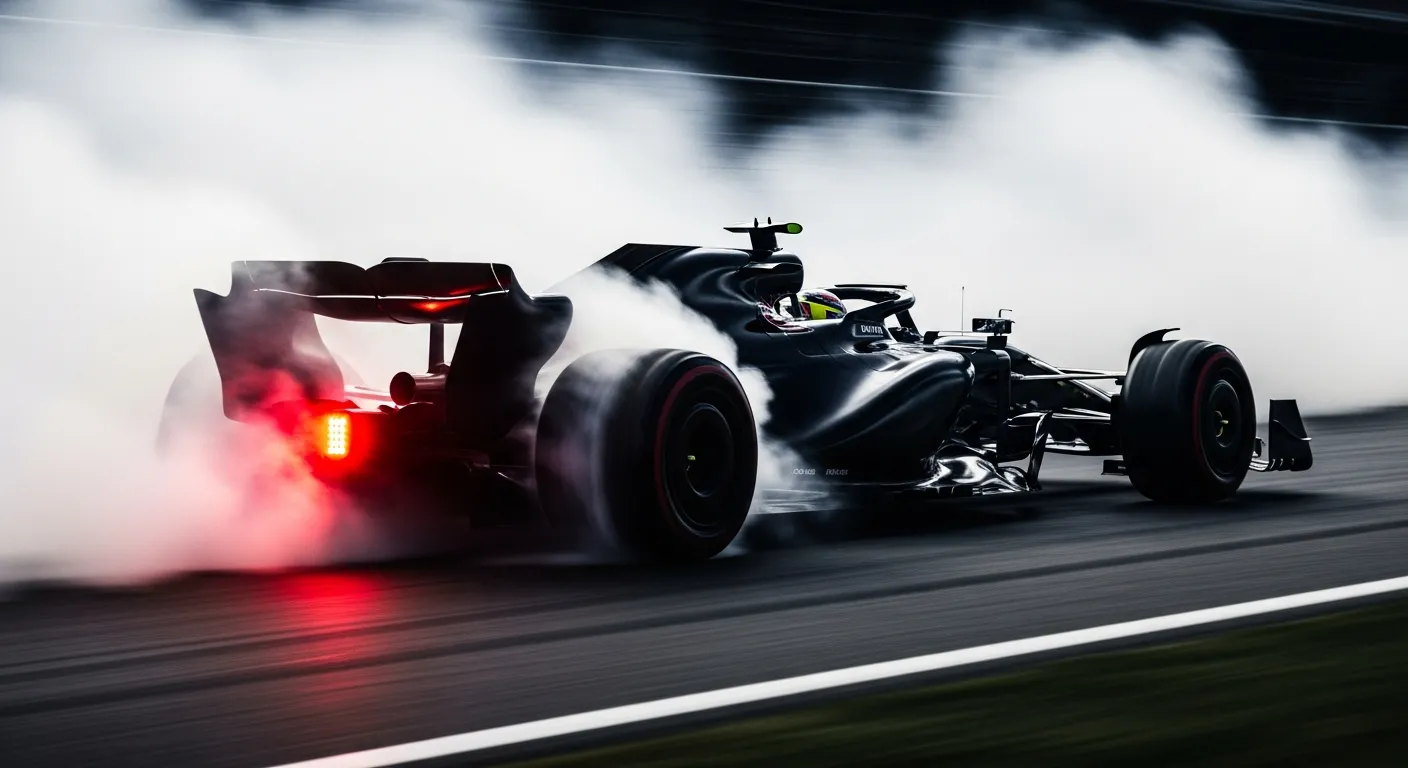
Max Verstappen secured a second-place finish at his home event, the 2025 Dutch Grand Prix, on August 31, 2025, converting a third-place grid start into a podium for Red Bull Racing. Starting from P3 at Circuit Park Zandvoort, Verstappen found himself behind Oscar Piastri, who took pole, and Lando Norris. The race witnessed significant attrition, including Lewis Hamilton's accident on lap 22 and Charles Leclerc's collision on lap 52, which altered the competitive landscape. Verstappen maintained a strong, consistent pace throughout the 72 laps, piloting his Red Bull RB21 with precision. His drive demonstrated the car's reliability and his skill in navigating the demanding home circuit, ultimately completing the race in 1:38:31.120. Such consistent performances are critical in a championship campaign, echoing the strategic efforts seen from drivers like [Alexander Albon at the 2020 Canadian Grand Prix](/results/2020-montreal-alex-albon) in past seasons. The ability to extract maximum performance, even when not starting from the front, is a hallmark of top-tier driving, as detailed on the [Formula 1 official site](https://www.formula1.com/en).
Despite not claiming the top step, Verstappen's second-place finish was a masterclass in strategic execution and tyre management, securing 18 points for Red Bull Racing. His fastest lap, a 1:12.921 on lap 70, ranked third overall, underscoring his late-race push, just shy of Piastri's leading 1:12.271. The team's strategy proved crucial in a race where rivals like Lando Norris retired due to a chassis issue on lap 64. Teammate Yuki Tsunoda also contributed, finishing ninth from a twelfth-place grid start, adding 2 points to the constructor's tally. This robust result at the fifteenth round of the 2025 season saw Verstappen's championship points increase from 187 to 205, solidifying his third position in the overall standings. The electric atmosphere at Zandvoort undoubtedly fueled his determination. For a broader understanding of F1's history and technical evolution, the [Wikipedia: Formula One](https://en.wikipedia.org/wiki/Formula_One) article provides context on how consistent points finishes are valued. The granular race data, including historical performance metrics, is often available through platforms like the [Jolpica/Ergast F1 data archive](https://api.jolpi.ca/ergast/f1/2026.json), which allows for deep analysis of race weekends, much like we might analyze performances from drivers such as [Pierre Gasly at the 2020 Canadian Grand Prix](/results/2020-montreal-pierre-gasly) or [Carlos Sainz at the 2020 Canadian Grand Prix](/results/2020-montreal-carlos-sainz).