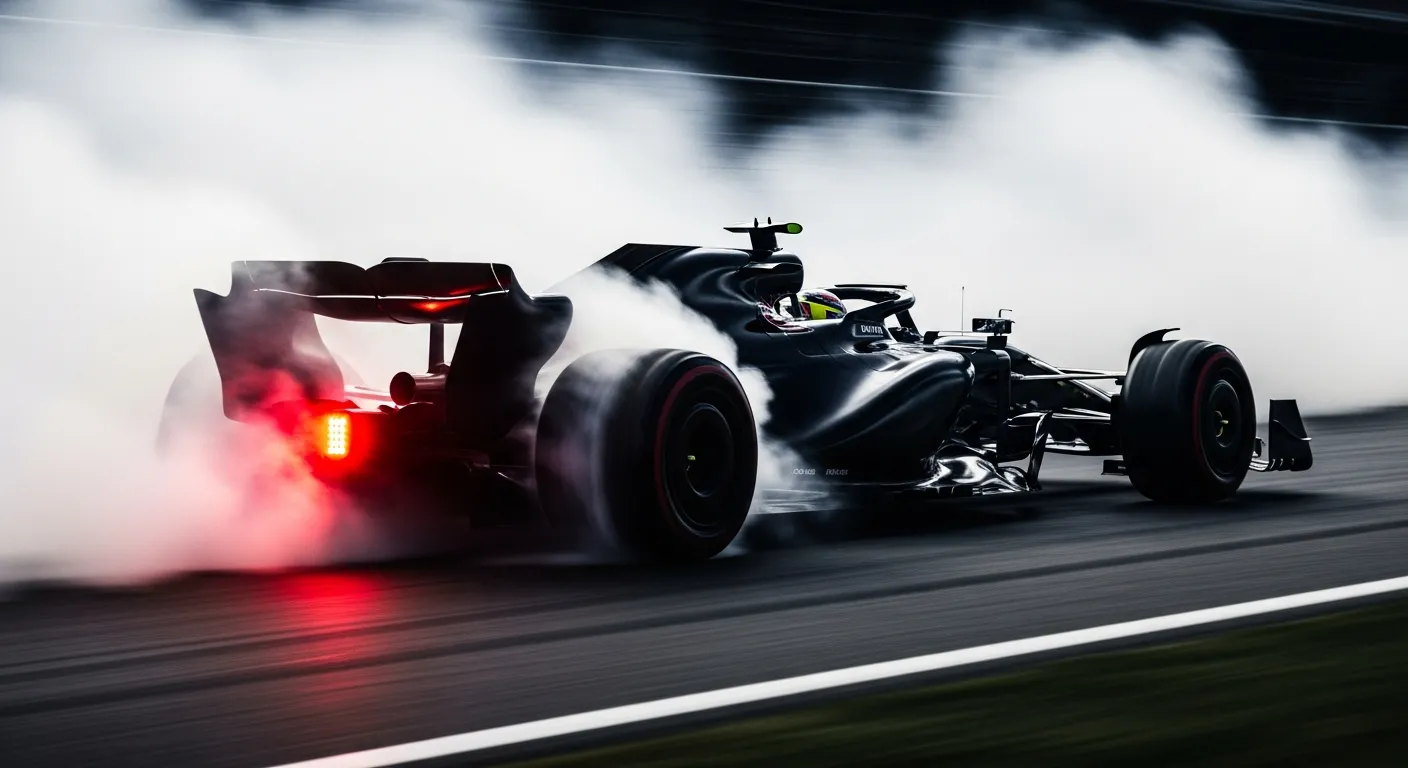
Charles Leclerc's performance at the 2026 Miami Grand Prix saw him convert a promising third-place grid start into an eighth-place finish, a result that offered four championship points for Scuderia Ferrari. The Monégasque driver began the 57-lap race from the second row, a strong qualifying effort placing his Ferrari SF-26 in a prime position to contend for significant points. However, the race narrative unfolded differently on the challenging Miami International Autodrome, a circuit known for its high-speed sections and tight chicanes, as detailed by the [official Formula 1 site](https://www.formula1.com/en). The initial phase of the race proved particularly demanding for Leclerc, as he struggled to maintain the pace of the front-runners, gradually ceding positions as the laps accumulated.
While he completed all 57 laps, his race time of 1:34:23.518 placed him over a minute behind race winner Kimi Antonelli of Mercedes. The data from [Jolpica/Ergast's 2026 season data](https://api.jolpi.ca/ergast/f1/2026.json) confirms his eighth position. Leclerc's teammate, Lewis Hamilton, also driving for Scuderia Ferrari, managed to secure sixth place, indicating a potential divergence in race pace or strategy between the two cars. This contrast in performance within the same garage often prompts detailed analysis from teams, a scenario not uncommon in Formula 1, as seen with Hamilton's own strategic battles at the [2024 Japanese Grand Prix](/results/2024-suzuka-lewis-hamilton). Leclerc did demonstrate moments of individual pace, recording his fastest lap on lap 44 with a time of 1:32.515, ranking him fifth overall for fastest laps in the race. This suggests that while the overall result was not what Ferrari might have hoped for from a P3 start, the car still possessed underlying speed at various stages, particularly in cleaner air or on specific tire compounds. Such lap time analysis is a critical component of post-race debriefs, informing future car development and race strategies, a process governed by the [FIA's F1 World Championship regulations](https://www.fia.com/events/fia-formula-one-world-championship).
The Miami Grand Prix saw strong performances from other teams, with Mercedes' Kimi Antonelli taking the victory, and McLaren's Lando Norris securing second place, followed by Oscar Piastri in third. Norris, who has shown consistent form, including his podium finish at the [2024 Japanese Grand Prix](/results/2024-suzuka-lando-norris), continued to be a front-runner, demonstrating McLaren's competitive package. Piastri's strong third-place finish further solidified McLaren's impressive showing, reminiscent of his own notable drive at the [2024 Japanese Grand Prix](/results/2024-suzuka-oscar-piastri). For Ferrari, the race presented a scenario where a strong qualifying position did not translate directly into a top-tier finish. The team will undoubtedly be dissecting the data to understand the factors contributing to the drop in positions from the grid. This kind of performance variance is a constant challenge in Formula 1, where every tenth of a second and every strategic decision can alter a race outcome, a dynamic thoroughly explored in the sport's history on [Wikipedia: Formula One](https://en.wikipedia.org/wiki/Formula_One). Despite the P8 finish, securing four points ensured Leclerc contributed to Ferrari's constructors' championship tally, a continuous effort across the demanding [Formula 1 season](https://www.formula1.com/en/latest/all-news.html). The focus for Scuderia Ferrari will now shift to identifying areas for improvement to convert strong qualifying pace into equally robust race day results, a perennial objective for any top-tier team in the [F1 paddock](https://www.formula1.com/en/racing/2026/Miami.html).