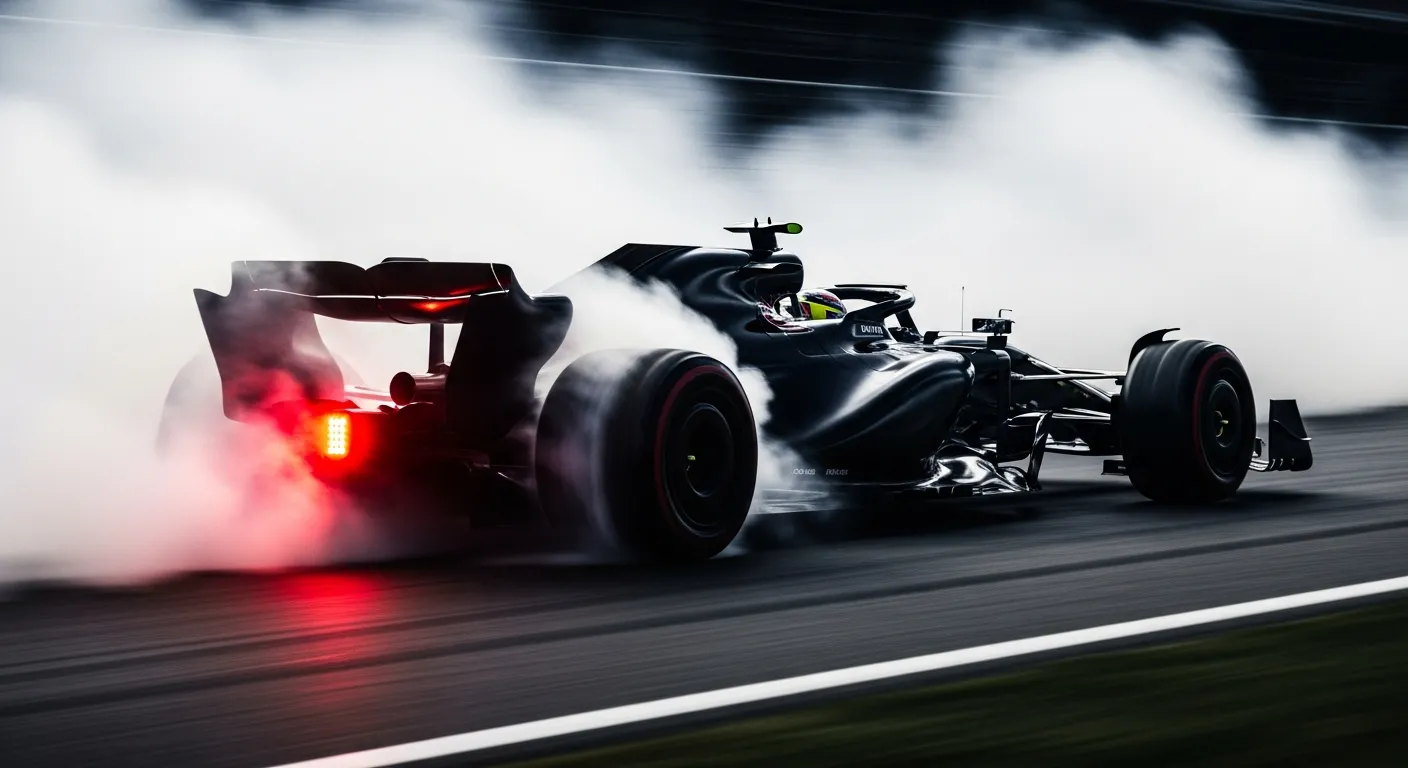
Oliver Bearman's performance at the 2026 Miami Grand Prix saw the British driver for Haas F1 Team move up one position from his starting grid slot, ultimately finishing P11 and just outside the points. Starting from the twelfth position on the grid, Bearman demonstrated consistent pace throughout the 57-lap event at the Miami International Autodrome, a circuit known for its challenging layout and high-speed sections that test both car and driver [Formula 1 — official site](https://www.formula1.com/en). The Haas VF-26, while showing flashes of potential, ultimately lacked the outright pace required to break into the top ten, a critical barrier for securing championship points. Bearman completed 56 laps, finishing one lap down from race winner Kimi Antonelli, a common outcome for cars in the lower midfield when the front-runners maintain a strong, uninterrupted rhythm. His fastest lap of "1:33.744" on lap 28 positioned him twelfth among all drivers, a close comparison to his teammate Esteban Ocon, who recorded a "1:33.712" on lap 33 and finished P13. This marginal difference in fastest lap times, with Ocon's being slightly quicker, suggests a tight internal battle for pace within the Haas garage, a dynamic often seen across the grid, as exemplified by [Max Verstappen at the 2021 São Paulo Grand Prix](/results/2021-interlagos-max-verstappen) and his then-teammate's performance in a highly competitive field.
The midfield battle at Miami was particularly intense, a characteristic feature of the [FIA — F1 World Championship](https://www.fia.com/events/fia-formula-one-world-championship) in recent seasons, where a single position can mean the difference between points and an empty tally. Bearman's P11 finish, while not yielding championship points, represented a slight improvement on his initial grid position of P12, indicating effective race management. The Haas F1 Team's strategy focused on maintaining track position and managing tire degradation effectively on the abrasive Miami surface, a crucial factor given the circuit's demands. However, the competitive density of the field meant that every tenth of a second was crucial for gaining an advantage, and the gap to the tenth-place finisher, Alexander Albon, proved just too large to close. For context, drivers like [Carlos Sainz at the 2021 Mexico City Grand Prix](/results/2021-mexico-city-carlos-sainz) have demonstrated how strategic decisions and consistent driving can elevate a car into the points from similar starting positions, underscoring the importance of every detail. The race underscored the fine margins that differentiate a points finish from a non-points result in modern [Wikipedia: Formula One](https://en.wikipedia.org/wiki/Formula_One) racing. Bearman’s drive was a solid effort in a tightly contested field, navigating the complexities of the Miami circuit and avoiding the early retirements that impacted drivers such as Nico Hülkenberg due to mechanical issues and Liam Lawson with a gearbox failure. The detailed race results, including these retirements, are publicly available through comprehensive [Jolpica/Ergast — 2026 season data](https://api.jolpi.ca/ergast/f1/2026.json). This outcome, while not a points finish, provides valuable data for the Haas F1 Team's ongoing development efforts under the current technical regulations, as they strive for consistent points finishes and improved competitiveness in the constructor standings [Formula 1 — official site](https://www.formula1.com/en) within the broader [FIA — F1 World Championship](https://www.fia.com/events/fia-formula-one-world-championship) framework.