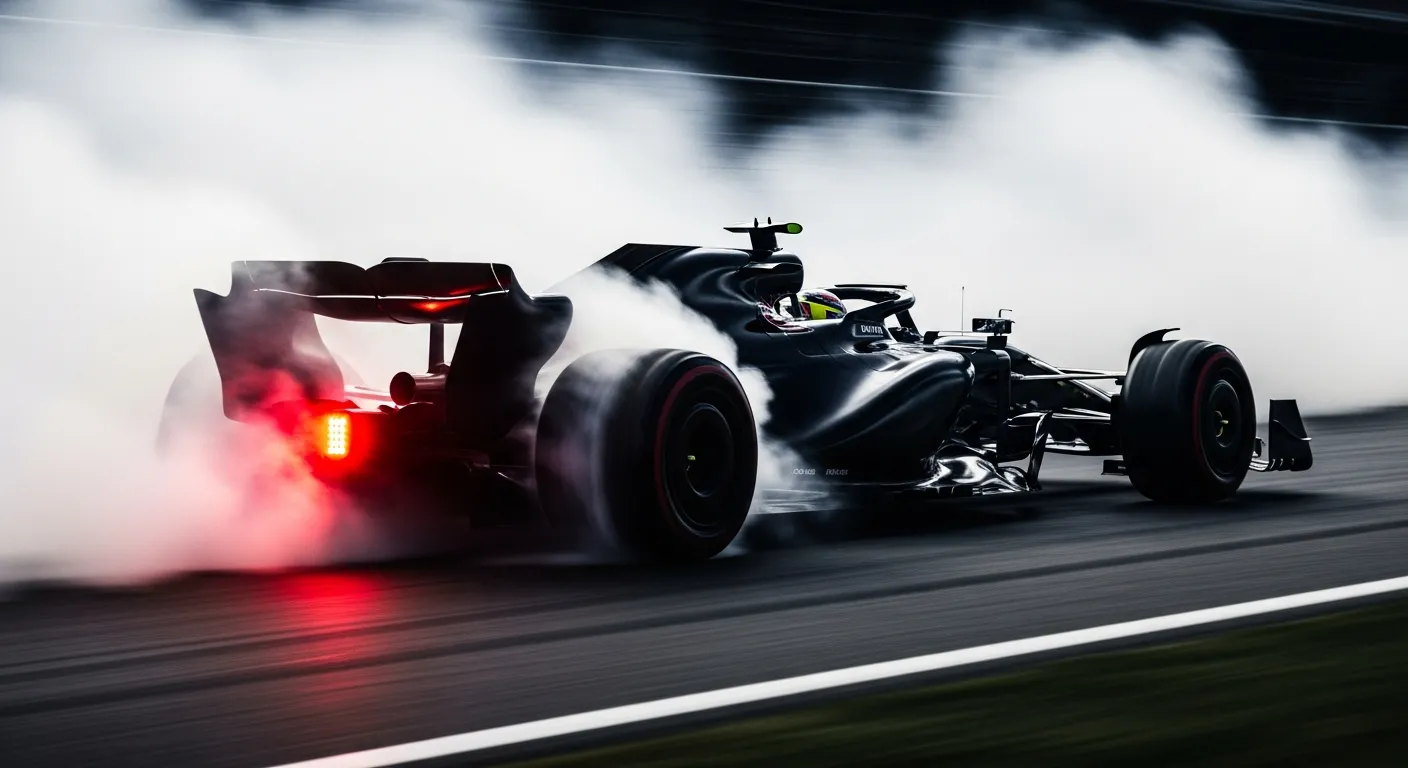
Liam Lawson's drive at the 2026 Japanese Grand Prix demonstrated a calculated progression through the demanding Suzuka Circuit, culminating in a hard-fought points finish for Racing Bulls. Starting from 14th on the grid, the young New Zealander executed a composed race strategy over the full 53 laps to cross the line in 9th position, earning 2 crucial points for the Italian constructor. This performance marked a significant recovery from qualifying, where he had placed behind his teammate Arvid Lindblad, who started 10th. Suzuka, with its iconic Esses and high-speed corners, is a circuit that relentlessly tests a driver's precision and a team's strategic acumen, elements Lawson clearly brought to bear in securing this result.
Throughout the 1:28:53.583 race, Lawson maintained a consistent pace, navigating the challenges presented by a competitive mid-field. He notably finished ahead of Esteban Ocon of Haas, who secured 10th place by a margin of just over a second, and his own teammate Lindblad, who ultimately finished 14th. The battle for the lower points positions was intense, with Max Verstappen, starting 11th, also making progress to finish 8th, just ahead of Lawson. This close proximity to an experienced competitor like Verstappen, even with the Red Bull driver starting further up, underscores Lawson's ability to extract performance from his Racing Bulls package. For a broader understanding of how these results contribute to the season, detailed [2026 Formula 1 season data](https://api.jolpi.ca/ergast/f1/2026.json) is available, offering a comprehensive look at the championship standings and individual race metrics.
Lawson's fastest lap, a 1:34.230 recorded on the final lap 53, ranked 13th overall among all competitors. While not challenging the outright fastest lap set by Kimi Antonelli, a 1:32.432, it was a strong showing within his immediate group and slightly quicker than his teammate's 1:34.314, also achieved on lap 53. This late-race push indicates effective tire management and the capacity to extract maximum performance when it mattered, a characteristic often seen in seasoned drivers and a trait Lawson continues to develop. The ability to manage pace and push on the final lap is a testament to both driver and engineering efforts. Comparing this to other drivers' early career performances, such as [George Russell at the 2019 Bahrain Grand Prix](/results/2019-bahrain-george-russell) or [Pierre Gasly at the 2019 Bahrain Grand Prix](/results/2019-bahrain-pierre-gasly), highlights the continuous learning curve and strategic demands in F1.
The two points gained at Suzuka were vital for Racing Bulls, contributing to their constructor's championship tally and reinforcing their position in the competitive mid-field. This race further solidified Lawson's reputation for converting mid-grid starts into valuable finishes, a skill that is crucial for teams aiming to climb the standings. His performance, alongside that of drivers like [Esteban Ocon at the 2019 Bahrain Grand Prix](/results/2019-bahrain-esteban-ocon), demonstrates the consistent effort required to secure points in a field where every position is fiercely contested. The intricacies of the sport, from car design to race day strategy, are comprehensively covered by the [Formula 1 — official site](https://www.formula1.com/en), providing further context on the operational demands faced by teams like Racing Bulls. Understanding the broader context of Formula 1's structure and history can be found on [Wikipedia: Formula One](https://en.wikipedia.org/wiki/Formula_One).