Constructor record
Source: Jolpica F1 API- Starts
- 5
- Race wins
- 0
- Podiums
- 0
- 1-2 finishes
- 0
- Best finish
- P6
- Points
- 14
Every appearance
| Year | Best | 2nd | Pts |
|---|---|---|---|
| 2021 | — | — | 0 |
Team × Circuit · permanent
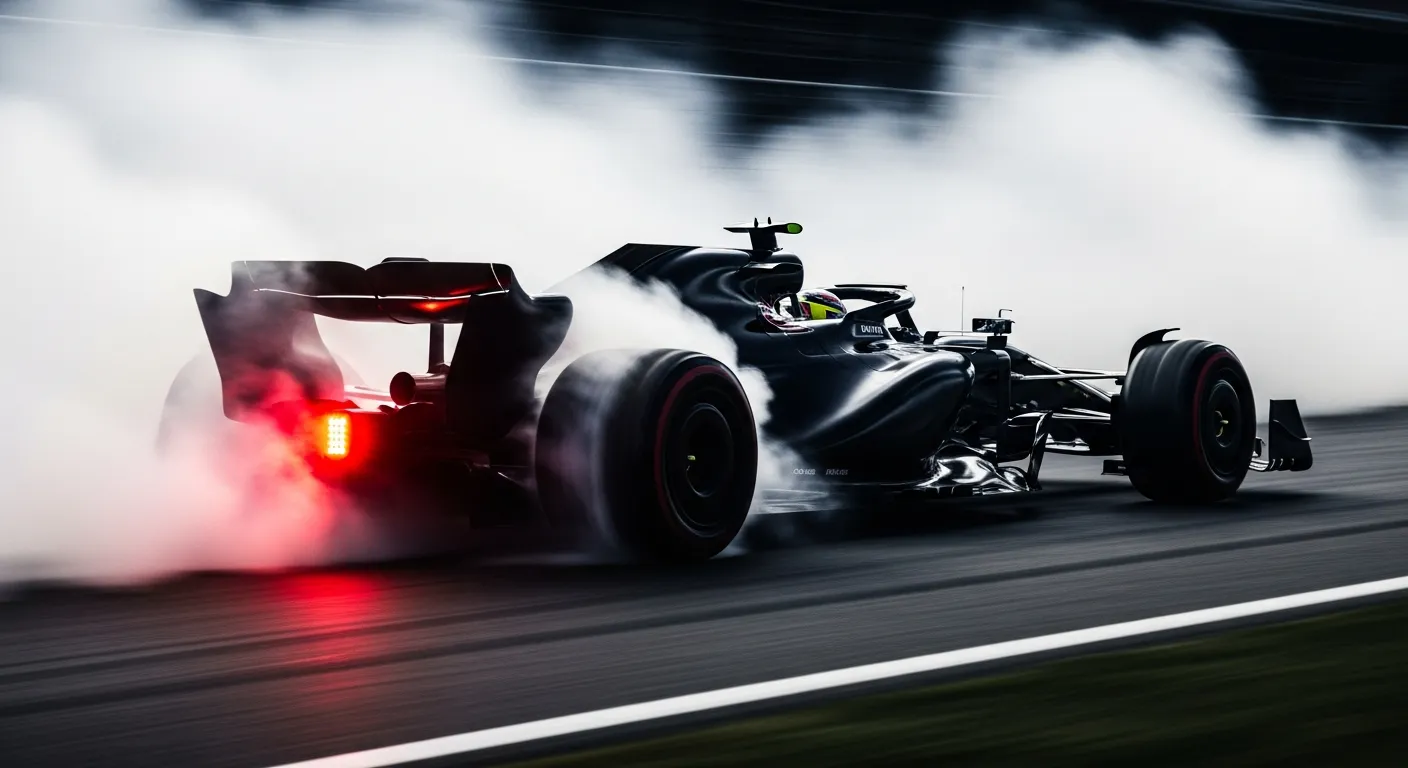
Alpine's record at the United States Grand Prix at COTA reveals a mixed bag, with a best finish of 6th in 2023, often battling for midfield points on this demanding permanent circuit.
| Year | Best | 2nd | Pts |
|---|---|---|---|
| 2021 | — | — | 0 |
| 2022 | P7 | P11 | 6 |
| 2023 | P6 | — | 8 |
| 2024 | P12 | P18 | 0 |
| 2025 | P17 | P19 | 0 |
Alpine's journey at the Circuit of the Americas for the United States Grand Prix has been a nuanced exploration of a permanent circuit that often highlights the BWT Alpine F1 Team's chassis strengths in complex corner sequences while simultaneously exposing the limitations of its Renault power unit on long straights. With five starts at COTA, the team has yet to secure a win or a podium finish, but its best result, a 6th place in 2023, underscores moments where the car concept has found a competitive window on this unique track.
The Circuit of the Americas, with its iconic uphill Turn 1 and high-speed 'Esses' section, demands a chassis that can handle rapid direction changes and maintain aerodynamic stability. Alpine's performance here has fluctuated, reflecting the inherent challenges of optimizing a car for both high-speed aero efficiency and the mechanical grip required through the slower, technical final sector. The 2023 season saw the team achieve its strongest outing, securing 8 points, a testament to a package that, for a brief period, seemed to align better with COTA's demands. This contrasts sharply with their initial appearance in 2021, where they scored no points, and the projected outcomes for 2024 and 2025, which also show a struggle to convert pace into points, with finishes outside the top 10.
Power unit performance is a significant factor at COTA, particularly on the long back straight where outright speed can dictate overtaking opportunities and defensive capabilities. The Renault power unit, which Alpine utilizes until the end of the 2025 season, has historically faced challenges in matching the raw output of its rivals, a factor that becomes particularly pronounced on circuits with extended full-throttle sections. This dynamic often forces the team into strategic compromises, balancing downforce for cornering speed against drag for straight-line performance. For a broader view on how different teams tackle this balance, one might look at Aston Martin at the United States Grand Prix, which also navigates these trade-offs.
The team's overall points tally of 14 at this venue, accumulated across five appearances, suggests a consistent, albeit midfield, presence. The challenge for Alpine at COTA, as with many circuits, lies in finding that elusive sweet spot where their aerodynamic package, mechanical setup, and power unit can all operate in harmony. The upcoming transition to Mercedes power units from 2026, as detailed in various sources including Jolpica/Ergast — 2026 season data, represents a significant shift that could fundamentally alter their performance profile at power-sensitive tracks like COTA. This strategic move is a major talking point in the wider context of Formula 1 — official site developments.
Looking ahead, Alpine's approach to COTA will likely continue to focus on extracting maximum performance from their chassis in the demanding first and third sectors, while mitigating any power deficit on the straights. The permanent nature of the circuit allows for consistent data collection and setup refinement year-on-year, but the competitive landscape of F1 means that even marginal gains are hard-won. Comparing their struggles with power to other North American venues, such as Aston Martin at the Mexico City Grand Prix, where altitude also impacts engine performance, offers another lens through which to view Alpine's challenges. Similarly, the demands on chassis balance at COTA share some characteristics with circuits like Aston Martin at the São Paulo Grand Prix, which also features elevation changes and a mix of corner speeds. The continuous evolution of F1 regulations, which can be explored on resources like Wikipedia: Formula One, means teams are constantly adapting, and Alpine's future at COTA will undoubtedly reflect these ongoing developments.